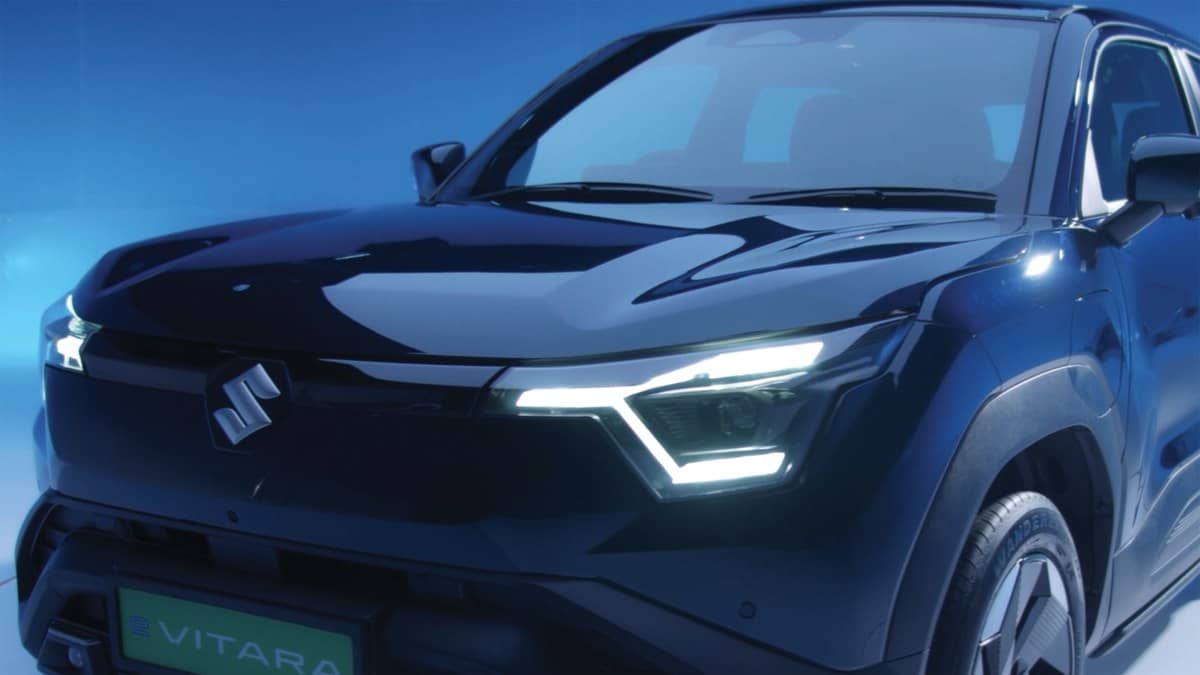
NEW DELHI: Maruti Suzuki's e Vitara charging claim of 45 minutes refers to a 10% to 80% battery charge. The September 2026 brochure footnote specifies the 61 kWh version and a rapid DC charger rated at least 70 kW. It is an estimated charging interval, with the charger and battery conditions affecting the result.
| Item | Official detail |
|---|---|
| Quoted DC charging interval | 10% to 80% in 45 minutes |
| DC claim footnote | 61 kWh battery, minimum 70 kW rapid DC charger |
| Delta battery | 49 kWh |
| Zeta and Alpha battery | 61 kWh |
| 7.4 kW AC, Delta | Approximately 6.5 hours, 10% to 100% |
| 7.4 kW AC, Zeta and Alpha | Approximately 9 hours, 10% to 100% |
| Charging connectors | Type 2 AC and CCS2 DC |
Read the percentage window with the time
A charging time needs both an arrival level and a finishing level to be meaningful. A car arriving almost empty and one arriving partly charged do not face the same session. Likewise, leaving at the stated end point and waiting for a full battery are different plans. The headline time alone cannot answer how long either stop will take.
For the e Vitara, the brochure's footnote is more specific than a casual reference to fast charging. It ties the quoted DC result to the larger battery and an appropriate rapid charger. That qualification should remain visible when the figure is used in a journey plan, even though the specification table prints a DC estimate across the variant columns.
The home-charging estimates describe a different percentage window. They extend to a full battery, while the rapid-charge estimate ends earlier. Comparing those durations without their starting and finishing levels would suggest a simpler relationship than the manufacturer actually claims. Owners should compare like-for-like sessions when deciding whether a charging arrangement fits their routine.
Battery size changes the home-charging schedule
Delta has the smaller pack, while Zeta and Alpha share the larger one. The published home-charging estimates therefore create a practical distinction between the versions even before comfort equipment enters the discussion. A household's parking routine and access to a suitable charging point matter alongside the chosen variant. The relevant question is whether the available parking period suits the required replenishment.
NEXA's eco-solutions page describes professional home-charger installation. For an apartment household, a useful preparation step is to establish the parking location and installation arrangements before assuming a home-charging estimate can become an everyday routine. The brochure describes vehicle capability; it does not resolve a particular building's access, permissions or electrical installation requirements.
The September brochure lists a portable charging cable as well as separate AC and DC inlets. Connector compatibility, the charge point's capability and the vehicle's starting charge are distinct checks. The home estimate quoted here applies to the specified wall-box power. It should not be transferred to another supply simply because both connections are described as AC.
Allow for the conditions at the stop
The manufacturer qualifies charging times by charger type and condition, ambient temperature, battery temperature, battery age and condition, state of charge and battery-protection systems. Those qualifications make the published duration a planning reference. They do not establish an appointment-length guarantee for every public charging stop or every stage of the vehicle's life.
For a longer Indian highway journey, the practical consequence is to check the planned station before departure and preserve an alternative stop. A pin on a map answers where a charger is located. It does not, by itself, establish that a compatible point will be free and working when the car arrives. Leave space in the schedule for that uncertainty.
NEXA says the e for me app supports charger navigation, availability information and route optimisation. The e Vitara product page separately describes charging-status information and scheduling through its connected features. These tools address different parts of ownership: finding a stop, seeing the car's status and arranging a charging period. Check the relevant service requirements for the vehicle.
Keep charging and purchase-price questions distinct
Our earlier Maruti e Vitara price: Rs 16,19,000 to Rs 20,21,000, range up to 543 km addresses the cost of the versions. The Maruti Grand Vitara price: Rs 10,76,500 to Rs 19,77,400 for all 20 versions covers another ownership consideration. Readers following the wider NEXA range can also consult the Maruti Alto K10 price: Rs 3,69,900 to Rs 5,44,900 for all 8 versions.
Official sources: e Vitara September 2026 brochure and charging footnote, NEXA charging ecosystem and e Vitara product page. Rechecked on 28 October 2026.