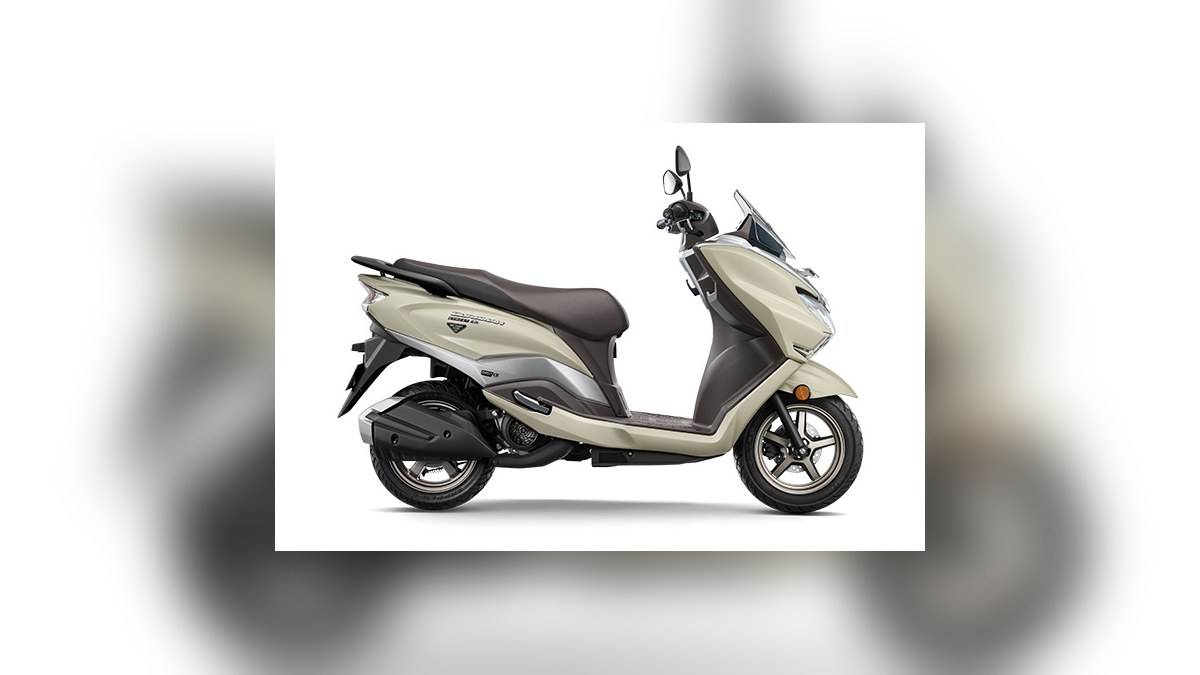
NEW DELHI: Suzuki's global Burgman Street 125EX guide says its Engine Auto Stop-Start system operates only after the scooter has reached at least 10 km/h, with a warm engine, a healthy battery and the side stand stowed. The Indian Burgman Street EX page confirms the same named stop-start and Silent Starter systems. A cold engine continuing to idle therefore needs a different assessment from a fault during an otherwise normal ride.
| System or specification | Official detail |
|---|---|
| EASS | Engine Auto Stop-Start |
| Speed condition in Suzuki's global guide | At least 10 km/h reached while running |
| Other global operating conditions | Engine warm, battery in good condition, side stand stowed |
| Restart after automatic stop | Turn throttle to resume riding |
| India engine | 124 cc, air cooled, fuel injected |
| India output | 8.6 PS at 6,500 rpm |
| India maximum torque | 10 Nm at 5,500 rpm |
This is an operating-system explainer, based on Suzuki's India product information and the manufacturer's global description of the 125EX. Check the handbook supplied with the Indian scooter for its complete operating instructions. The global explanation helps identify the conditions to discuss during a demonstration; it does not replace that handbook.
What EASS is intended to change
EASS reduces the time the engine spends idling while the scooter is stationary. Suzuki describes its usefulness at traffic lights and in stop-and-go traffic. When the rider resumes the journey, the system restarts the engine in response to the throttle. The Silent Starter system works with that restart function to make the transition quieter.
The useful distinction is between starting a parked scooter and restarting after an automatic stop. Suzuki's global instructions describe an initial start with the ignition on, the brake lever squeezed, the side stand stowed and the starter button pressed. The throttle-based restart belongs to the automatic-stop sequence. Demonstrating both sequences makes the system easier to understand.
Why it may continue idling
The global guide lists operating conditions together. Reaching the stated speed is part of the explanation, alongside engine temperature, battery condition and side-stand position. A rider should therefore avoid judging the system solely by whether the engine switches off immediately after a cold start in the parking area.
During handover, ask the representative to explain the idle-stop switch and normal indications using the owner's manual. Then request a demonstration under suitable conditions. Notice how the engine stops and how it restarts. This gives the rider a reference for ordinary behaviour before encountering the system in busy traffic.
If the expected operation changes later, describe the circumstances to the workshop: whether the ride had just begun, whether the engine was warm and whether the scooter had already been moving normally. Those observations are useful troubleshooting context. They are not a diagnosis, and the absence of an automatic stop alone does not identify a particular failed component.
The EX hardware around the system
In the Indian specification, the engine drives through a CVT automatic transmission. The EX has a 12-inch rear wheel with a 100/80-12 tubeless tyre, paired with a 90/90-12 front tyre. Its published wheelbase is 1,290 mm and kerb mass is 111 kg. The package gives the technology a specific scooter context, beyond an isolated stop-start badge.
Suzuki calls its engine approach Suzuki Eco Performance Alpha. On the EX, the stop-start and quieter starter are part of that description. The practical point for a commuter is to understand the engine's behaviour at stops. The branding does not itself tell an owner when a workshop inspection is needed or how much fuel a particular route will save.
Keep fuel claims in their proper setting
The global model information discusses fuel-consumption testing with EASS enabled and qualifies results by weather, roads, rider behaviour and maintenance. It would be misleading to convert that into a guaranteed Indian commute result. A rider facing frequent signals may experience the system differently from someone whose route has long uninterrupted stretches.
For a useful personal comparison, keep a normal record of fuel filled and distance travelled over ordinary use. Avoid assigning a fixed saving to every automatic stop. The published material explains what the technology is designed to do, but a savings calculation needs evidence from the actual riding pattern.
Who it is for
This guide is for Burgman Street EX owners learning the system, and riders considering the EX specifically for its starting and idling behaviour. A supervised demonstration can be more revealing than a general claim that the scooter has more technology. Ask questions while the scooter is stationary, then become familiar with the controls before using it on a regular commute.
Our Burgman Street storage guide covers a separate practical topic. The Burgman roadside-assistance explainer addresses support terms, while the Access price guide concerns another Suzuki model. Keep each model's operating instructions and service requirements separate.
Official sources: Suzuki India Burgman Street EX and Suzuki global 125EX operating conditions.