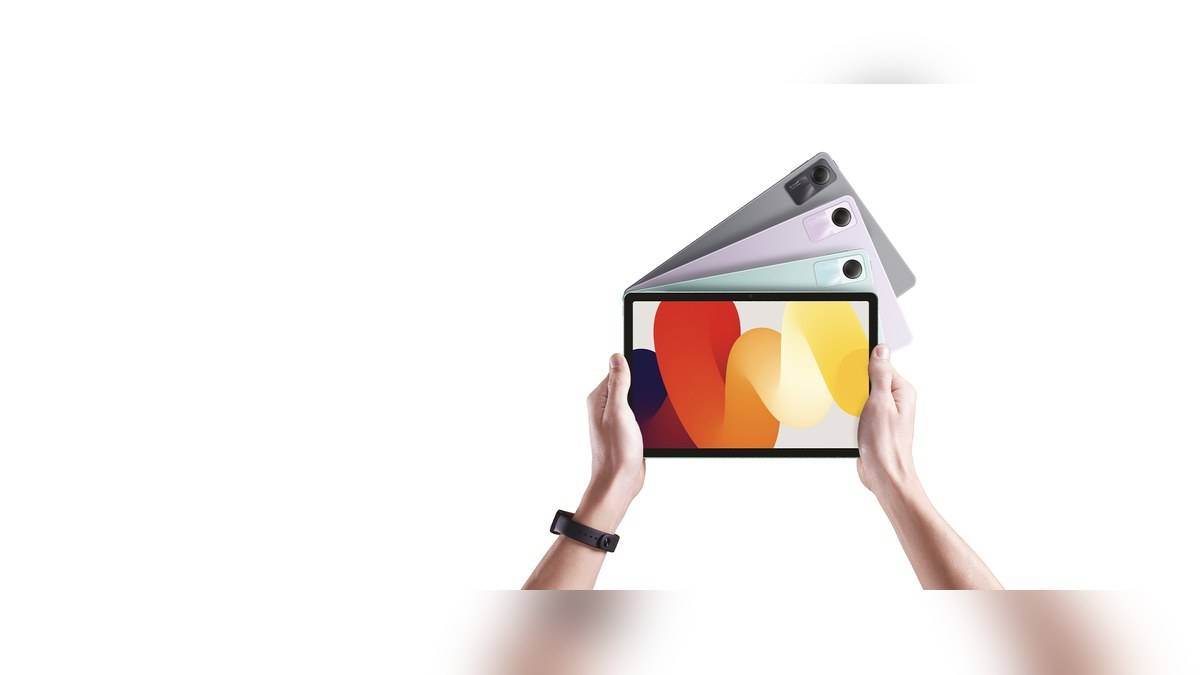
NEW DELHI: Redmi Pad SE's official India specification lists 4GB, 6GB and 8GB RAM options, all paired with 128GB internal storage. It also supports expandable storage up to 1TB. The larger RAM figure therefore does not mean a larger built-in place for videos, photographs or course material.
| Memory item | What Xiaomi lists |
|---|---|
| Entry configuration | 4GB RAM + 128GB storage |
| Middle configuration | 6GB RAM + 128GB storage |
| Higher RAM configuration | 8GB RAM + 128GB storage |
| RAM type | LPDDR4X |
| Internal storage type | eMMC 5.1 |
| Expandable storage support | Up to 1TB |
| Processor | Snapdragon 680 |
Separate the two numbers on the product label
The first number in each configuration describes RAM, while the second describes internal storage. On this tablet, the second figure stays fixed throughout the listed range. Comparing only the larger first number can lead a household to expect more download space when the specification offers a different change.
Xiaomi also warns that available memory and storage are below the total advertised figures because the operating system and preinstalled software occupy space. The printed 128GB is consequently not a promise that the entire amount will be empty when the tablet is first set up.
For a student sharing the tablet with family, the distinction is practical. Saved lessons, downloaded entertainment and personal photographs all need a place to stay. Choosing more RAM does not enlarge the internal storage figure for those files. That makes the course-material folder and the entertainment folder part of the same capacity calculation.
The expansion figure describes a separate storage route
Xiaomi's overview specifies expansion through a microSD card, with support up to 1TB. That is an expansion limit for this model, rather than an included 1TB card or a 1TB internal-storage variant. A listing that mentions only the expansion figure can obscure the tablet's actual built-in capacity.
Keep the distinction visible when making a device inventory. Record internal capacity and any removable card separately. If a card is removed, the files kept on it are no longer in the same physical place as the tablet's internal files. This is especially relevant when a family moves learning material between devices.
The official specifications do not establish that every application or subscription download can be moved to removable storage. Before planning an offline library around a card, check the relevant application's own download settings. Treat that as an application question rather than assuming that the tablet's expansion limit answers it.
RAM options sit beside the same core hardware
The listed processor is Snapdragon 680 and the internal storage standard is eMMC 5.1. Xiaomi does not describe a different processor or a different storage technology for the higher RAM options on this page. The memory ladder therefore needs to be read within the same underlying product specification.
The tablet has an 11-inch display with 1920 x 1200 resolution and refresh up to 90Hz. Xiaomi also advertises split screen and floating windows. Those features give useful context for someone keeping reading material beside another application, but they do not turn RAM capacity into a guarantee that every app combination will behave identically.
A sensible preparation exercise is to open the actual reading, video and note-taking applications that the household expects to use together. The important result is whether the intended task works comfortably. A specification sheet supplies the hardware baseline; it cannot reproduce every course platform's software behaviour.
Build the offline library around the intended use
Keep essential documents easy to identify before filling the tablet with optional downloads. A labelled folder for current study material is easier to check than an undifferentiated collection of files. Keep another copy of important work outside the tablet, rather than treating a removable card as the only archive.
For a different example of how capacity can change a tablet's storage technology, read our Xiaomi Pad 7 storage explainer. That model's specification should not be carried over to Redmi Pad SE simply because both carry Xiaomi branding.
Our Redmi Pad 2 Pro 5G price report concerns a separate tablet, while the Xiaomi Pad 8 cable guide addresses external transfers. These are different questions from the SE's RAM and removable-storage limits.
The India specification sheet lists an 8000mAh typical battery, 10W charging and a USB Type-C connection. Its wireless entries specify Wi-Fi on 2.4GHz and 5GHz bands, plus Bluetooth 5.0. The sound system includes four speakers, Dolby Atmos support, Hi-Res Audio and a 3.5mm headphone socket.
Xiaomi gives the rear camera an 8MP sensor with an f/2.0 aperture and the front camera a 5MP sensor with an f/2.2 aperture. Both camera entries include 1080p recording at 30fps. The package contains the tablet, power adapter, USB cable, warranty card and user guide.
Official sources: Redmi Pad SE India specifications and official product overview.