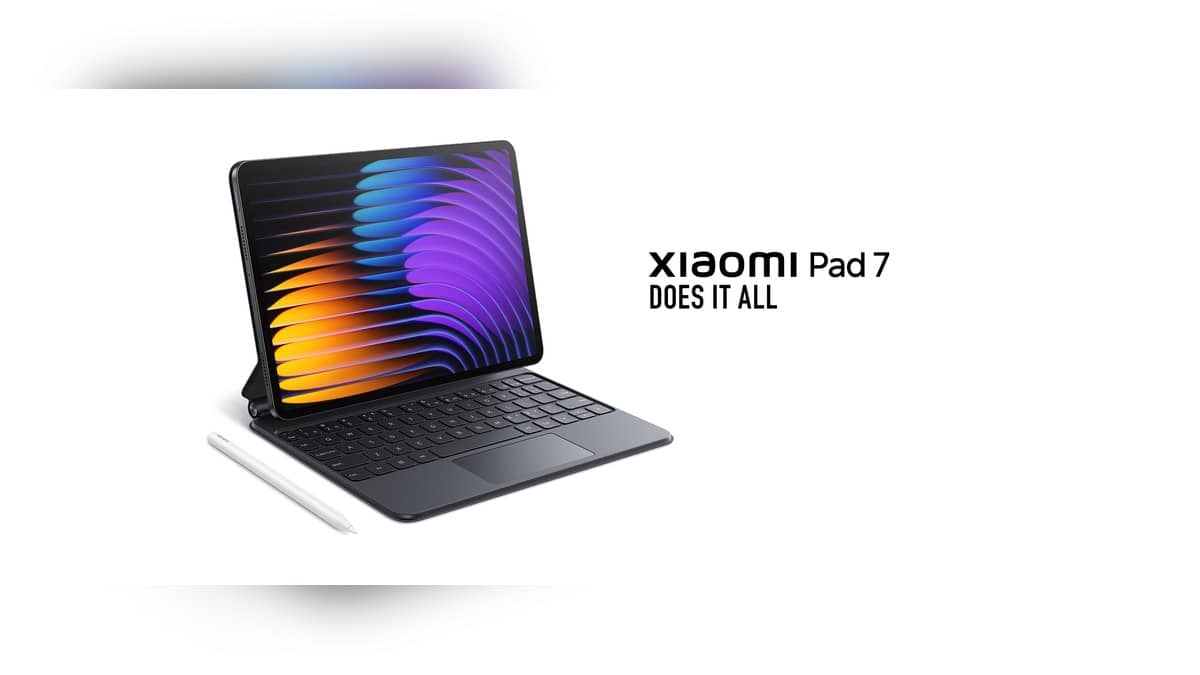
NEW DELHI: Xiaomi Pad 7 buyers reading the India specification sheet should note a storage difference beyond capacity: the 8GB/128GB version uses UFS 3.1, while the 12GB/256GB configuration uses UFS 4.0. Both have LPDDR5X RAM. The exception appears in a footnote beneath the main storage listing.
| India specification listing | RAM type | Storage type |
|---|---|---|
| 8GB RAM + 128GB storage | LPDDR5X | UFS 3.1 |
| 12GB RAM + 256GB storage | LPDDR5X | UFS 4.0 |
| Memory extension | Separate setting from the physical RAM specification | Does not add built-in storage capacity |
| Storage expansion | Not applicable | Official product FAQ says not supported |
Read the footnote with the headline specification
The main India product page promotes an LPDDR5X and UFS 4.0 combination, then qualifies that statement for the 8GB/128GB version. This is why a short feature banner is not enough to identify a configuration. Read the capacity line and its exception together before comparing two listings that both say Xiaomi Pad 7.
RAM is the working memory used by software, while the storage figure describes space for apps and files. UFS is the storage interface designation. These are separate entries on a specification sheet. More storage and a different UFS generation should not be described as though they were simply extra RAM.
The published India sheet lists the 8GB/128GB and 12GB/256GB combinations. Treat that as the configuration information checked for this guide, rather than importing every combination found on another country's store. The useful comparison is between the exact Indian product descriptions in front of you.
Do not add memory extension to physical RAM
Xiaomi's official product FAQ, hosted on its UK support site, separately describes memory extension and built-in RAM. It identifies 128GB storage as UFS 3.1 and 256GB as UFS 4.0, matching the India storage footnote. The regional FAQ is used here to explain the technology, not to establish an additional Indian sales variant.
For a parent checking a tablet for a student, write the physical RAM and storage in separate columns. Put any advertised memory-extension setting in a third column. That small exercise prevents a combined marketing figure from displacing the actual hardware configuration on which the comparison should rest.
The same FAQ says expanded storage is not supported. Plan the built-in capacity around files that must remain available offline, such as downloaded lessons, reference PDFs and locally saved video. A cloud folder can be useful, but its existence does not add internal storage or make every file accessible without a connection.
Match the display description as carefully
Xiaomi's India overview also mentions a nano-texture display option, with a qualification that it is limited to particular memory configurations and colours. Do not assume the term applies to every Pad 7 just because it appears on the family page. Read the exact display description of the unit being considered.
This is a model-specific trap: memory capacity, storage technology and display treatment can appear in different parts of the same product presentation. Someone comparing only 'Pad 7, 256GB' could miss the display distinction; someone comparing only 'UFS 4.0' could miss the explicit exception attached to the smaller storage option.
The India overview lists a Snapdragon 7+ Gen 3 platform, an 8,850mAh battery and 45W turbo charging. Those family specifications help describe the tablet, but they do not cancel the configuration qualifications. Keep shared hardware in one part of a comparison and variant-specific details in another.
Check the ownership paperwork too
Xiaomi's India tablet warranty table lists one year of labour and parts cover for the tablet and battery, with walk-in service. The charger is listed separately with six months of cover. The policy identifies the purchase order number as the support document and says the limited warranty starts on the purchase date.
Retain the order confirmation alongside the precise variant description. If a later support question concerns the delivered hardware, that record is more useful than a screenshot of the range's general banner. This guide explains how to read the official specifications; it does not establish today's transaction price or recommend a retailer.
Related coverage includes our Xiaomi 17 series price list: 17T Rs 69,999, Xiaomi 17 Rs 89,999, 17 Ultra Rs 1,39,999, Xiaomi Pad 8 Creator Edition listed at Rs 42,999 in Amazon early deals and Xiaomi 17T now starts at Rs 69,999 in India, Rs 10,000 above launch price.
Official sources: India specifications, India product overview, official product FAQ and India tablet warranty.