NEW DELHI: The Nissan Gravite provides six airbags from its entry Visia MT grade, alongside electronic stability control, traction control and hill-start assistance. Higher grades add useful equipment, but the basic restraint package does not depend on choosing Tekna. The important distinction in Nissan's brochure is between equipment fitted across the range and the cameras, lighting and parking aids added further up.
| Safety item | Official fitment |
|---|---|
| Six airbags | Visia onwards: two front, two side and two curtain |
| Stability and traction control | Visia onwards |
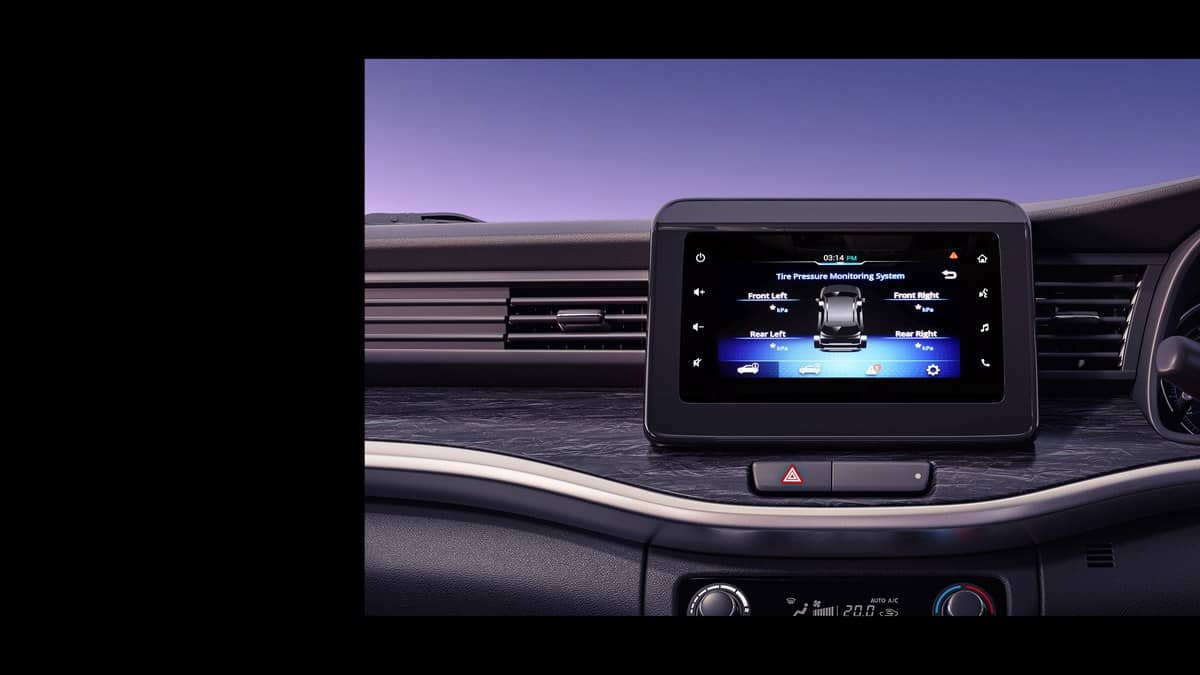
| Rear parking sensors and TPMS | Visia onwards |
| Rear camera with guidelines | N-Connecta onwards |
| Front parking sensors | Tekna |
| Belts | Three-point belts and reminders for all seats |
Start with the Visia equipment list
Nissan's current product page explicitly lists the airbag arrangement under Visia MT. That matters because the headline count can otherwise become detached from the entry car. The brochure also places ABS, electronic brake-force distribution, brake assist and hill-start assistance in the base equipment block. These systems are carried into the higher grades through the brochure's cumulative feature structure.
For a family comparing versions, this changes the order of the discussion. Begin with the occupants and their restraints, then look at the equipment that helps the driver judge the surroundings. A screen or camera is easy to demonstrate in a showroom. A complete list of standard restraints is less visually dramatic, but should still be checked against the exact grade on the paperwork.
Six airbags do not mean six seating positions
The Gravite is a seven-seater. Its six-airbag count describes the restraint hardware, rather than a separate airbag allocated to every passenger. Nissan specifies front, side and curtain units. The brochure separately lists three-point belts and seat-belt reminders for all seats, together with ISOFIX child-seat anchorages and rear-door child locks.
This is particularly relevant to the Gravite because its cabin can be rearranged. A household may use it with different passengers on school days and family outings. The practical question is whether each person has the correct seating position and restraint in that day's layout. The airbag headline alone cannot answer that question, and should not be used as a substitute for checking the handbook's seating instructions.
For the separate space calculation, our Gravite luggage-space explainer explains the condition attached to Nissan's larger boot figure. Keeping luggage configuration separate from the safety checklist makes both decisions easier to understand.
There is a further restraint detail in the base brochure block: the seat-belt pretensioner is described as driver-only, while load limiters are listed for the front belts. Keep those entries distinct from the all-seat belt and reminder claims. A standard safety package can contain components whose fitment differs by seating position.
Where parking assistance changes
Rear parking sensors appear in the standard equipment list. A rear camera with projection guidelines is added by N-Connecta, while front parking sensors appear in Tekna's additions. These are meaningful distinctions for anyone who regularly manoeuvres between walls, parked vehicles or short driveway boundaries. Ask to see the selected grade's actual parking display and sensor indications.
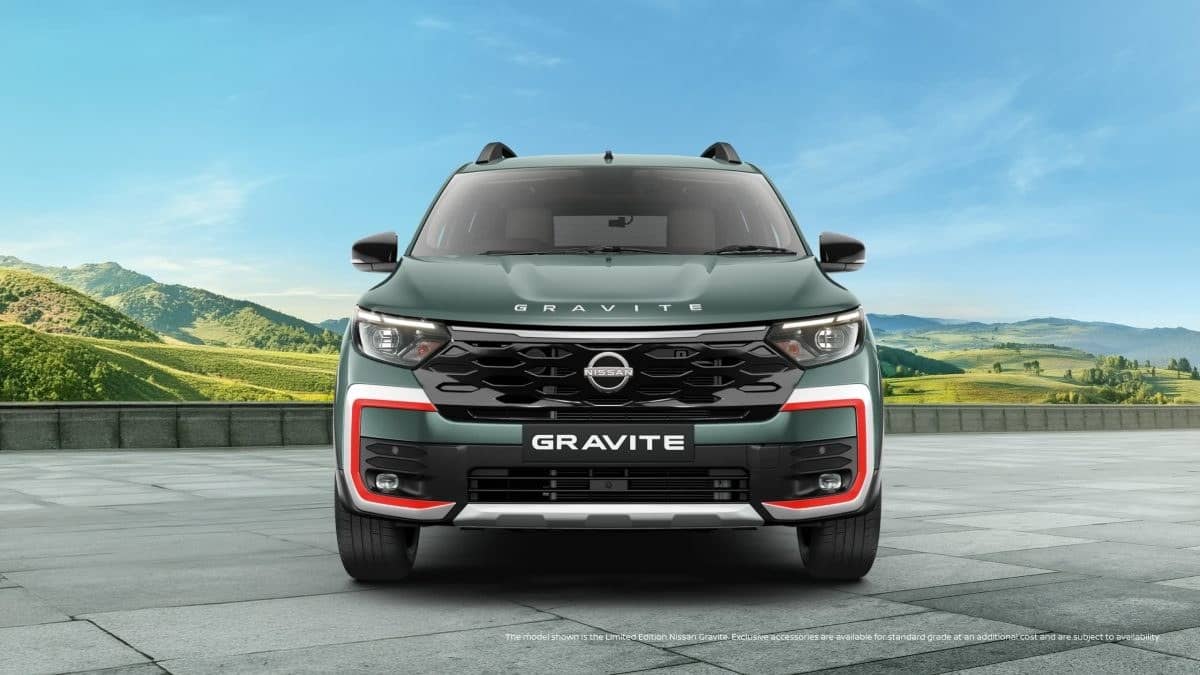
The distinction also prevents an expensive misunderstanding. The product page showcases front and rear parking sensors together, but a feature photograph does not establish that every version has both. The grade matrix provides the more useful answer. Treat the headline display of equipment as an introduction, then use the variant listing to establish what the particular car includes.
Who each equipment level is for
Visia is relevant to readers who want the standard restraint and stability package while keeping cabin equipment simple. Acenta adds convenience features, but the safety foundation is already present below it. N-Connecta deserves closer attention when rearward visibility aids are a priority. Tekna is the version to examine for the added front parking sensors, rather than assuming those sensors accompany every Gravite.
These are equipment-based distinctions, not a ranking of crash performance. Nissan's standard-feature claim does not by itself supply a crash-test score for each grade. Nor does the presence of electronic assistance remove the need to inspect the surroundings before moving. Keep a demonstrable feature, a manufacturer's claim and an independently measured result in separate parts of the comparison.
Check accessories separately
Nissan's brochure describes the Launch Edition's additional items as accessories and says they are not standard on ordinary variants. A dash camera can be useful for recording a journey, but it should not be confused with a driving-assistance camera or used to infer an extra braking function. Ask for accessories and factory equipment to be listed separately.
Our existing Gravite price guide covers the separate cost question. Readers considering the retrofit fuel option can also consult the Gravite CNG kit warranty guide. Neither changes the need to verify the safety equipment of the actual grade.
Official sources: Nissan Gravite product page and its linked specification brochure.