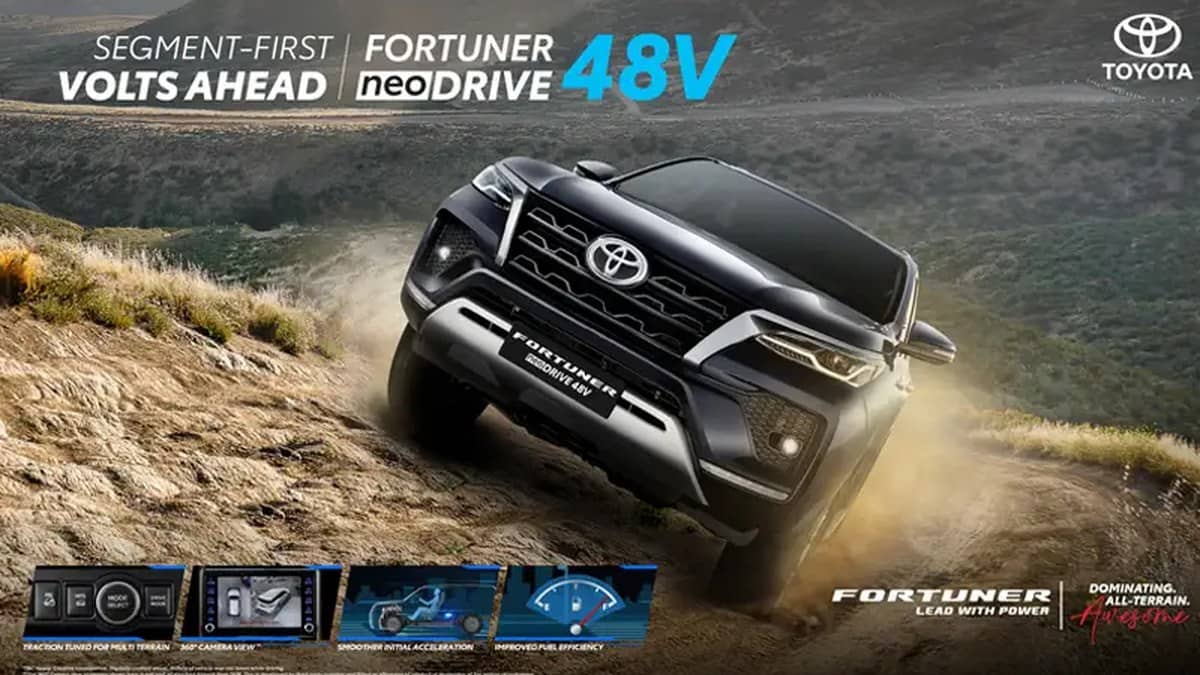

NEW DELHI: Toyota's Urban Cruiser Hyryder AWD uses the NeoDrive petrol powertrain with a six-speed automatic. The current India specification table places the all-wheel-drive option under the V NeoDrive grade, while Toyota's equipment-update announcement explains that the automatic replaced the earlier manual AWD combination. It should therefore be identified by engine family, grade and drivetrain together.
| Item | Hyryder V NeoDrive AWD |
|---|---|
| Engine | 1,462 cc petrol |
| Maximum power | 75.8 kW at 6,000 rpm |
| Maximum torque | 136.8 Nm at 4,400 rpm |
| Transmission | Six-speed automatic |
| Drivetrain description | AWD, also listed as 4WD in the table |
| Published fuel efficiency | 19.20 km/l |
| Seats | Five |
Why the gearbox description matters
Toyota announced the AWD transmission change on 7 April 2025. Its release specifically says the six-speed automatic replaces the previous five-speed manual in that variant. That dated announcement helps explain why an older brochure or an older owner's account may describe a different combination. It is a historical change, not a fresh launch being announced tonight.
The current specification page is the more useful reference for identifying today's listed configuration. It shows a manual for two-wheel-drive NeoDrive versions and an automatic option across the relevant drivetrain combinations. An advertisement that merely says Hyryder automatic leaves an important question unanswered: which automatic powertrain and which driven wheels does the vehicle actually have?
NeoDrive and strong hybrid are separate choices
The AWD entry belongs to NeoDrive. Toyota separately lists the strong-hybrid powertrain with e-Drive and two-wheel drive. These names describe different configurations, even though both appear within the Hyryder family. Selecting the most prominent hybrid claim from the model's advertising will not identify the AWD car's mechanical specification.
This distinction is unusually important for the Hyryder. Its model name brings together an efficiency-led strong hybrid and a petrol range that includes the AWD option. A reader researching the hybrid for city use could easily carry the wrong assumptions into an AWD enquiry. Start a comparison by copying the complete powertrain description, then build the equipment checklist around that version.
Our Hyryder strong-hybrid fuel-efficiency explainer deals with the other configuration. Its economy headline should stay attached to the powertrain for which Toyota publishes it.
Compare like with like on economy
For NeoDrive, Toyota's table lists 20.58 km/l for the two-wheel-drive automatic and 19.20 km/l for the AWD automatic. Those are published certification figures, not the result of a road test by this publication. They show why the drivetrain entry must remain attached to an economy claim. The automatic gearbox label alone does not produce a single figure for the range.
For an Indian household, the useful comparison begins with the route. Consider whether the reason for examining AWD is a recurring access problem or simply interest in a higher specification. Then examine the automatic experience separately in ordinary traffic. That approach keeps traction requirements, cabin comfort and fuel use visible instead of compressing every decision into the badge on the tailgate.
What to check on the V specification
Toyota's V NeoDrive listing includes a drive-mode switch for AWD and identifies hill-descent assistance as AWD-only. These details help distinguish drivetrain-related functions from the comfort equipment shown elsewhere on the page. Ask for those controls to be explained on the exact vehicle being demonstrated, rather than assuming that every display car represents the intended version.
A practical demonstration should follow the family's actual questions. Check whether the driver can identify the controls, understand the indications and return to the normal operating setup. A long list of assistance systems is less useful if their operation remains unclear. The official specification establishes that equipment is listed; it does not replace the operating instructions for using it.
The V NeoDrive specification also lists 215/60 R17 tyres and a tyre repair kit. Those are useful details to include in a journey-preparation checklist alongside the AWD controls. Traction equipment and the provision for a puncture concern different problems, so the presence of AWD should not replace checking what tyre equipment the vehicle carries.
Who this combination is for
The AWD automatic is relevant to someone specifically examining the petrol Hyryder's traction configuration while wanting an automatic gearbox. Readers primarily researching the strong hybrid need a separate comparison. Neither enquiry is answered by choosing an exterior colour package, and neither should begin with a fuel-efficiency number taken from a different powertrain.
The Hyryder Aero Black package guide covers a separate accessory question. Our Toyota Taisor transmission guide concerns another model. A styling package or another Toyota model's variant descriptions do not establish the drivetrain of an individual Hyryder.
Before accepting a quotation, have V NeoDrive, automatic transmission and AWD written together in the specification. That creates a clear record for checking the delivered car and avoids relying on a broad model description.
Official sources: Toyota Hyryder specifications and the dated transmission-update announcement.