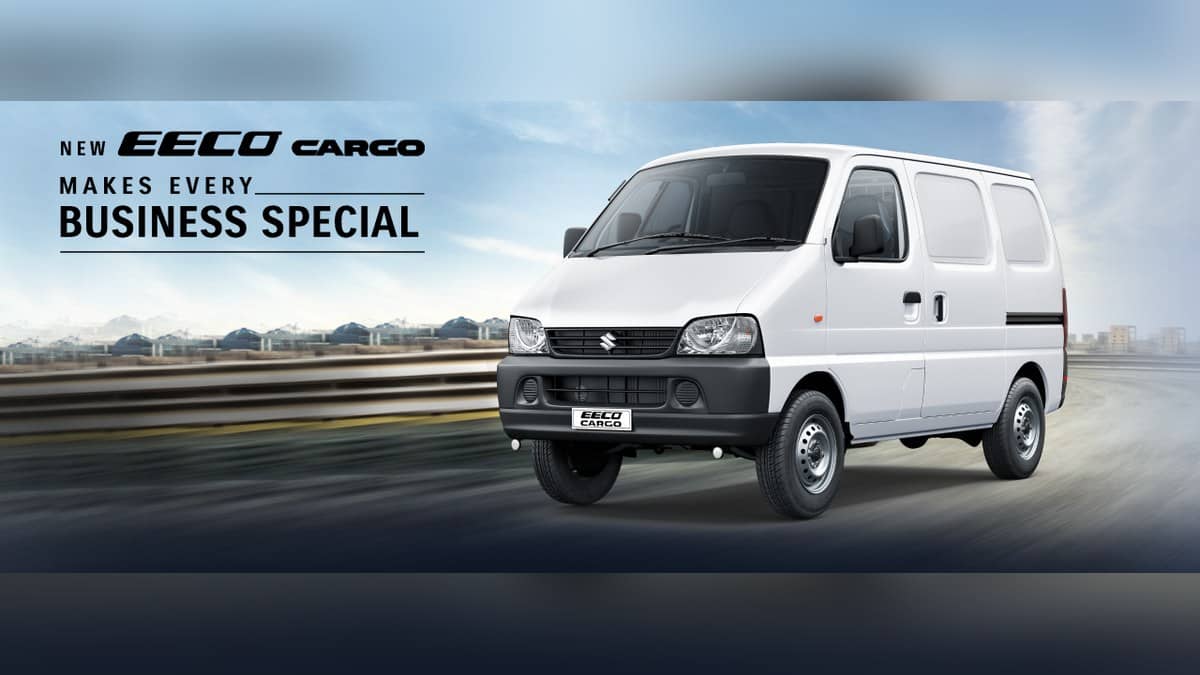
NEW DELHI: Maruti Suzuki lists the Eeco Cargo petrol van at 3,675 mm long, 1,475 mm wide and 1,825 mm high, with seating for two. Those are vehicle dimensions. They should not be used as the dimensions of a parcel that can fit inside its covered goods compartment.
| Specification | Eeco Cargo petrol |
|---|---|
| Overall length | 3,675 mm |
| Overall width | 1,475 mm |
| Overall height | 1,825 mm |
| Wheelbase | 2,350 mm |
| Turning radius | 4.5 m |
| Seating capacity | 2 |
| Engine | 1,197 cc K12N petrol |
| Transmission | 5-speed manual |
The body envelope answers only part of the loading question
Overall dimensions help describe the vehicle that must reach a delivery point. They do not describe the clear space between interior surfaces, the shape of the load floor or the opening through which goods must pass. For a business carrying rigid cartons, those differences can determine whether a planned consignment is practical.
Maruti's commercial page describes a covered cargo cabin and flatbed. That establishes the basic format: an enclosed goods area rather than an open pickup deck. It does not provide permission to treat the van's external width or height as unobstructed internal cargo clearance. Measure the relevant space on the actual vehicle.
Start with the largest rigid package that the route requires. Check its route through the loading opening, then its final position inside. A parcel may fit within an imagined rectangular box yet fail at the doorway or require an orientation that blocks access to the remaining goods. Those checks belong to loading preparation.
Passenger seats and cargo space serve different jobs
The official petrol specification lists seating for two. That is an important distinction from passenger Eeco versions and the Tour passenger range. For this cargo model, plan the people who need to travel separately from the space needed for goods. Do not infer extra passenger accommodation from the size of the covered rear compartment.
A useful loading plan should also preserve access for the driver and co-driver. Work out how deliveries will be removed in sequence, rather than filling every visible gap. For a van serving several stops, a package buried beneath the rest of the load can turn an otherwise workable arrangement into repeated unloading.
Choose the correct specification column
Maruti names petrol, CNG and CNG AC versions of Eeco Cargo. The dimensions table above comes from the petrol specification displayed on the official page. Keep that identification attached to the figures when sharing them with a driver, fabricator or colleague responsible for planning a vehicle's daily work.
The same petrol table gives a 32-litre fuel tank. A tank capacity is a fuel-system specification, not a measure of goods volume. Likewise, the engine's output or displacement does not establish how much cargo can be carried. Use the vehicle's applicable loading documentation for weight limits instead of deriving them from unrelated specifications.
This guide deliberately does not turn the external measurements into a cargo-volume figure. Doing so would assume the entire body is an empty rectangular compartment, ignoring the cabin and internal structure. It would produce a precise-looking result that does not describe the usable loading area of the Eeco Cargo.
Check the route as well as the package
The published turning radius is another planning input, but it cannot settle every access question. A real loading location may have parked vehicles, a narrow approach or an awkward gate. Check the intended stopping and unloading position rather than assuming a compact external footprint guarantees a convenient approach to every delivery point.
The commercial page lists reclining front seats, a sliding driver seat and a cabin air filter for the AC version. These details are relevant to the working cabin. They should be checked against the chosen variant, particularly when an operator is comparing a description of the range with an individual vehicle's equipment.
For Eeco Cargo, the useful distinction is straightforward: external size, passenger accommodation and usable goods space answer different questions. Record each separately. An actual package-fit check, supported by the correct variant's loading documents, is more dependable than treating the overall dimensions as a promise that any smaller object will fit.
Related reading: Eeco passenger version prices; Super Carry configurations explained; Commercial pickup price comparison.
Official sources: Eeco Cargo specifications and Maruti Suzuki Commercial Eeco Cargo features.