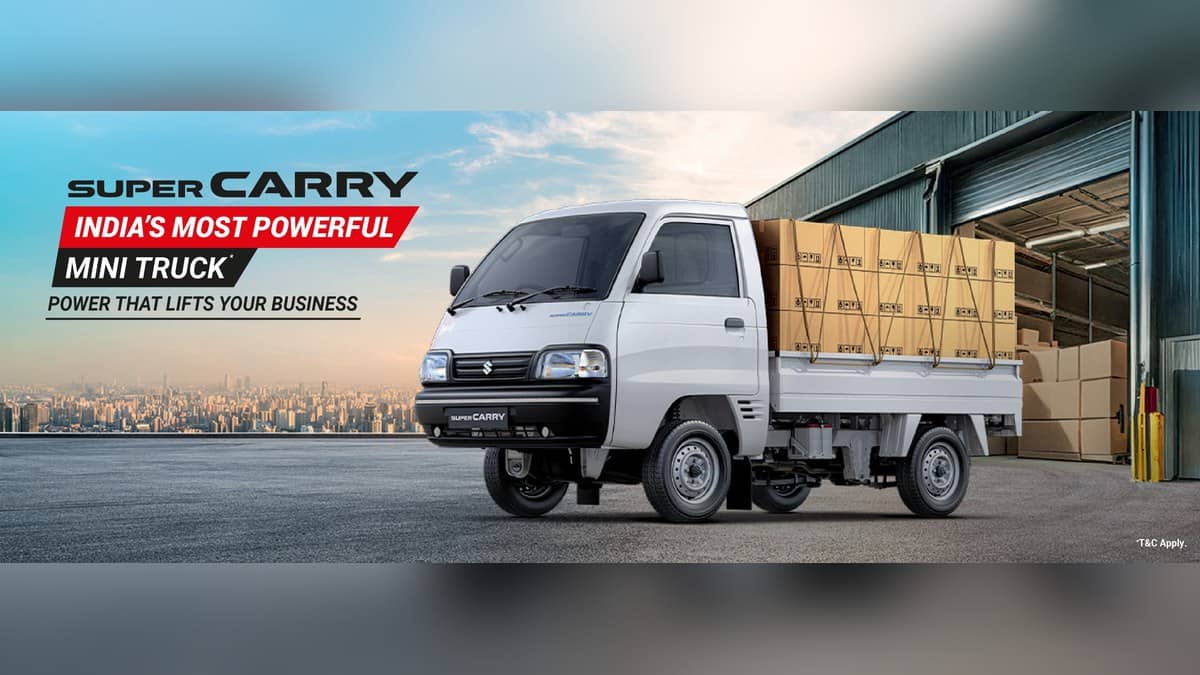
NEW DELHI: Maruti Suzuki lists four Super Carry configurations: Petrol STD, Petrol Cab Chassis, CNG STD and CNG Cab Chassis. Read the fuel type and body description together before comparing quotations. The manufacturer's published load figures also differ: 750 kg for the petrol version and 630 kg for CNG, so the Super Carry badge alone does not identify the working specification.
| Official variant name | Fuel | Body description to match on the quotation |
|---|---|---|
| Petrol STD | Petrol | Standard deck vehicle |
| Petrol Cab Chassis | Petrol | Cab chassis |
| CNG STD | CNG | Standard deck vehicle |
| CNG Cab Chassis | CNG | Cab chassis |
Read the complete name before the equipment list
The four entries represent a fuel choice combined with a body choice. They should not be read like a passenger car's ladder of increasingly expensive trim levels. The standard deck and cab chassis versions answer different body requirements, while petrol and CNG bring different engine outputs and loading figures.
For a delivery operator, this means the first comparison should be between equivalent configurations. Put a petrol deck quotation beside another quotation for that same configuration. If one document says cab chassis and another includes a completed cargo body, establish what each total actually covers before treating the difference as a vehicle discount.
Maruti's own specification display illustrates why the suffix matters. When Petrol Chassis is selected, the deck length, width and height fields are marked unavailable. A buyer planning an enclosed delivery body should therefore request the proposed body's dimensions and specification separately. Dimensions shown for a deck vehicle should not be carried across to a different body without confirmation.
Keep the petrol and CNG figures in separate columns
The petrol specification lists a 1,197 cc K-Series Dual Jet, Dual VVT engine producing 59.4 kW, or 80.7 PS, at 6,000 rpm. The dedicated CNG page gives 52.7 kW, or 71.6 PS, at 6,000 rpm. Both official pages describe a five-speed transmission. The fuel suffix therefore changes more than the name on the filling-station receipt.
Maruti's product FAQ gives maximum loading capacities of 750 kg for petrol and 630 kg for CNG. Keep those figures attached to the relevant fuel version. For a cab chassis that will receive a separate body, ask for the final approved load specification with that body fitted instead of assuming the advertised figure is unchanged.
This is a particularly useful distinction for a Super Carry carrying a regular consignment of milk cans or packaged groceries. A load that fits physically into a proposed box is not automatically within the vehicle's rated capacity. Prepare a consignment list with weights as well as package dimensions, and have the completed vehicle specification checked against both.
The CNG petrol tank has a specific role
The CNG page describes a 5-litre emergency petrol tank. Treat the word emergency as part of the specification. It should not be confused with the 30-litre tank listed for the petrol chassis version, or used to assume that the CNG model provides the same petrol operating arrangement.
Before delivery, ask for a demonstration of the fuel controls and an explanation of the relevant instructions in the vehicle handbook. Also identify the intended CNG refuelling stops on the operating route. The presence of emergency petrol capacity answers one question about the vehicle; it does not answer every question about a particular delivery schedule.
Check safety equipment against the actual vehicle
Maruti's official ESP announcement describes ABS, electronic brake-force distribution and traction control among the system's functions. The current commercial product page also lists ESP and an engine immobiliser. Ask the handover staff to identify the warning lamps and explain their normal behaviour using the handbook supplied with the truck.
For related operating context, see our reporting on Delhi goods-vehicle entry rules and commercial vehicle registrations. Neither replaces checking the specific fuel and body description on a Super Carry order.
Finally, obtain an itemised quotation naming the exact variant and any body work. If finance is involved, our vehicle-loan paperwork guide is a useful companion. Keep a copy of the agreed configuration with the invoice so the delivered truck can be checked against the order.
Official sources: Super Carry CNG, Super Carry specifications and FAQs and Super Carry variant page, checked on 27 October 2026.