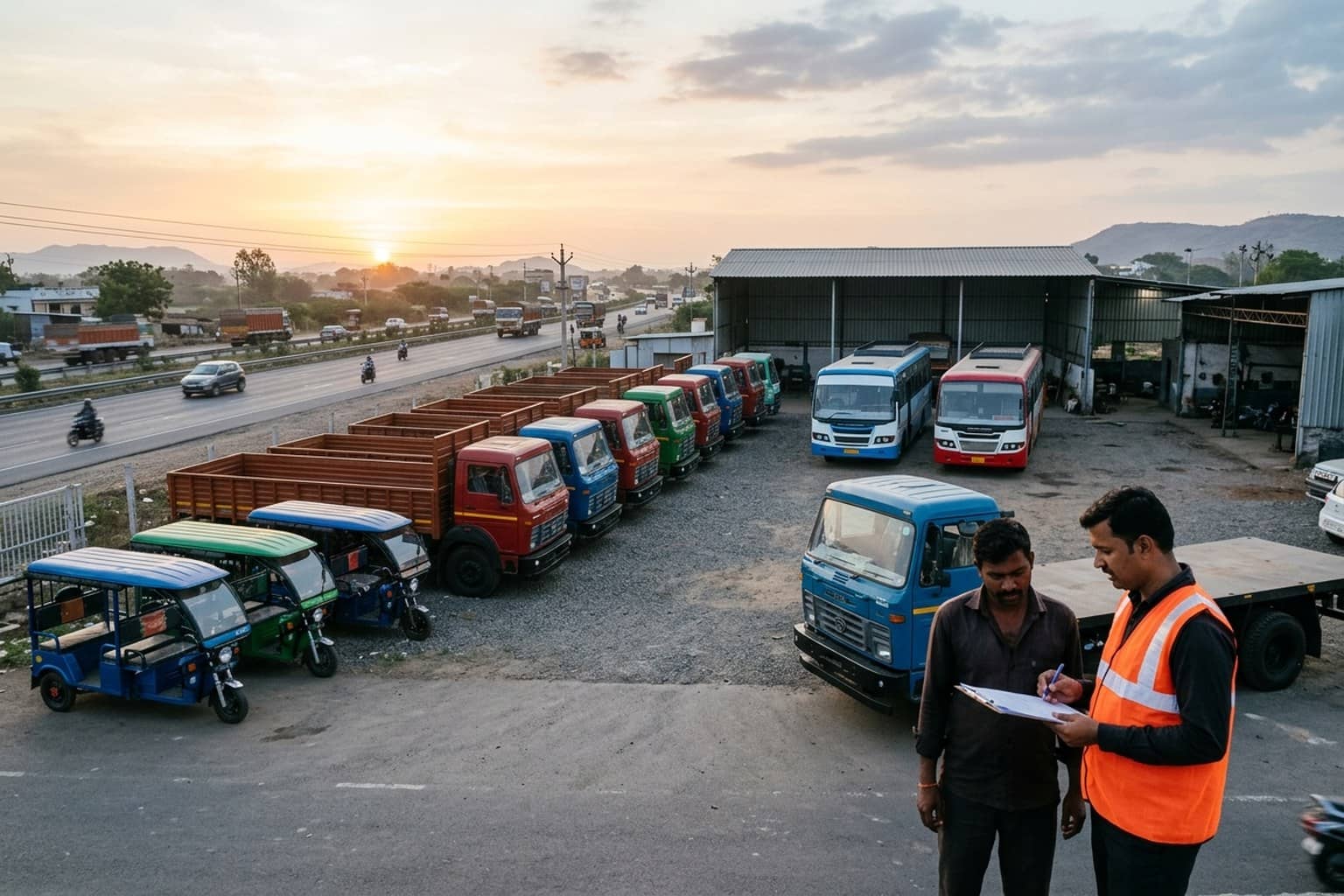
NEW DELHI: Commercial vehicle registrations in India crossed one lakh in a September for the first time, with 1,03,557 trucks, buses and pickups registered last month, according to retail data released by the Federation of Automobile Dealers Associations (FADA) on 6 October.
That is 37.62 percent more than in September 2025 and 14.09 percent more than in August. Three-wheelers also had their best September, with 1,32,570 registrations, up 22.25 percent. Close to two in three of those three-wheelers were electric.
Heavy trucks lead the jump
Heavy commercial vehicles grew the fastest. Registrations rose to 32,310 units, up 46.22 percent over last year and 21.28 percent over August. Light commercial vehicles, the segment that includes small goods carriers and pickups, reached 62,398 units, up 34.13 percent. Medium commercial vehicles were up 33.96 percent at 8,789 units.
Dealers gave FADA a long list of reasons. They pointed to the GST 2.0 cut and replacement demand, infrastructure and mining work, bulk fleet purchases to move steel and cement, higher rural incomes, buying ahead of the price increase due in October and the usual rush to close the half year. Rural registrations grew 40.44 percent, faster than the 35.15 percent seen in cities.
Tata stays ahead in trucks and buses
Tata Motors registered 35,931 commercial vehicles for a 34.70 percent share, up from 32.49 percent a year ago. Mahindra and Mahindra, including its last mile mobility arm, was second with 27,677 units, though its share fell to 26.73 percent from 29.23 percent.
Ashok Leyland, including Switch Mobility, registered 19,223 units, and VE Commercial Vehicles, which makes Eicher trucks and buses, registered 8,309. Maruti Suzuki's commercial vehicles came in at 4,352, followed by Force Motors at 2,301, Daimler India Commercial Vehicles at 2,077 and SML Mahindra at 1,286.
Diesel still powers 80.76 percent of commercial vehicles registered in India. CNG has 12.07 percent and electric models 4.04 percent, up from 2.16 percent a year ago but lower than the 5.18 percent seen in August. Mahindra's own dispatch figures for the month are in our report on Mahindra trucks and buses in September. Fleet owners in the capital region are also dealing with the end of entry for older goods vehicles, covered in our story on the BS-IV deadline of 31 October.
Electric three-wheelers keep growing
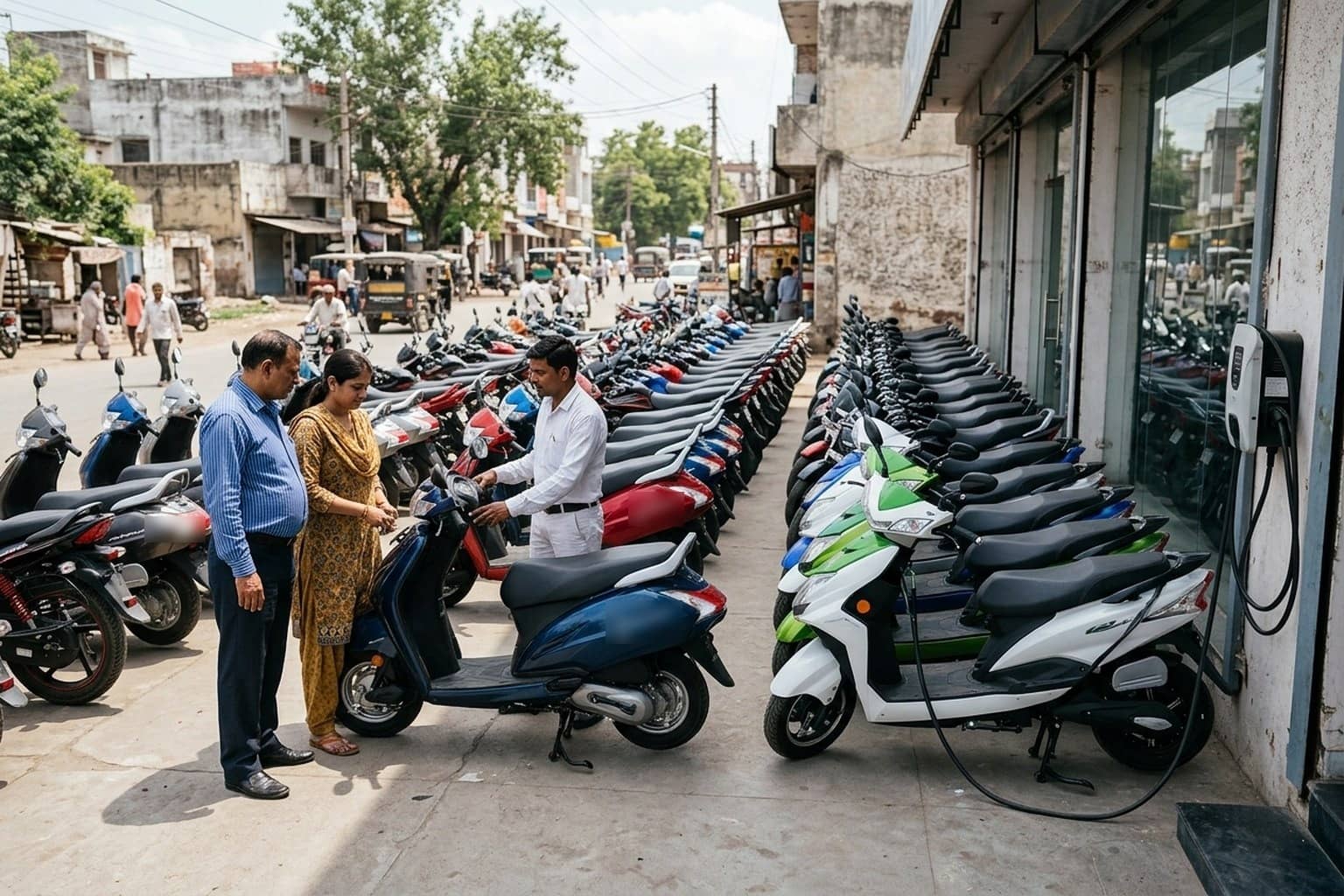
In three-wheelers, electric models made up 64.90 percent of registrations, against 56.65 percent a year ago. CNG's share fell to 21.91 percent from 32.43 percent, a sign of how quickly the auto stand is changing. Passenger three-wheelers, the autos most people take to work or the station, rose 37.64 percent to 80,023 units. Goods three-wheelers grew the fastest, up 63.48 percent to 16,456.
The one category that shrank was the passenger e-rickshaw. Its registrations fell 13.35 percent to 29,522 units, even as e-rickshaws with goods carts rose 6.25 percent to 6,409.
Bajaj Auto stayed the largest three-wheeler maker with 46,680 units, but its share dropped to 35.21 percent from 40.06 percent. Mahindra Last Mile Mobility grew about 71 percent to 15,221 units, and its share rose to 11.48 percent from 8.20 percent. Piaggio Vehicles registered 9,185, TVS Motor 7,740 and Atul Auto 2,982.
Tractors the soft spot
Tractor registrations were 76,906 units, up 13.75 percent over last year but down 12.58 percent from August. FADA says the monsoon failed in parts of the country and the festive calendar falls later this year. Mahindra's tractor arm was the largest seller with 18,223 units. Its own dispatch numbers are in our Mahindra tractor sales report.
FADA notes in its September 2026 retail data release that registration data for three-wheelers, commercial vehicles and tractors was not available for Telangana in September, so the national totals leave that state out. For the first half of FY27, from April to September, commercial vehicle registrations stood at 5,85,217, up 21.48 percent, and three-wheelers at 7,48,009, up 14.98 percent. For October, the federation expects commercial vehicle demand to stay firm on freight, infrastructure work and a healthy enquiry pipeline.