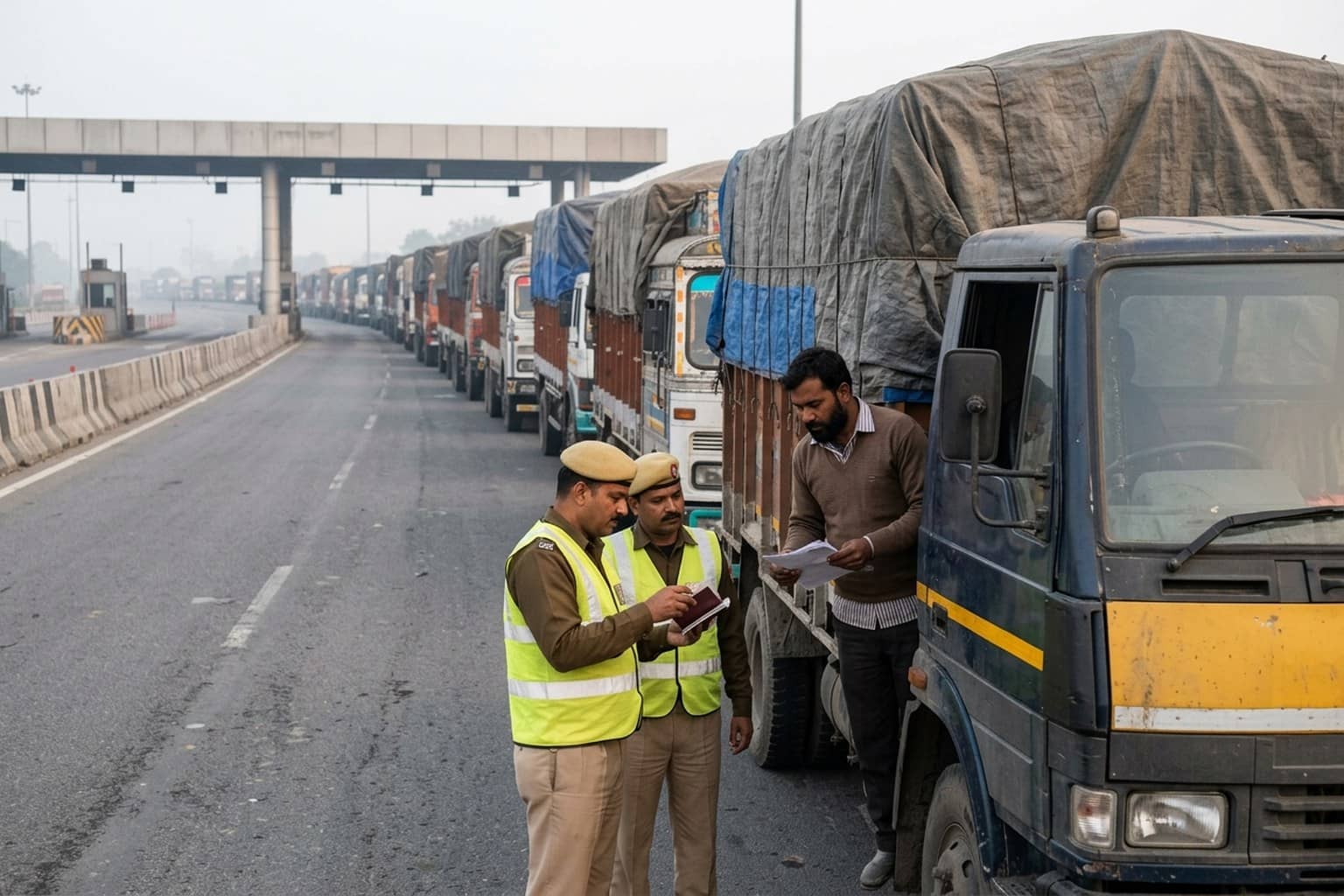
GURUGRAM: Transporters in Gurugram, Faridabad, Noida, Ghaziabad and the rest of the National Capital Region have a little over three weeks left to run BS-IV goods vehicles into Delhi. Under the Commission for Air Quality Management's amended Direction No. 88, BS-IV light, medium and heavy goods vehicles registered outside Delhi are allowed to enter the city only until 31 October 2026.
From 1 November 2026, unless the Commission issues a fresh order, only BS-VI, CNG, LNG and electric commercial goods vehicles from outside Delhi will be allowed in. For fleet owners still running BS-IV trucks and tempos on Delhi routes, the time to plan is now, not in the last week of October.
What the rule says
The decision was taken at the 25th meeting of the full Commission on 17 October 2025, chaired by CAQM Chairperson Rajesh Verma, according to the official release issued by the Press Information Bureau.
The Commission reviewed Direction No. 88 of 23 April 2025 after the Supreme Court, in its order of 26 September 2025, lifted the exemptions earlier given to vehicles carrying essential commodities. Following that order, the CAQM directed a strict ban on the entry into Delhi of any commercial goods vehicle, meaning LGVs, MGVs and HGVs, other than BS-VI, CNG, LNG and electric vehicles, with effect from 1 November 2025. Vehicles registered in Delhi were kept out of this ban.
At the same time, the Commission allowed all BS-IV commercial goods vehicles to keep entering Delhi until 31 October 2026 "as a transitional measure". It also directed enforcement agencies to monitor border entry points closely.
In plain terms, BS-III and older goods vehicles from outside Delhi have been barred since last November. BS-IV vehicles got one extra year, and that year ends this month.
Who is affected
The rule hits small operators hardest. Plenty of the light commercial vehicles that bring vegetables, milk, building material and parcels into Delhi every night are registered in Haryana, Uttar Pradesh and Rajasthan, and some of them are BS-IV pickups and tempos bought before April 2020, when BS-VI became mandatory for new vehicles across India.
Warehouses and logistics parks along the Delhi border, in places like Gurugram, Manesar, Kundli and Ghaziabad, also depend on trucks that cross into the city. If a BS-IV truck cannot enter Delhi after 31 October, loads may have to be shifted to a BS-VI, CNG or electric vehicle at the border, which adds cost and time.
The rule is about entry into Delhi. It does not by itself stop a BS-IV goods vehicle from running within Haryana or Uttar Pradesh, but owners should check their own state's rules and any NCR-wide curbs separately.
What owners can do now
First, check the emission norm on your registration certificate. The fuel and emission details are printed on the RC and can also be checked on the Parivahan portal using the registration number.
Second, if a vehicle is BS-IV and runs on Delhi routes, decide in October whether to replace it, move it to non-Delhi routes, or switch to a BS-VI, CNG or electric vehicle for city deliveries. Commercial vehicle demand has been rising this year. Mahindra's truck and bus business, for example, reported a 53 percent jump in September sales, as we covered in our report on Mahindra truck and bus sales.
Third, keep the Pollution Under Control certificate valid. Separate from this entry rule, NCR authorities have been tightening checks at fuel stations and on roads during winter. Our earlier report explains the no PUC, no fuel plan for Gurugram and what it means for vehicle owners.
GRAP curbs apply separately
The 31 October date is not the only restriction to watch. When air quality worsens, curbs under the Graded Response Action Plan, known as GRAP, can restrict older diesel goods vehicles in Delhi and NCR for days at a time, regardless of this transitional window. Transporters should follow the GRAP stage announced by the CAQM during the winter months.
On end-of-life vehicles, the same CAQM meeting kept Direction No. 89, about removing older vehicles from large fleets, in abeyance until further orders. This followed the Supreme Court's order of 12 August 2025 directing that no coercive steps be taken against owners only on the ground that a diesel vehicle is 10 years old or a petrol vehicle is 15 years old.
Any change to the 31 October date would have to come from the Commission itself. Until then, the official position is the one set out in the PIB release on the CAQM review meeting, and the latest orders are posted on the CAQM website.