No PUC, No Fuel as City Preps Winter Air Plan
GURUGRAM: Vehicles without a valid pollution under control certificate will be denied fuel at petrol pumps in the city this winter, and end-of-life vehicles will face the same bar, after a district coordination review chaired by Municipal Corporation of Gurugram Commissioner Pradeep Dahiya on Monday.
The 13th District Coordination Committee meeting and a linked inter-departmental review locked a package of measures covering fuel stations, construction sites, road sweeping, road repairs and traffic cameras. Officials framed the push as preparation for Graded Response Action Plan stages that the Commission for Air Quality Management typically tightens across Delhi-NCR once winter sets in. CAQM's public orders and notices are posted at https://caqm.nic.in/.
Under the plan, the Regional Transport Authority and the Food and Civil Supplies department will issue binding orders to fuel stations. Pumps are to refuse diesel to vehicles older than 10 years and petrol to those older than 15 years where they fall under end-of-life rules, and to refuse fuel where the PUC is missing or expired. CCTV at pumps is to help flag non-compliant vehicles. Station owners who ignore the orders risk departmental action once the written directions are served.
Monitoring web, sweeping fleet and road targets
The Haryana State Pollution Control Board told the review that 1,054 pollution-emitting sites larger than 500 square metres are under electronic oversight. Web cameras cover 907 locations, and 534 sites carry low-cost air sensors linked to CAQM and HSPCB dashboards. Repeat violators face penalties and then work-stoppage orders. HSPCB's GRAP and CAQM directions page is at https://hspcb.gov.in/page/grap-orders.
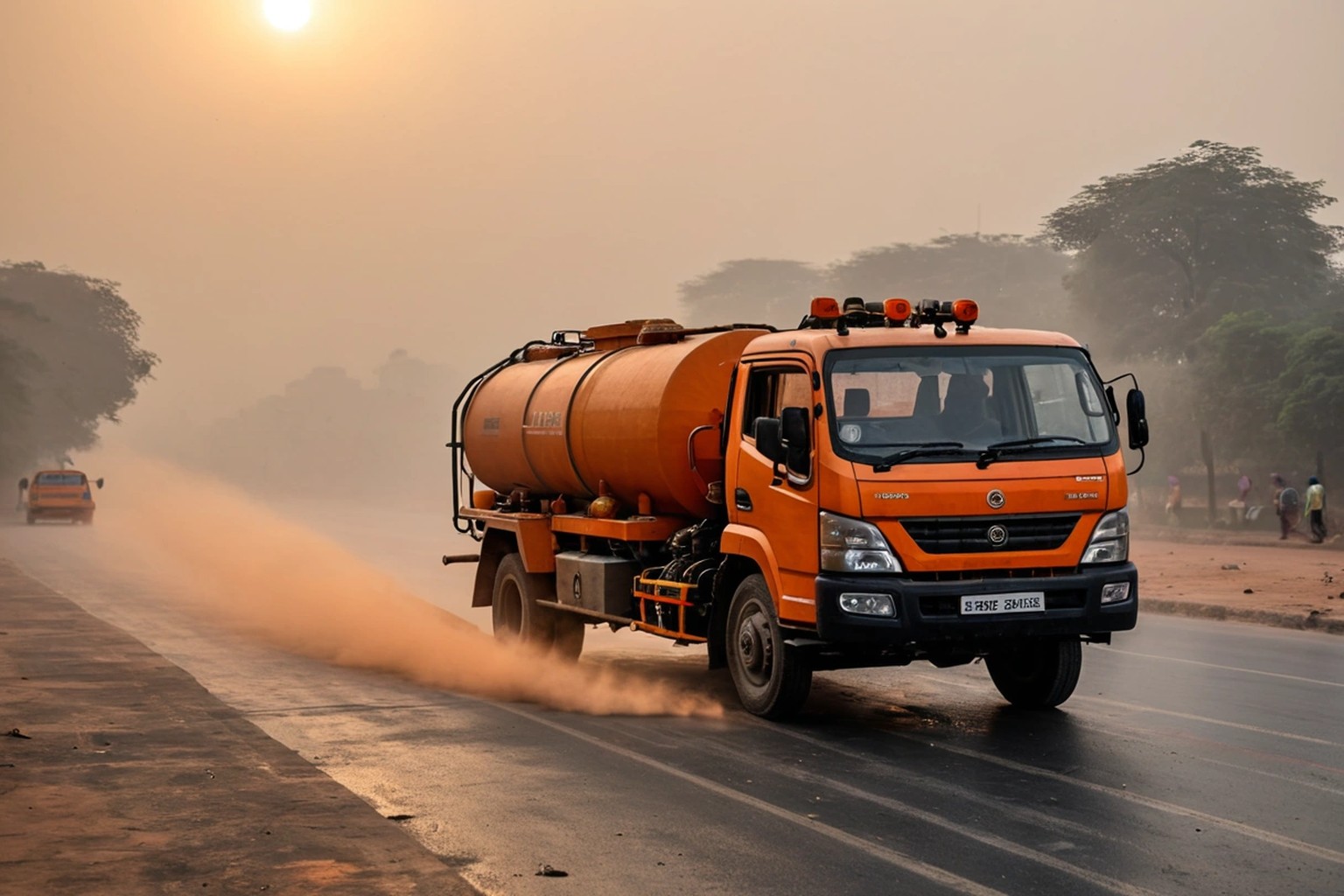
On dust control, MCG reported a 404.61 km mechanised sweeping network. Twenty-four sweepers cover more than 600 lane-km every night between 9 pm and 7 am under GPS tracking. The corporation also listed 40 water sprinklers and a fleet of 10 truck-mounted and three tractor-mounted anti-smog guns for stretches where dry dust lifts fastest after construction and traffic peaks.
Road quality remains a parallel track. Of 2,091 km of MCG roads, 611 km need redevelopment. The 2026 target is 396 km; 179.04 km, or 45.2 percent of that target, is already done, and 162 km meet CAQM benchmark standards. Administrative approval covers 376.72 km, tenders 371.2 km and work orders 335.24 km. Officials said unfinished stretches still throw dust into the evening air and will stay on the weekly review sheet.
Continuous ambient air quality monitoring stations are to rise from three to eight by December. On traffic enforcement, ITMS Phase 2 will place 2,722 cameras at 258 intersections, including about 1,400 automatic number plate recognition units, with 31 bottleneck hotspots marked for closer watch during GRAP windows.
The review did not claim the city has solved winter haze. It set out the tools officials say will be ready when CAQM activates stricter GRAP stages: fuel denial at the pump, site-level camera and sensor watch, nightly sweeping, and a thicker CAAQMS and ITMS net. Residents will feel the fuel-station checks first once the RTA and civil supplies orders land at pumps across the municipal area.
Sources and reporting
District administration and MCG review statements on winter air measures, 29 September 2026; Commission for Air Quality Management (https://caqm.nic.in/); Haryana State Pollution Control Board GRAP and CAQM directions page
Related Stories
Thar Driver Held After Dwarka Expressway Crash
Police Raze Narco Accused House, Seal Another
DGP Flags 15-20 Overseas Gangsters, Opens New PS

Deputy Mayor Quits F&CC Seat; Poll on Oct 1
DGP Admits Lapses in Manchanda Body Handling