NEW DELHI: Honda Motorcycle and Scooter India sold more two-wheelers to retail customers than anyone else in September 2026, finishing 34,509 units ahead of Hero MotoCorp in a month when Indians registered 17,90,188 new two-wheelers. The numbers come from the Federation of Automobile Dealers Associations (FADA), which released its monthly retail data on 6 October.
Two-wheeler retail rose 33.08 percent over September 2025 and 4.41 percent over August. FADA says it was the best September on record and 15.3 percent above the pre-Covid September peak of 2018. The figures in FADA's September 2026 retail data release cover 1,468 of the country's 1,469 RTOs.
Honda leads, TVS gains share
Honda registered 4,68,789 two-wheelers for a 26.19 percent share, up from 25.24 percent a year ago. Hero MotoCorp registered 4,34,280, a share of 24.26 percent, slightly lower than the 24.57 percent it held a year ago.
TVS Motor Company was third with 3,64,640 units, and its share climbed to 20.37 percent from 19.03 percent. Bajaj Auto registered 1,66,112 vehicles, but its share slipped to 9.28 percent from 10.72 percent.
Royal Enfield and Suzuki Motorcycle India were almost level, at 1,02,226 and 1,01,926 units. India Yamaha Motor registered 64,292. Readers who follow factory dispatches can compare these with TVS Motor's September 2026 sales and with Royal Enfield's own record September dispatches. Retail and dispatch numbers rarely match in a festive month because dealers stock up ahead of demand.
Electric share climbs to 11.58 percent
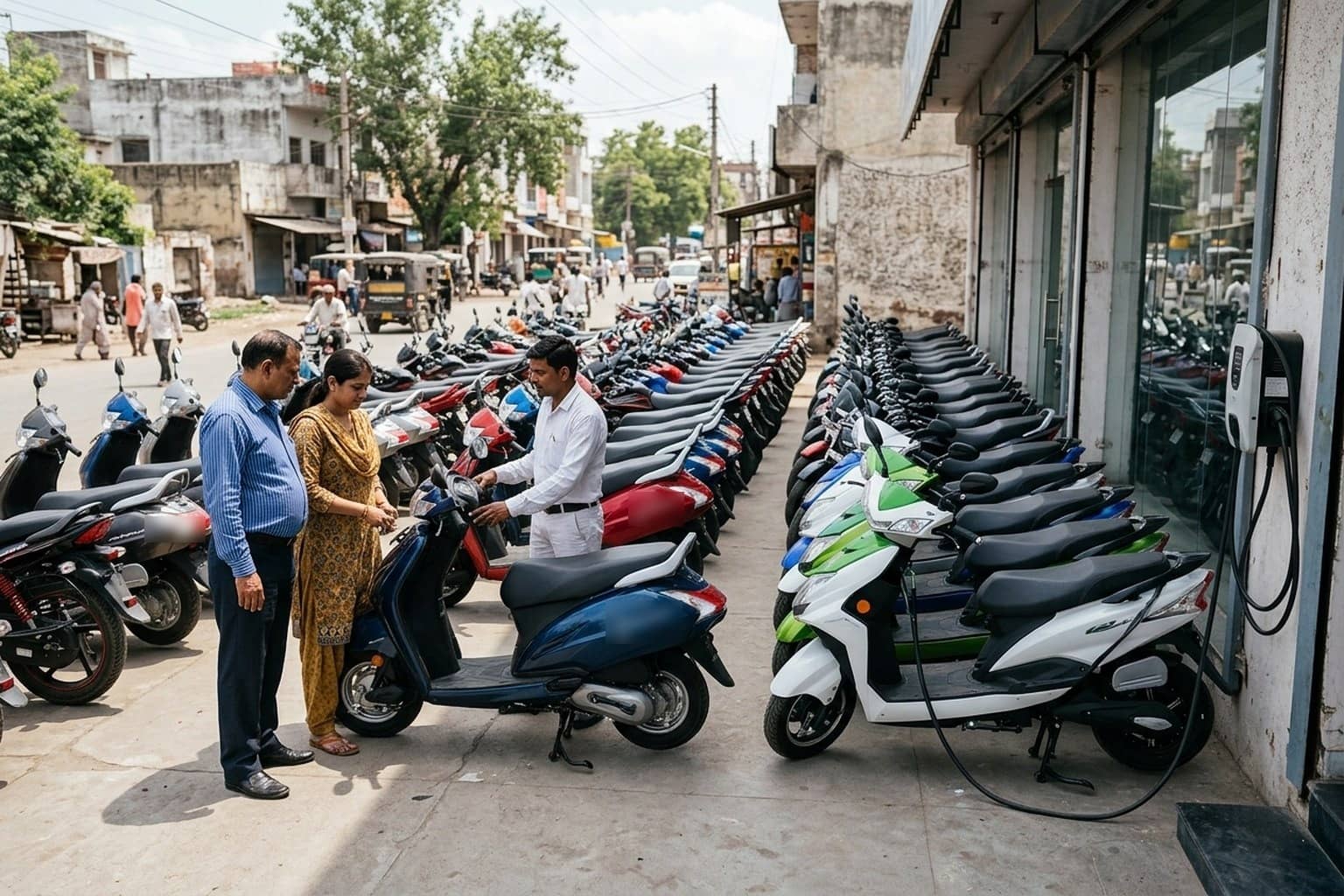
Electric models made up 11.58 percent of all two-wheelers registered in September, up from 10.68 percent in August and 8.17 percent a year ago. Petrol models still account for 88.35 percent, so roughly one in every nine new two-wheelers registered last month was electric.
Among the companies that sell only electric two-wheelers, most posted big gains, with one notable exception. Ather Energy was well ahead with 30,533 registrations, up from 19,620 in September 2025. Ola Electric registered 13,451, slightly fewer than the 13,862 it managed a year earlier, and its share fell to 0.75 percent from 1.03 percent.
Greaves Electric Mobility, which sells Ampere scooters, more than doubled to 9,316 units. River Mobility registered 5,556 against 1,895, BGauss 5,023 against 2,524 and Bounce Electric 3,069 against 895. FADA's company table does not split TVS, Bajaj, Honda or Hero into petrol and electric models, so their electric volumes cannot be read from this release.
Ola's next step is its third-generation S1 range, with deliveries due in November, as we reported in our story on the S1 3rd Gen. For buyers comparing electric scooters this season, the central subsidy rules are explained in our PM E-DRIVE guide.
Cities picked up faster in the run-up to the festivals
Growth over last year was almost the same in rural and urban India, at 33.11 percent and 33.06 percent. Month on month, though, cities moved faster, with urban registrations up 5.29 percent against 3.62 percent in rural areas. FADA says the metros were coming back to showrooms ahead of the season.
Dealers told FADA that festive buying in the first half of the month, steady demand from rural and semi-urban areas, a shift towards premium motorcycles and growing interest in electric models drove the numbers. Sales slowed in the last week because of Shraadh, when many families put off big purchases, and some fast-selling models were in short supply.
FADA also cautions that September 2025 was unusually weak because buyers waited for GST 2.0, which took effect on 22 September 2025. That makes this year's percentage jump look bigger than the real trend. From April to September 2026, two-wheeler registrations totalled 1,10,43,407, up 20.43 percent.
What dealers expect in October
FADA expects two-wheeler bookings to turn into deliveries on auspicious days during Navratri, from 11 to 20 October, and Dussehra. It points to rural cash flows and rising interest in electric scooters as support. The risks it lists are a high base from last October, when sales surged after the GST cut, the supply of fast-moving models, October price increases and weak sentiment in areas that got less rain.