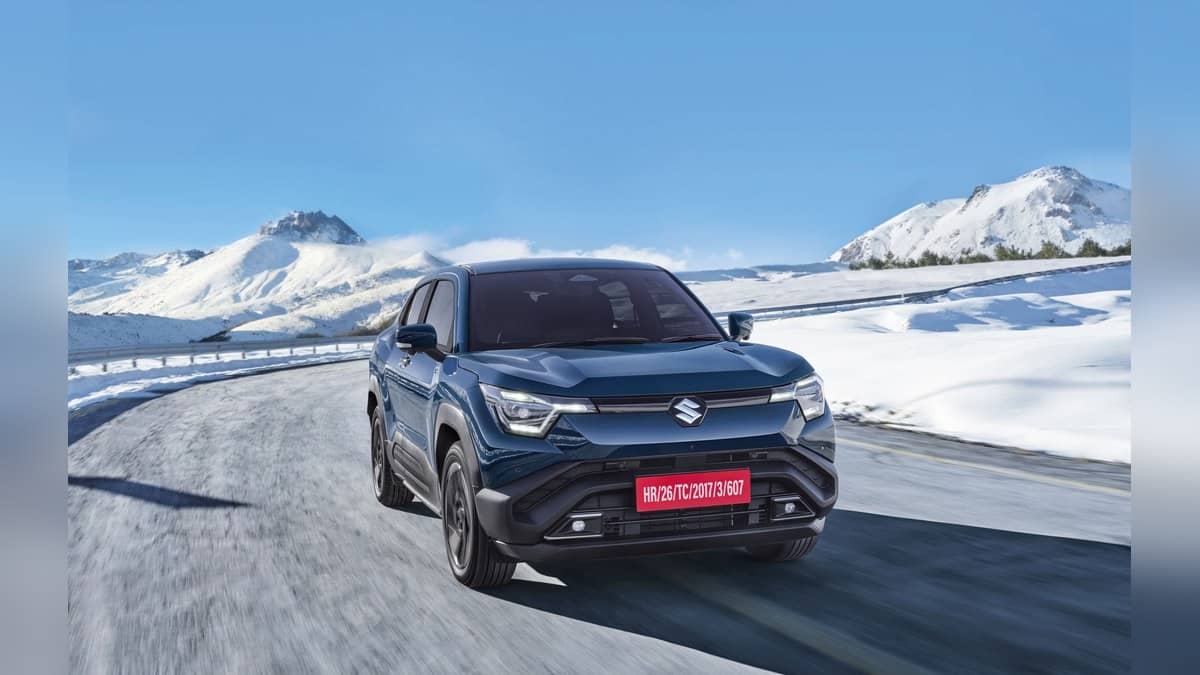
NEW DELHI: Maruti Suzuki's e Vitara launch document specifies battery warranty cover for 8 years or 1,60,000 km, whichever comes earlier. The same document gives the vehicle a separate standard warranty and describes paid additional cover. Owners should identify which certificate applies to the component they want assessed.
| Cover | Published position |
|---|---|
| Traction battery | 8 years or 1,60,000 km, whichever is earlier |
| Standard vehicle warranty | 3 years or 1,00,000 km, whichever is earlier |
| Paid vehicle extension described in the footnote | Up to 5 years or 1,40,000 km, whichever is earlier |
| Later vehicle cover | Optional service activated coverage from the 6th to the 8th year, terms apply |
| Battery options in launch document | 49 kWh and 61 kWh |
The battery term and vehicle term are separate
The distinction matters because a battery warranty headline can easily be read as cover for the entire SUV. Maruti's detailed footnote separates standard vehicle cover, a paid extension and later service activated coverage. Read that footnote alongside the battery term before assuming the same conditions apply to every component.
There is a practical reason to keep the documents separate. A concern about the traction battery, a cabin equipment fault and a question about a paid service package need not be assessed under the same provision. Start by identifying the problem and the applicable certificate, rather than matching every issue to the longest advertised period.
Both the calendar and odometer matter
The words whichever is earlier mean that the battery cover is bounded by time and distance together. An owner should not treat the distance limit as additional running available after the time period expires. Equally, a vehicle reaching the distance ceiling cannot rely solely on remaining calendar time to establish eligibility.
Keep the delivery documents and an up-to-date odometer record with the warranty papers. When asking about a possible claim, request the workshop's assessment against those actual records. A broad description such as still within warranty is less useful than knowing which warranty is being discussed and which limits apply.
Identify the battery version without inventing a capacity promise
The launch document describes the e Vitara's battery options using rounded capacities. The current product material identifies the SUV as a dedicated electric model with its own battery and charging systems. Ensure the vehicle and battery version on the paperwork match the car presented for assessment, particularly if a description has been abbreviated.
A warranty duration alone does not establish a promised remaining battery-capacity percentage. This guide does not assign a degradation threshold, replacement-cost allowance or unconditional battery replacement promise because those terms were not confirmed in the opened Indian warranty statement. Request the relevant contractual wording before relying on such a promise.
Likewise, do not import terms from another country's e Vitara documentation. A similarly named vehicle overseas may be sold under a different aftersales programme. For an Indian owner, the useful evidence is the Indian vehicle's supplied warranty terms and the manufacturer's written assessment of the specific concern.
Describe the symptom, then ask which cover applies
If a battery-related warning appears, record its wording where it is safe to do so and note the circumstances. Keep any diagnostic report provided by the workshop. These are suggested ways to make the conversation precise; they are not a substitute for the car's operating instructions or a new list of warranty conditions.
A change in the distance displayed after charging is a reason to explain the observation clearly, not enough by itself to prove a warrantable defect. Ask for the assessment and its basis in writing. Avoid describing a displayed estimate as a measured battery-capacity test unless that is what the workshop actually performed.
The separate paid vehicle cover also needs its own paperwork. Ask whether it was purchased, which period it covers and what activates any later service-linked protection. Do not assume that buying the SUV automatically includes every optional scheme mentioned in a launch announcement, or that a headline replaces the detailed certificate.
This guide uses the published warranty structure and does not revive introductory charging or finance offers from launch. For the e Vitara owner, the immediate task is to keep battery cover, standard vehicle cover and any optional extension identifiable. That makes a future service discussion much clearer than relying on an undifferentiated promise of long cover.
Related reading: Maruti e Vitara price: Rs 16,19,000 to Rs 20,21,000, range up to 543 km; Charging the e Vitara: what its 45-minute DC claim covers; Maruti Alto K10 price: Rs 3,69,900 to Rs 5,44,900 for all 8 versions.
Official sources: Maruti Suzuki e Vitara release, including warranty footnote and NEXA e Vitara product information.