
NEW DELHI: Audi India's e-tron GT quattro page quotes approximately 22.5 minutes to charge its battery from 5% to 80% using suitable 270 kW DC charging. That is a defined fast-charging window, rather than a full recharge time. At home, the same page lists 11 kW AC charging as standard, with 22 kW requiring optional equipment on the car as well as a matching AC charger.
| Charging detail | Audi's published specification |
|---|---|
| DC charging window | 5% to 80% |
| Claimed time | Approximately 22.5 minutes |
| DC peak capability | Up to 270 kW |
| Electrical architecture | 800 volts |
| Standard AC capability | 11 kW |
| Optional AC capability | 22 kW, with compatible onboard and external equipment |
Read the charge window before the stopwatch
The starting and finishing percentages are essential parts of the claim. A driver arriving with a different state of charge is not repeating the same session. Nor does reaching the quoted finishing point mean the battery is full. For a journey plan, the useful question is whether the energy added will cover the next leg with an appropriate reserve.
It is also a peak-power figure. A charger displaying the same rating does not establish that the car will accept that power throughout the stop. Audi's technical explanation places the result under ideal conditions, while its charging guidance identifies battery condition, temperature, available voltage and state of charge among the variables that affect actual charging time.
Temperature is part of the GT's charging system
Audi's technical material describes the connection between the e-tron GT's battery management and navigation. When a suitable high-power charging station is entered in the e-tron route planner, the system can calculate arrival timing and the heating or cooling needed for the battery. The objective is to reach the charger in a condition suited to accepting high charging power.
That is a specific reason to understand the car's own route-planning functions, rather than treat every navigation display as equivalent. A destination entered in a phone application should not automatically be assumed to trigger the same vehicle functions. Owners should check the installed software, local service availability and the operating instructions for their particular car before relying on preconditioning.
For an Indian highway journey, the practical implication is to verify the actual charging stop before leaving. Check the connector, operational status, access hours and how payment works. A route marker alone does not confirm those details. This is journey-planning context, not a claim that a particular Indian charger has been tested with the e-tron GT.
Home AC charging is a different equipment question
The India page makes the optional arrangement unusually clear: faster AC charging needs both the optional onboard charger and an additional compatible AC charging unit. Installing a wallbox with a higher rating does not itself change what equipment the vehicle has. Before arranging an installation, identify the car's specification and have the proposed electrical supply assessed.
That distinction can prevent an expensive misunderstanding in an apartment or shared parking area. The vehicle order, the charging unit and the building's available supply are separate things to verify. A quotation that describes only the wallbox leaves the onboard capability unanswered. There is no basis here for promising an overnight duration for an installation whose supply and equipment have not been established.
Keep units and model generations straight
The page's charging prose specifies power in kW. Its net battery-capacity field uses kWh. These describe different quantities: the rate of energy transfer and the amount of energy stored. One summary label on the page uses kWh beside the peak charging number, but the surrounding text and Audi's official technical sheet identify the charging capability in kW.
The technical sheet used for that cross-check is explicitly dated for an earlier German-market specification. It is supporting evidence for the units, rather than a substitute India equipment list. Equally, a newer overseas e-tron GT announcement should not silently replace the charging figures on the India page. Match an individual vehicle to its paperwork before applying a specification from another market or generation.
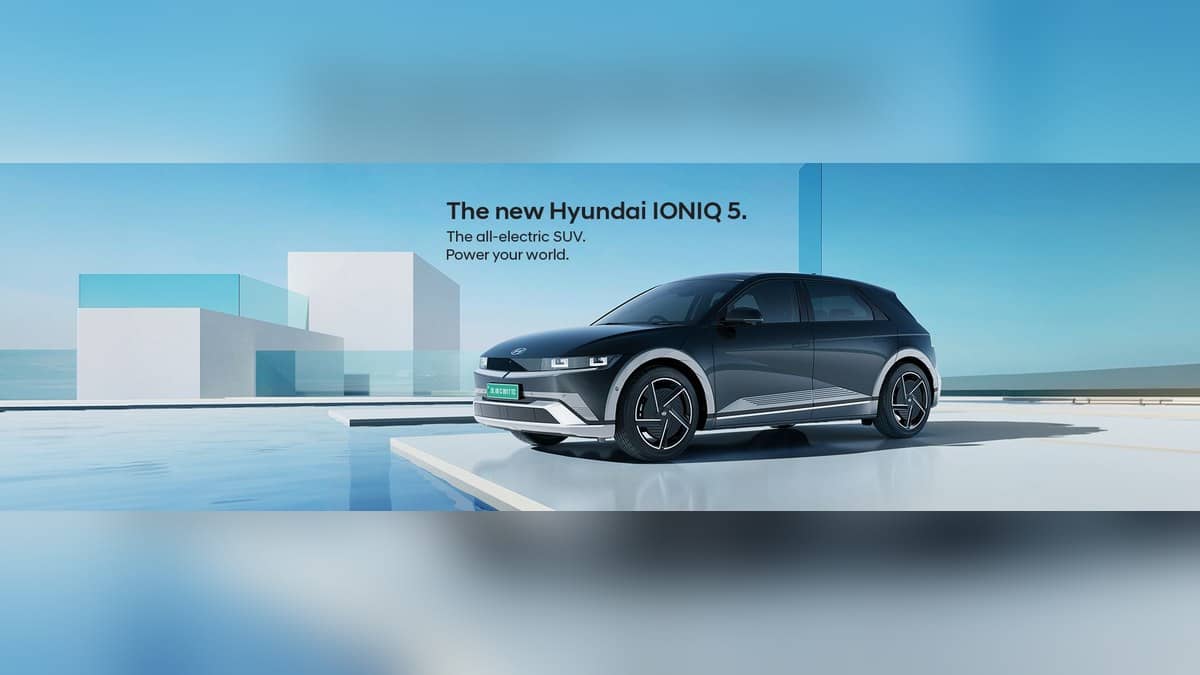
Other ownership questions are covered separately in our Hyundai IONIQ 5 price: Rs 55,70,600 for the 84 kWh RWD version, Kia EV6 price: Rs 65,97,937 starting MSRP and Kia Syros EV price list: Rs 13,49,900 to Rs 19,99,900. Charging speed, battery warranty and general vehicle warranty answer different questions and should remain separate in an ownership plan.
A charging plan should keep the GT's AC and DC capabilities on separate lines. The quoted fast-stop window belongs to DC charging and cannot be carried across to a domestic AC installation.
Official sources: Audi India e-tron GT charging specification, Audi's explanation of predictive preconditioning, Audi charging-condition guidance and dated Audi technical sheet.