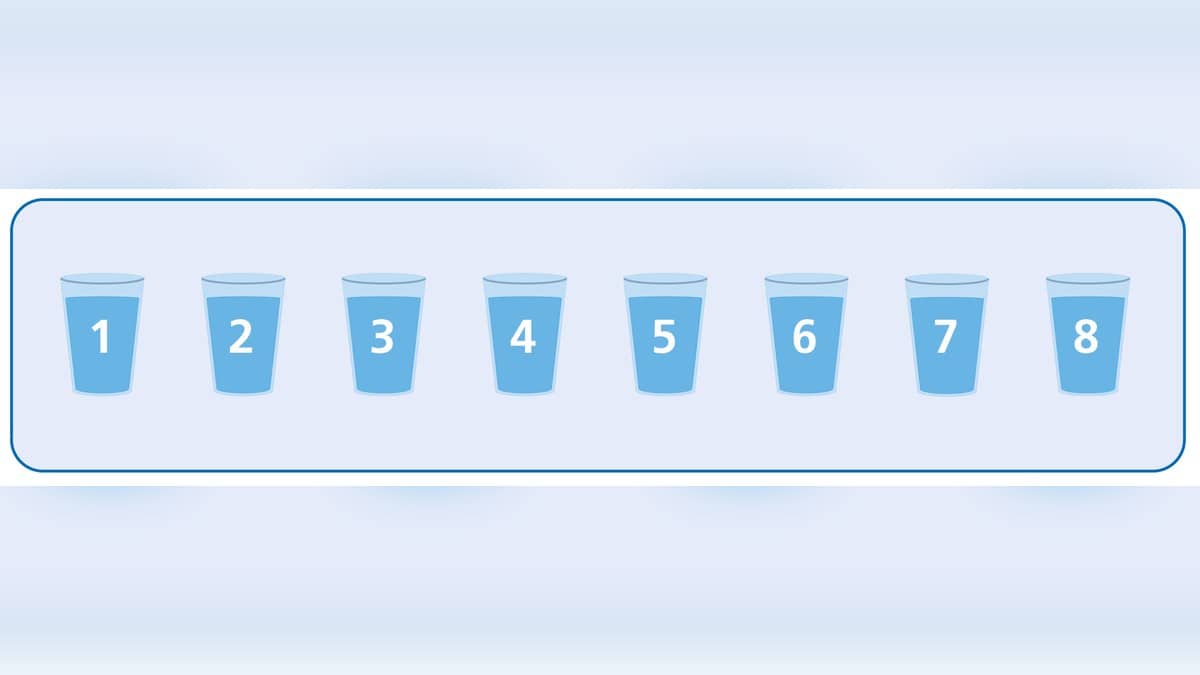
A useful starting guide for daily fluid intake is 6 to 8 cups or glasses, according to the NHS Eatwell guidance. That means fluids from drinks, not an instruction to drink that many glasses of plain water on top of everything else. It is also a guide rather than an exact requirement for every adult, every climate and every medical condition.
King's College Hospital NHS Foundation Trust expresses the same broad guide as 1.5 to 2 litres a day. The national NHS page uses cups and glasses without specifying a universal vessel size. Read the litre figure as the hospital's practical interpretation, rather than assuming that every cup in an Indian kitchen holds an identical amount.
| Common question | What the guidance says |
|---|---|
| Does only plain water count? | No, other drinks contribute |
| Is the number exact for everyone? | No, circumstances change needs |
| Does food contain fluid? | Yes, food contributes too |
| What if a doctor has set a limit? | Follow your healthcare team's instructions |
How much water should you drink in a day?
The NHS water and drinks guide says people may need more fluids in a hot environment, during prolonged physical activity, while pregnant or breastfeeding, or when ill or recovering from illness. These qualifications matter as much as the headline number. A quiet day indoors and a long, sweaty day outdoors are different situations.
For Indian readers, that makes a fixed daily challenge a poor way to interpret the page. The official guidance does not supply one compulsory number of litres for everyone living in India. It also does not give a universal body weight formula on this page. A search result offering a calculator should not be mistaken for an individual assessment by a healthcare professional.
The practical habit in the NHS advice is to drink regularly through the day. Its guidance also points to extra fluids when sweating from physical activity. This does not require finishing a large quantity at a single sitting or forcing the same amount on every family member. Keep the general target connected to the person's circumstances.
Do tea, coffee, milk and food count toward fluid intake?
Yes. The national NHS page includes water, lower fat milk and lower sugar drinks, including tea and coffee, in daily intake. It also notes that some fluid comes from food. Therefore, someone who has already had several drinks should not read the guide as a separate plain water quota that ignores them.
The King's College Hospital hydration page lists soups among fluids and gives fruit, vegetables and yoghurt as examples of foods that contribute water. The distinction is useful when keeping a simple record: write down what you actually drink, while remembering that meals also contribute. The guidance does not ask readers to weigh every water containing ingredient.
Counting as fluid does not make all drinks interchangeable nutritionally. The NHS advises against having high sugar drinks too often and limits fruit juice and smoothies to a combined small glass of 150ml a day, taken with a meal. That is a limit for those drinks, rather than a total daily fluid target. Water remains a straightforward option for routine hydration.
Can urine colour tell you whether you drink enough?
The NHS says most people should aim to drink enough for their urine to be a clear pale yellow. The hospital trust adds a useful limitation: vitamins and medicines can change urine colour. Colour can therefore be a rough everyday clue, but it cannot establish a diagnosis or tell you precisely how many millilitres you need.
The NHS dehydration page identifies thirst, darker urine, urinating less often, dizziness and tiredness among possible symptoms. These are reasons to pay attention, rather than a checklist that proves dehydration in every person. This article does not offer a treatment plan, rehydration recipe or medicine advice.
The same page warns that confusion, breathing difficulties or being unusually sleepy or difficult to wake can accompany a serious problem. Seek urgent local medical help if these occur, rather than trying to meet a daily drinking target and waiting. The general fluid guide is intended for routine habits, not for deciding whether someone is safe during an emergency.
If you have a medical condition or have been given a fluid restriction, consult a qualified doctor about your personal intake and follow your healthcare team's instructions. The hospital explicitly says its guide may vary according to a person's condition or preparation for a procedure. Do not replace an existing medical plan with a number taken from a general article.
For related everyday guidance, see how to read food labels in India, our walking and weekly activity explainer and the guide to adult sleep duration and quality.