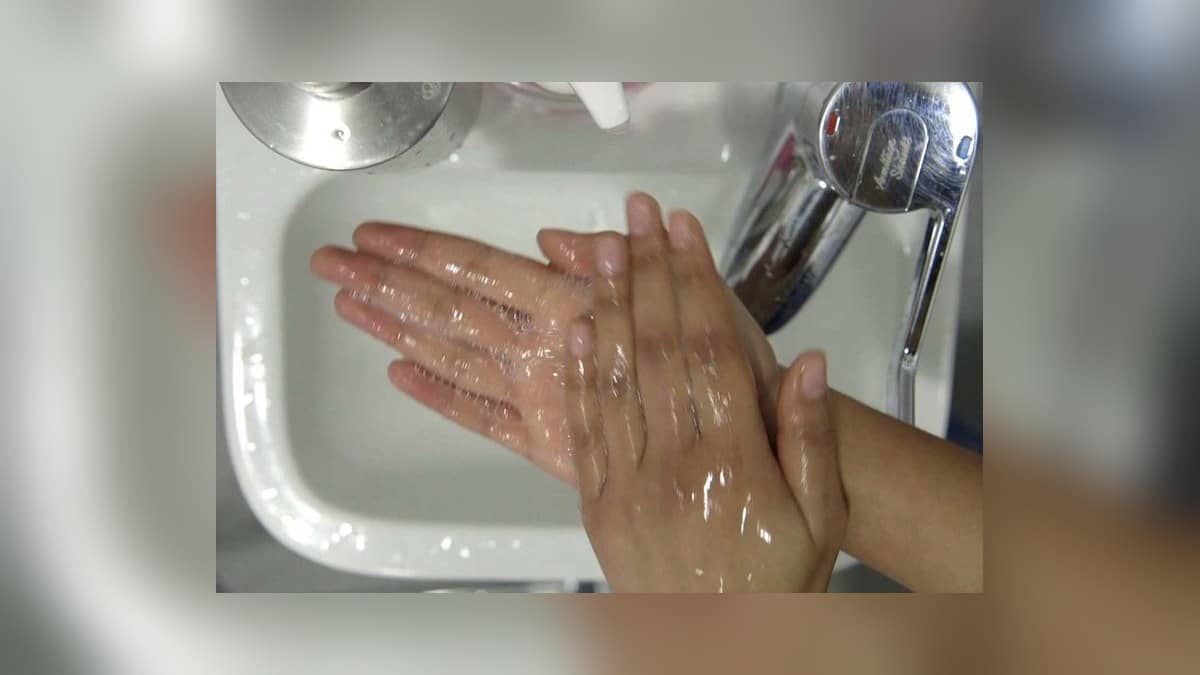
The basic hand washing steps are to wet your hands, apply soap, clean every surface, rinse and dry them thoroughly. Pay attention to the backs of your hands, the spaces between your fingers, your thumbs and your fingertips. These areas are part of the official technique, even though a hurried wash may cover only the palms.
Timing depends on what is being measured. The US Centers for Disease Control and Prevention advises scrubbing for at least 20 seconds. The World Health Organization's illustrated handwashing poster gives 40-60 seconds for the entire procedure. Those figures should be read with their labels: one describes the scrub, while the other includes the complete sequence.
| Source | Time stated | Meaning |
|---|---|---|
| CDC public guidance | At least 20 seconds | Scrubbing hands |
| WHO poster | 40-60 seconds | The entire handwashing procedure |
How to wash your hands properly, step by step
The NHS illustrated guide begins by suggesting that rings and bracelets be removed if possible. Wet your hands with water, apply enough soap to cover them, then rub your palms together. Think about coverage before speed: the purpose of the following movements is to reach the surfaces a simple palm rub can miss.
Place one hand over the back of the other and rub, cleaning between the fingers. Repeat on the opposite hand. Next, bring the palms together with the fingers interlaced so the spaces between them receive attention. Both movements appear in the NHS sequence, because the palm side and back side are separate surfaces to clean.
Grip the fingers of each hand together, with the backs of the fingers against the opposite palm, and rub. Clean one thumb by rubbing it with the other hand, then repeat for the second thumb. Rub the fingertips against the opposite palm and switch hands. This is a practical way to work through the illustrated sequence without treating the thumb or fingertips as optional extras.
Rinse with water and dry completely. The NHS sequence uses a disposable towel and then uses that towel to turn off the tap. The CDC's public instructions allow a clean towel or an air dryer. Follow the available safe drying arrangements at home, school or work, rather than ending the wash with hands still wet.
Is hand washing 20 seconds or 40-60 seconds?
The WHO poster explicitly describes its 40-60 seconds as the duration of the entire procedure. Its panels begin with wetting and applying soap and continue through rubbing, rinsing and drying. It is especially useful as a visual reminder of the movements, rather than a reason to omit any part of them.
The CDC separates the process into wet, lather, scrub, rinse and dry. Its instruction to scrub for at least 20 seconds sits within that sequence. Reading only the two numbers can make the advice sound inconsistent. Reading the actions attached to each number makes the distinction clearer. Neither source supports a quick splash of water as equivalent to the full process.
When should you wash your hands?
According to the NHS, important moments include after using the toilet or changing a nappy, before eating or handling food, and before and after handling raw foods such as meat and vegetables. Washing is also advised after blowing your nose, coughing or sneezing, after contact with animals and their food, and after cleaning animal cages.
The same guide includes washing before and after caring for a cut or wound. For an Indian household, the food handling advice is relevant whether the meal is prepared from vegetables or meat. Do not read the reference to raw meat as meaning that other food preparation is exempt. Use the task you are doing as a reminder to wash.
Where soap and water are unavailable, CDC guidance permits a hand sanitiser containing at least 60% alcohol. It also says soap and water are the better choice in many situations, particularly when hands are visibly dirty or greasy. Sanitiser is therefore a fallback with stated limits, rather than a reason to abandon the washing routine.
If you have a skin condition, a weakened immune system or another medical condition, consult a qualified doctor about the hygiene precautions appropriate to you. This guide describes public hygiene guidance and does not diagnose an infection or prescribe treatment. Follow any additional instructions given by your healthcare team when visiting or caring for someone in a healthcare setting.
For other everyday health routines, read our explainers on reading Indian food labels, adult sleep duration and walking and weekly activity.