
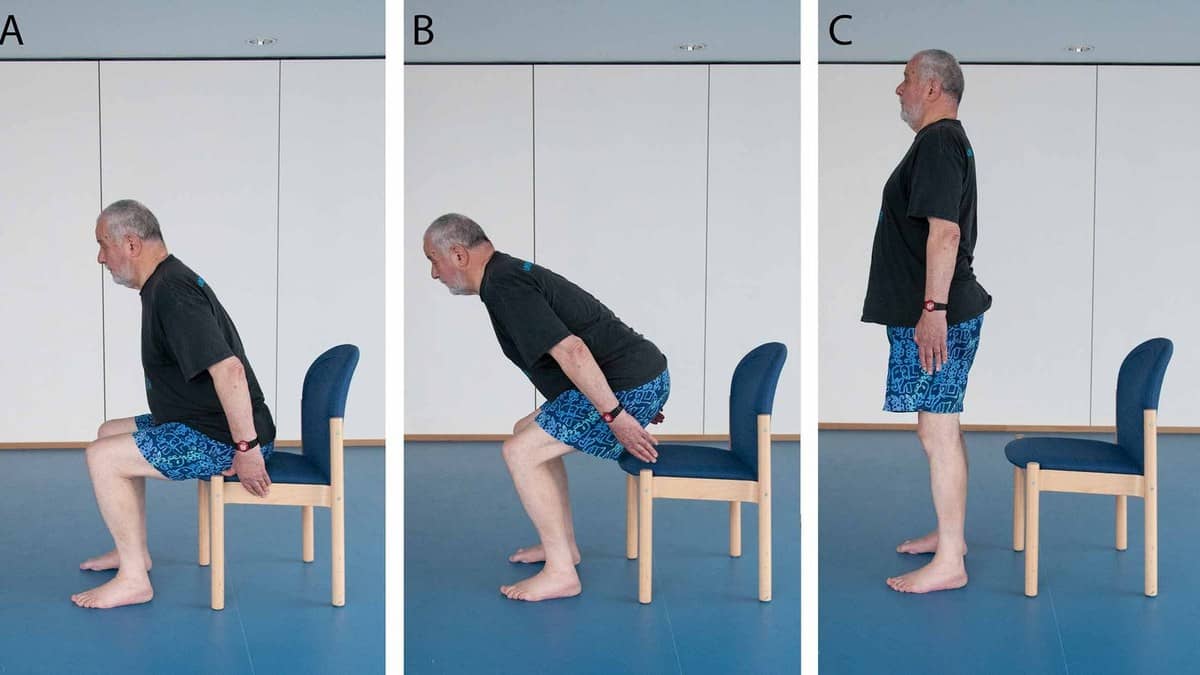
Beginner strength exercises at home can start with a stable chair and a wall. The NHS suggests gentle movements such as rising from a chair, supported mini squats and calf raises, with slow increases in repetitions. Its routine is intended to build strength gradually. Choose movements you can control comfortably and stop if you feel pain.
The official NHS strength exercise guide supplies the movement instructions below. These are starting examples, rather than a personalised training prescription. If you have a medical condition, an injury, uncertain balance or concerns about exercising, consult a qualified doctor before starting or changing your routine.
| Movement | NHS starting guidance |
|---|---|
| Rise from a chair | Aim for 5 slow repetitions |
| Supported mini squat | Repeat 5 times, within a comfortable range |
| Supported calf raise | Repeat 5 times with control |
| Frequency | Try at least twice a week and build gradually |
How to prepare for strength exercises at home
Use a solid chair without wheels, on a surface where it will not slip. The NHS advises a seat height that lets your feet rest flat with your knees at right angles, and a chair without arms for the illustrated routine. Wear comfortable clothing, have water available and leave enough room to move without catching nearby furniture.
Before beginning, check the setting rather than rushing into a repetition count. A chair that is fine for sitting may slide when you use its back for support. Remove loose objects from the floor. If the available setup does not feel secure, change the arrangement before attempting a movement. More space and a reliable support are useful practical preparations.
Choose a small selection to learn first. You do not need to reproduce every exercise on a webpage in one session. Read the instructions, look at the official illustrations and practise the setup. The objective at this stage is a movement you understand and can repeat with control, rather than completing a demanding list.
How to do a chair rise and supported mini squat
For the chair rise, sit near the seat's edge with feet about hip width apart. Lean forward slightly, look ahead and stand slowly using your legs. Return to sitting slowly, using your hands or arms for guidance if possible. The NHS starting aim is five repetitions. If you cannot manage the movement safely, get individual advice instead of forcing it.
For a mini squat, stand behind the chair with hands resting on its back. Keep your back straight and bend your knees only as far as feels comfortable, with knees facing forward. Return gently to standing. A shallower comfortable movement is the beginner modification; depth is something to consider later, rather than a target to chase immediately.
Notice which part of the action becomes difficult. Rushing the return to the seat or dropping into the bottom of a squat can make a repetition look finished without being controlled. If that happens, pause and reassess the movement. A short note such as “needed a smaller range today” can be more useful than recording only a total.
How to do calf raises and wall press ups
For calf raises, keep both hands on the chair back and slowly lift your heels within a comfortable range, then lower them. The NHS starting count is five. Keep the support for the beginner version. Removing it is listed as a harder option, so there is no reason to make that change before the supported movement feels manageable.
The wall press up is another option in the official guide. Stand about an arm's length from a wall, place hands at chest height and bend your arms slowly while keeping your back straight and elbows near your sides. Push back slowly. Try only a comfortable amount at first; the guide's fuller set targets are a progression reference, not a requirement for a first attempt.
Do not add extra difficulty to several movements at once. If you change the range, number of repetitions and amount of support together, it becomes harder to tell what made the session uncomfortable. Keep notes simple and adjust cautiously. Stop if there is pain, and seek appropriate medical advice for symptoms or difficulty that concern you.
How often should beginners do strength training?
The NHS suggests these exercises at least twice weekly. WHO's physical activity guidance also includes muscle strengthening involving major muscle groups on two or more days a week. A short beginner selection is an entry point; it should not be described as a complete programme for every muscle group or every health need.
Keep strength work alongside your other activity rather than using one small routine as a measure of overall fitness. Read our guides to walking pace and weekly activity, sleep duration and quality, and understanding food labels for related background. Individual limitations still need individual assessment.