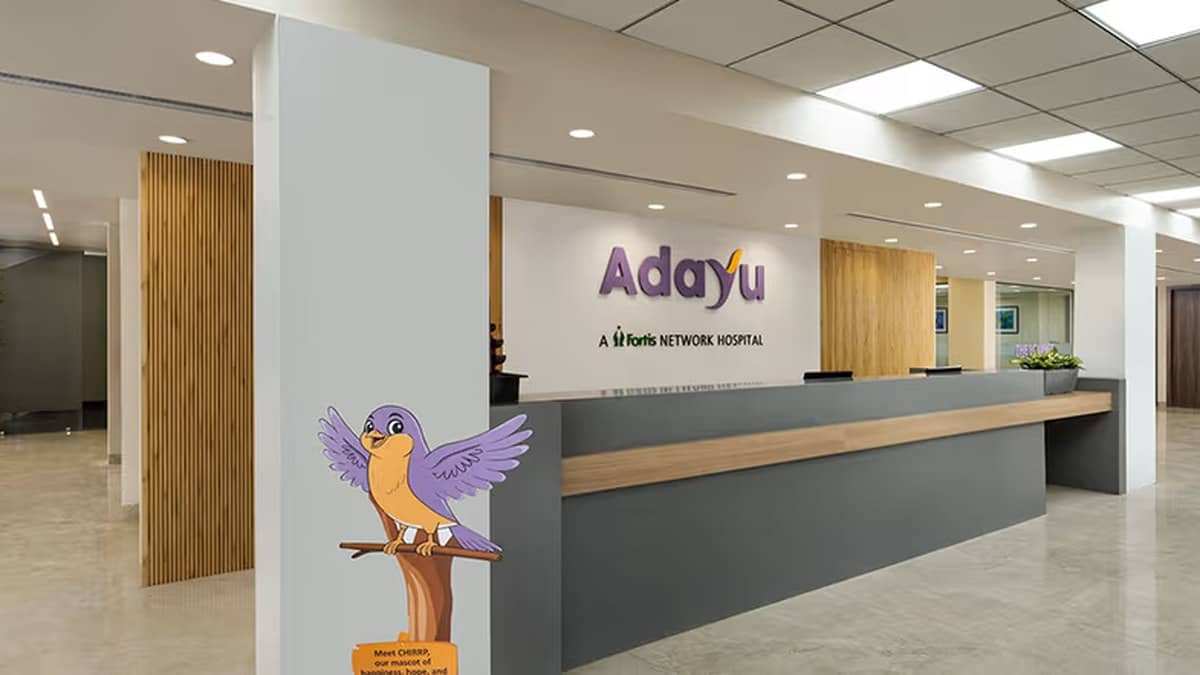
GURUGRAM: Adayu announced a Behavioural Addiction Clinic at its Sector 38 hospital on Wednesday, October 28, 2026, offering assessment and care for people whose repetitive behaviours are disrupting everyday life. The service covers concerns involving gaming, gambling and problematic use of digital or social media platforms, according to two reports of the hospital's announcement.
The clinic's announced hours are 9 am to 10 pm IST, Monday to Saturday. The hospital's official website places the facility at NH 1 and 2, opposite HUDA Market and near the Old Age Home in Sector 38. No separate opening hour for the launch itself was given.
What the new clinic will provide
The announced services include assessments by psychiatrists and psychologists, treatment involving more than one mental health discipline, and individual therapy. Family therapy may be included where appropriate. Lifestyle guidance is to be adapted to the person being assessed, rather than offered as a single programme for everybody attending.
Dr Bishnu Panigrahi, Fortis Healthcare's group head for medical strategy and operations, described assessment of the effect on daily life as an essential part of care, according to the announcement. He said support could involve mental health professionals working together and, where suitable, assistance for family members.
Dr Samir Parikh, chairperson of the Fortis National Mental Health Program and Adayu, cautioned against treating frequent gaming or digital use alone as proof of addiction. His explanation focused on difficulty controlling the behaviour and continuing it despite substantial harm or disruption. Families could help recognise concerns and support a person receiving care, he said.
- Location: Adayu, Sector 38, Gurugram.
- Announced clinic schedule: Monday to Saturday, 9 am to 10 pm IST.
- Services: psychiatric and psychological assessment, tailored treatment and therapy.
- Family involvement: where appropriate to the person's care.
Assessment looks beyond time spent gaming
The World Health Organization's explanation of gaming disorder describes impaired control, gaming taking priority over other activities, and continuation despite negative consequences. Diagnosis requires significant impairment in personal, family, social, educational, work or other important functioning. The pattern would normally have been apparent for at least 12 months.
That guidance also says the disorder affects only a small proportion of people who play digital or video games. The clinic announcement similarly distinguishes a concern requiring individual assessment from an automatic diagnosis based on frequent use. Neither source provides a simple daily screen time threshold that by itself establishes a disorder.
Where residents can check the service
The hospital's official website lists its Gurugram address and describes a team drawn from psychiatry and psychology, with nutrition, yoga and physical therapy support. Its existing deaddiction information also describes family education and psychological therapies. Those broader hospital services should be distinguished from the specific schedule announced for the new clinic.
The October 28 announcement does not give a clinic consultation fee, an age restriction or a separate appointment timetable for individual clinicians. Residents can check those details through the hospital's published appointment information before travelling. The stated clinic hours should not be read as a guarantee that every specialist is available throughout that period.
Other local health coverage includes Gurugram's TB outreach teams, the district's private clinic enrolment effort and work planned for 30 health centres.