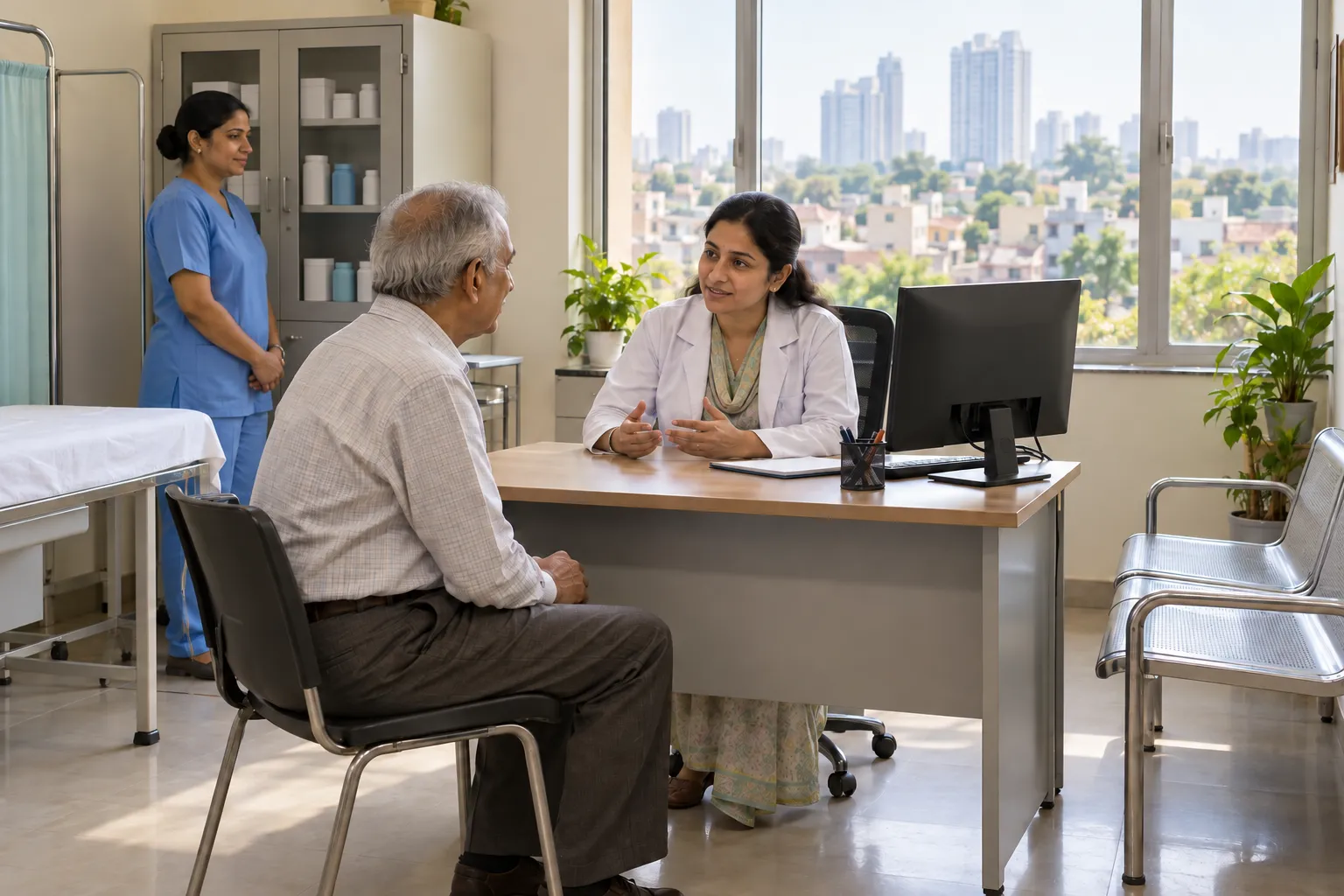
GURUGRAM: Haryana has issued a Rs 26.20 crore work order covering the establishment, operation and management of 30 Urban Ayushman Arogya Mandirs in Gurugram district. The government announcement dated 8 October names ASR Hospitals (India) Private Limited as the operator, with a two-year term running from the agreement date.
The order totals Rs 26,20,80,000. Haryana Medical Services Corporation Limited issued it for neighbourhood primary-care services aimed at underserved urban communities, including low-income households and people living in slum settlements.
Named locations include Hira Nagar, Narsinghpur Dhani, Shivaji Nagar, Ghata village in Sector 56, DLF Phase 1, Sarhaul and Kanhai. The planned facilities include staff, essential medicines, diagnostics and teleconsultations. Penalties cover staff shortages and failures to provide required services. The announcement gives no opening date or centre-wise visiting hours.
Each centre is to have a medical officer, staff nurse, male multipurpose health worker and sanitation worker. Computerised registration, oxygen support and day-care beds are also specified.
The work order therefore establishes the proposed service arrangement. It does not establish that all 30 facilities are already receiving patients. For residents, the next practical information will be the operating address and service schedule of their nearest centre.
What primary healthcare includes
Ayushman Arogya Mandirs are part of the national primary-care network. In a 3 February parliamentary reply, the Union Health Ministry described a package extending beyond treatment of everyday illness. It covers reproductive and child healthcare, infectious diseases and non-communicable diseases, alongside services often requiring continuing contact with a health team.
The national package includes oral health, eye and ear, nose and throat care, support for older people and palliative care. It also includes basic emergency care and care for common mental-health conditions. These are descriptions of the programme's primary-care remit, rather than a claim that every centre has the facilities of a full-service hospital.
The distinction is relevant when reading an announcement about a new neighbourhood clinic. A listed service category indicates what the primary-care system is intended to cover. It does not, by itself, specify the equipment at an individual building or establish that a specialist is present throughout its working day.
The ministry's January programme review describes outreach and follow-up as part of the job. Teams identify people in their catchment areas, undertake screening and arrange referrals for further diagnosis. They are also expected to support treatment follow-up in the community. This makes the centre part of a continuing care pathway rather than simply a counter for a one-off consultation.
That pathway connects neighbourhood services with facilities offering more specialised treatment. The ministry describes prevention, rehabilitation and palliative support alongside treatment. The practical question is how a person moves between those levels of care, including who handles the referral and where a subsequent visit takes place.
Medicines, tests and hospital cover are different services
In an August parliamentary reply, the Union government described its free-drug and free-diagnostic programmes as support for public health facilities, intended to reduce what patients pay themselves. Medicines and testing are therefore part of the service model, alongside the consultation.
The same reply treats hospitalisation cover under Ayushman Bharat PM-JAY separately. That scheme provides eligible families with cover for secondary and tertiary hospital care. A neighbourhood primary-care centre and hospitalisation cover perform different functions, even though both sit within the broader Ayushman Bharat system.
The ministry also distinguishes service levels in its 10 February explanation of health infrastructure. Sub-health centres, primary health centres and larger hospitals have different diagnostic service lists. Its published examples are 14 tests at sub-health centres and 63 at primary health centres, with larger hospitals assigned broader lists. It also identifies district hospitals, sub-district hospitals and first referral units as providers of secondary care for urban and rural communities. A national list should consequently be read with the facility category attached, rather than applied indiscriminately to every local clinic.
Related Dalimss News coverage examines planned trauma-care works at Gurugram, Sohna and Pataudi hospitals and the national digital-health infrastructure. Those reports concern separate parts of healthcare delivery, with their own implementation requirements.