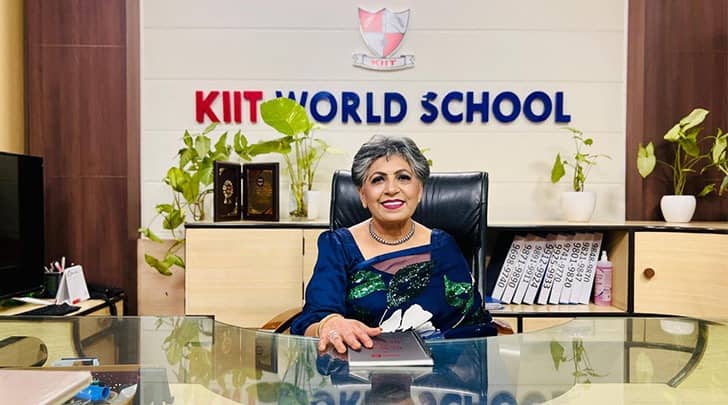
Dalimss News Education exclusive. In this opinion piece written for Dalimss News Education, Dr Sangeeta Bhatia, founder and principal of KIIT World School, Delhi, argues that schools should stop trying to fill children with everything they must know and instead create the conditions in which they learn to discover.
There was a time when the school was perhaps the most important source of knowledge in a child’s life. What the teacher said, what the textbook contained and what the school taught became the reference points from which a young person understood the world. The role of the school was therefore naturally associated with imparting knowledge, building discipline and shaping young minds. I wonder if that purpose is still enough.
Why the purpose of the school is changing
The world in which our children are growing up is fundamentally different. Knowledge is no longer confined to classrooms, libraries or even the school campus. It is available everywhere, all the time, and through forms of learning that are far more experiential, immediate and diverse than a conventional curriculum can provide. A child can learn through a conversation, a community, a project, a failure, a journey, an experiment or simply by pursuing a question for which there is no ready answer. This makes me believe that the future of schools cannot be about trying to fill young minds with everything we think they need to know. It must be about creating the conditions in which they learn to discover.
Our approaches, mindsets and opportunities are becoming increasingly non-linear. The pathways that once seemed predictable are no longer so. What we learn today may be transformed or become inadequate within a few years. In such a context, can a school really prepare a child by deciding in advance everything that child must know? Perhaps our greater responsibility is to prepare children to keep learning, unlearning and relearning. This requires us to rethink what we mean by shaping young minds.
Students as partners, not passive listeners
Young people today are not the passive, uninformed individuals that some traditional educational structures continue to assume them to be. They come to school with opinions, questions, experiences and a growing sense of their own identity. They have access to perspectives from across the world and are exposed to possibilities that previous generations may not even have imagined. They may not always be right. But neither are adults. Perhaps, therefore, the relationship between the school and the student needs to change. Instead of always speaking to young people, we need to learn to speak with them.
If we want students to become responsible decision-makers, they must experience decision-making. If we want them to respect different viewpoints, their own viewpoints must first be heard. If we want them to develop agency, we cannot continue to make every important decision on their behalf. Students need to be part of the circle of trust. This does not mean abandoning the responsibility to guide, set boundaries or provide direction. It means making that responsibility more meaningful. The adult’s role moves from being the sole authority to being a mentor, facilitator and, sometimes, simply a thoughtful listener.
I believe this should extend beyond classrooms and student councils. Why should students not have a voice in aspects of the infrastructure they use every day? Why should they not contribute to conversations about spaces, activities, wellbeing, sustainability, technology and school culture? When students participate in creating their environment, they develop a different relationship with it. They begin to understand ownership, consequence, negotiation and responsibility not as concepts taught in a lesson, but as lived experiences. That, to me, is education.
Rules, right and wrong
The same applies to our understanding of right and wrong. Codes of conduct are necessary. Children need boundaries and schools need frameworks that create safety, dignity and mutual respect. But these frameworks cannot remain entirely static when social interactions, technology and notions of identity are changing so rapidly. A rule is meaningful when a young person understands its purpose, not merely when they fear its consequence. We need more spaces where students can question a rule, discuss a dilemma, listen to another perspective and understand why a particular behaviour is considered responsible or irresponsible. The objective should not simply be compliance. It should be the gradual development of judgement. We cannot spend eighteen years telling children what is right and wrong and then suddenly expect them to make nuanced decisions when they enter the real world.
The objective should not simply be compliance. It should be the gradual development of judgement.
The future will demand something more complex: adaptability, curiosity, discernment, empathy and the courage to question what no longer works.
The school as a curriculum
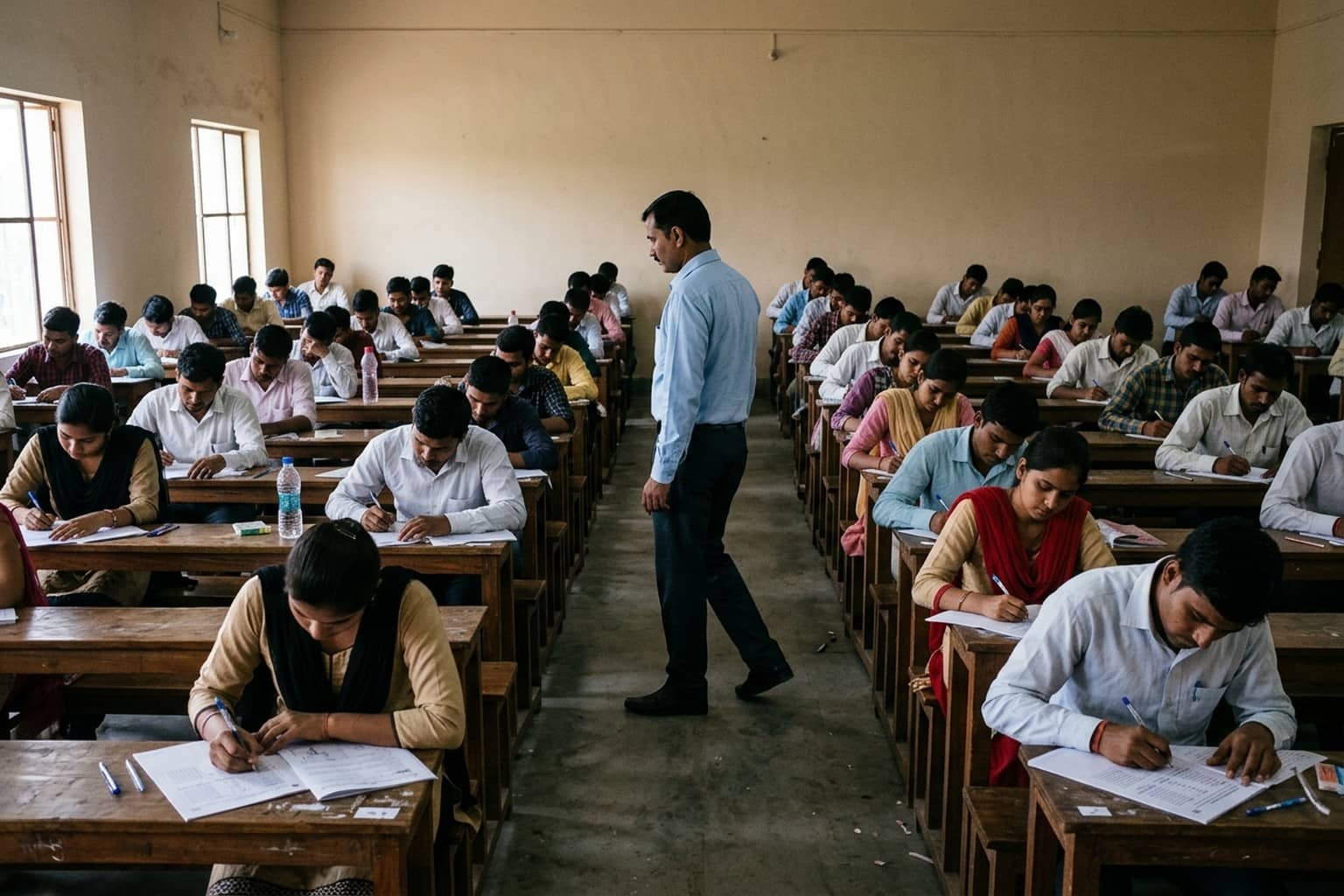
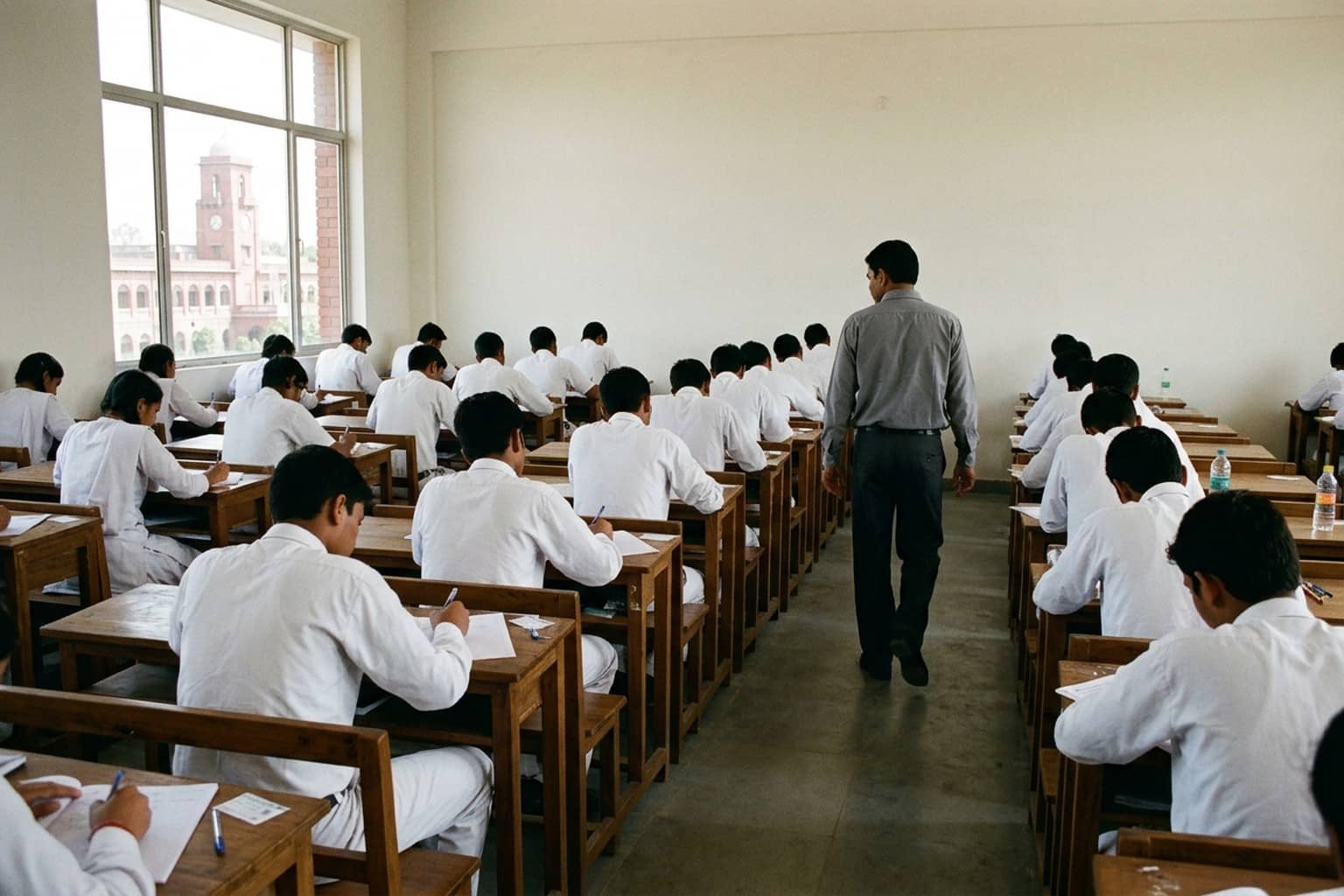
This is why I also believe that the infrastructure and design of a school must be viewed differently. Every space, system and experience communicates something to a child. A rigid classroom, an open collaborative space, a garden students help maintain or a laboratory where experimentation is encouraged all become part of the educational experience. The school itself is a curriculum.
The school itself is a curriculum.
If we claim to be preparing young people for an uncertain VUCA or BANI world, then the way we design our institutions must reflect that uncertainty. We cannot speak about creativity while creating environments where every answer has already been decided. We cannot speak about collaboration while structuring learning entirely around individual performance. We cannot ask children to be courageous thinkers while treating questioning as defiance.
So perhaps the larger question for educators and school leaders is this: are we preparing children for their future, or are we preparing them for the world we ourselves grew up in? I suspect that, too often, it is the latter. And that is where the real rethinking has to begin.
Where the rethinking begins
When we speak about the school of the future, we immediately discuss curriculum, technology, pedagogy, infrastructure and assessment. These matter, but they are not the starting point. The starting point is our own outlook. We need to rethink our purpose before we rethink our strategy. We need to examine our assumptions about childhood, learning, authority, achievement and success. We need to ask whether our systems leave enough room for uncertainty, exploration and individuality.
The school of the future cannot be an institution obsessed with shaping every young mind in a predetermined direction. It should be a place where young people are trusted enough to discover who they are, encouraged enough to explore what they can become and supported enough to make sense of the world around them. Our role is not to provide every answer. It is to help them develop the confidence to ask better questions.
Perhaps the greatest measure of a school, therefore, should not be how much it manages to put into a child’s mind, but how much curiosity it leaves alive when the child walks out of its doors. If we can preserve that curiosity, nurture that voice and give young people the freedom to discover, while providing them with the wisdom and values to navigate what they discover, then perhaps we are not merely shaping minds. We are preparing minds that can shape the future. And that, I believe, is the purpose of the school that lies ahead.
About the author: Dr Sangeeta Bhatia is the founder and principal of KIIT World School, Delhi. This opinion piece was contributed exclusively to Dalimss News Education. The views expressed are the author’s own.