
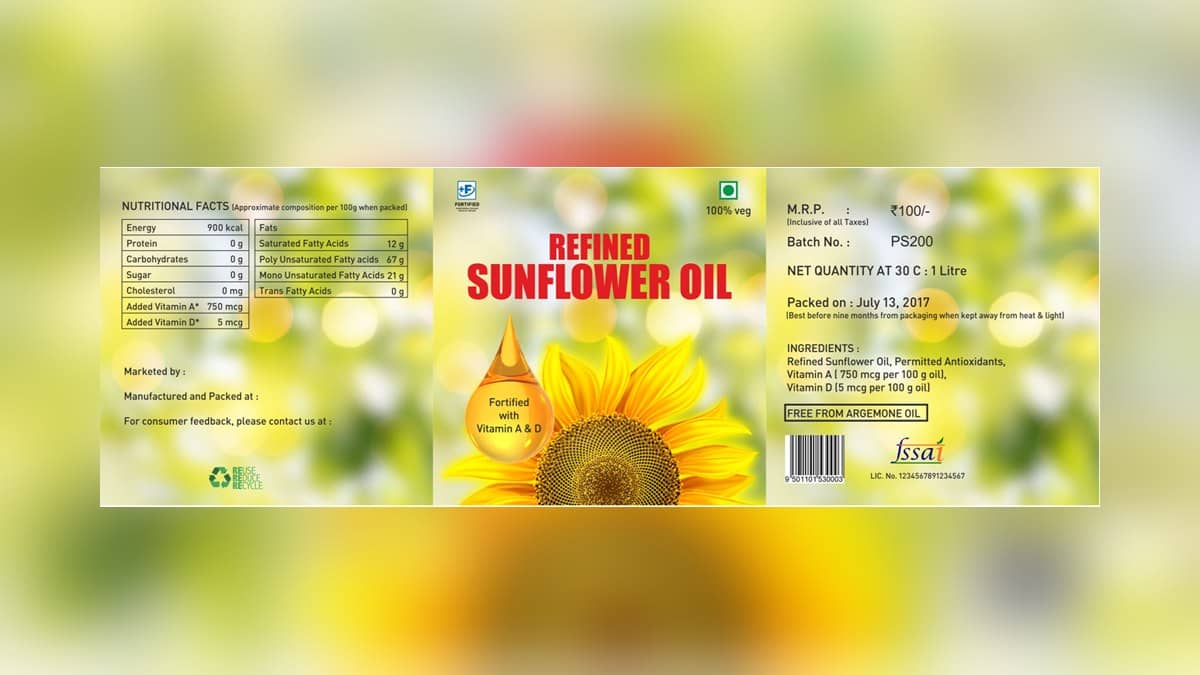
To read a food label in India, first check whether the nutrition figures apply to 100 g, 100 ml, one serving or the whole pack. Then read the ingredient list, total and added sugars, fat and sodium, allergen information, dates and storage instructions. The amount you actually eat matters: a small printed serving can be much less than the contents of the packet.
FSSAI's Eat Right India guide to labels advises readers to examine nutrition information alongside ingredients, dates and instructions for use. The back of the pack can answer questions that a prominent front-of-pack claim leaves open. Start with the units before comparing any numbers.
| Label item | Question to ask |
|---|---|
| Nutrition panel | What quantity do these numbers describe? |
| Ingredients | What comes first in the list? |
| Allergens | Does this contain something I must avoid? |
| Date and storage | How should it be kept, including after opening? |
What is the difference between per 100 g and per serving?
FSSAI's labelling compendium, Version VIII dated 9 September 2025, describes nutrition information per 100 g or 100 ml or a single-consumption pack, together with per-serving percentage contributions to the reference daily allowance. It also describes serving size and the number of servings in a pack. Read the headings on the actual product instead of assuming that every panel uses the same basis.
Here is a fictional arithmetic example, not a real product or a recommended portion. Suppose a snack label gives the following numbers per 100 g, the suggested serving is 40 g and the full pack weighs 80 g. Multiply the per-100-g value by the amount eaten, then divide by 100.
| Illustrative nutrient | Per 100 g | 40 g portion | 80 g full pack |
|---|---|---|---|
| Energy | 400 kcal | 160 kcal | 320 kcal |
| Total sugars | 20 g | 8 g | 16 g |
| Sodium | 600 mg | 240 mg | 480 mg |
For the sugar calculation, 20 multiplied by 40 and divided by 100 equals 8 g. Eating the full fictional pack doubles that amount because 80 g contains two 40 g servings. This calculation says how much is in the portion; it does not decide whether that portion suits your individual needs.
The same method helps when two similar foods use different serving sizes. Put both on a common 100 g basis before comparing their composition, then work out the amount in your own portion. Comparing 30 g of one food with 60 g of another without noticing the difference can create a misleading impression.
How to read ingredients and added sugar on Indian labels
The FSSAI compendium says ingredients are generally listed in descending order by weight or volume at manufacture, with an exception to the ingredient-list requirement for single-ingredient foods. It also distinguishes added sugars from the broader sugars category. Read both the ingredient list and nutrition panel, since they answer different questions about composition and quantity.
The WHO healthy diet guidance uses another term, free sugars. This includes sugars added by a manufacturer, cook or consumer, as well as sugars naturally present in honey, syrups, fruit juice and concentrates. Free sugars and a label's added-sugars line should therefore not be treated as identical categories.
WHO frames a healthy diet around adequacy, balance, moderation and diversity. That is useful context for label reading: a single highlighted nutrient cannot describe the whole diet. Use the panel to understand what a food contributes, while keeping the rest of your meals and any individual medical requirements in view.
Check allergens, expiry and storage instructions
Eat Right India's guide highlights allergy-causing ingredients and advises checking them carefully. Someone avoiding a particular allergen needs to read the relevant information on each pack rather than rely on familiar colours or branding. If you have an allergy or another medical condition that affects food choices, consult a qualified doctor for individual guidance.
Dates also need their accompanying instructions. The FSSAI compendium distinguishes best-before information about quality from use-by or expiry information relating to safety. Eat Right India tells consumers to check dates and follow storage directions. Instructions applying after opening deserve attention as well as the unopened pack's date.
A useful final pass is to read the panel as a set: quantity, composition, allergens and handling. For related food and health coverage, see our reports on food checks at JNV Kannauj, school meal support in West Bengal and doctors' warning against self-diagnosis in Varanasi. None of these replaces reading the label of the food in your hand.