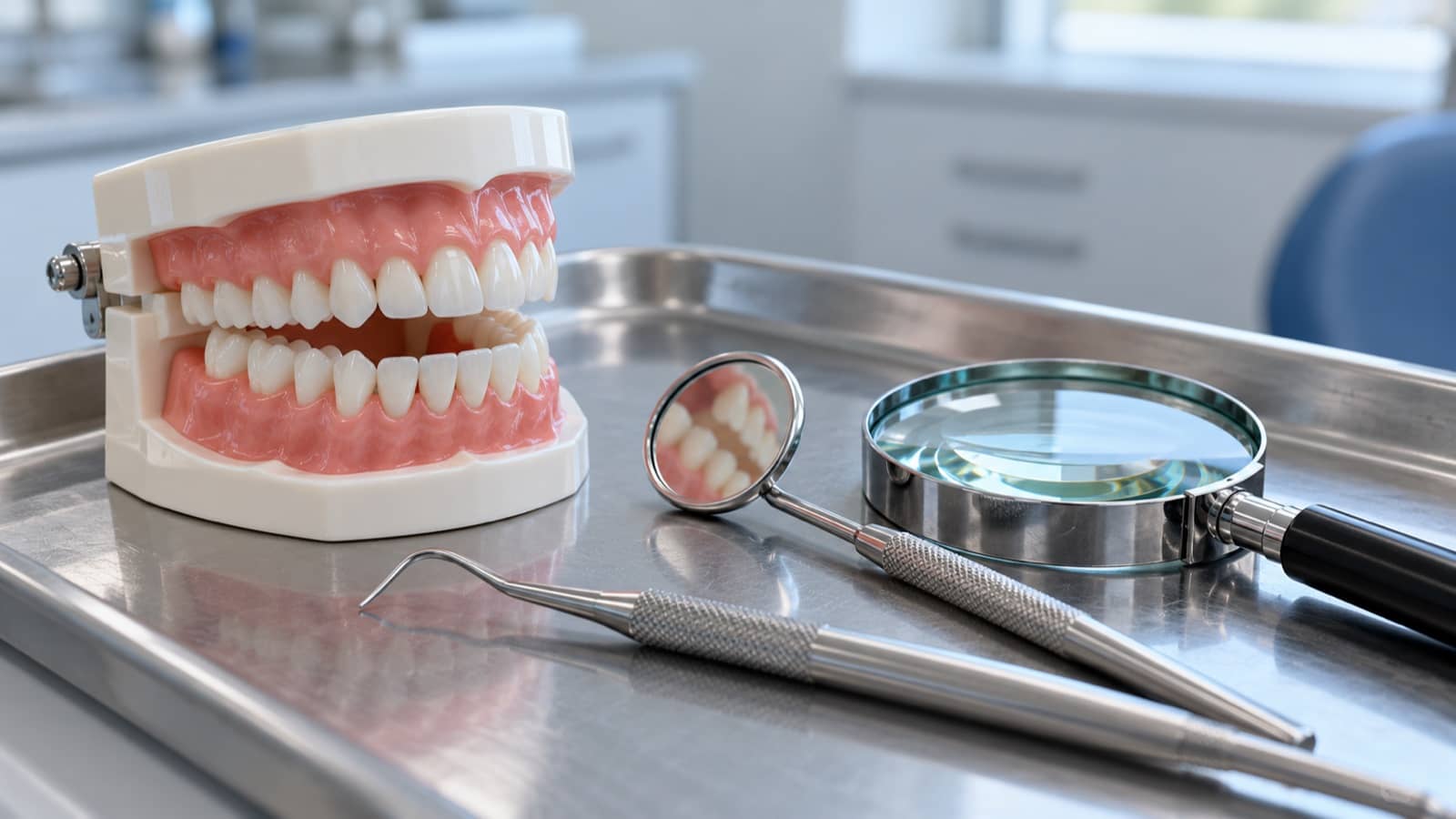
VARANASI: How teeth can assist with age estimation and the identification of unknown remains was the focus of a continuing dental education programme and workshop at BHU’s Faculty of Dental Sciences on Saturday, October 24.
Held with support from the National Academy of Medical Sciences, the programme brought together speakers working in dentistry, imaging and forensic science. The sessions connected the examination of teeth with the handling of evidence used in an investigation.
Former faculty dean Professor T.P. Chaturvedi described dental features and imaging as potential sources of information when investigators need to estimate age or establish the identity of an unknown body or skeleton. His remarks concerned the wider role of dental evidence rather than a newly identified person.
Preserving evidence matters
Dr Arjun Kundu, an assistant professor at the National Forensic Sciences University in Goa, discussed how dental practitioners should preserve evidence and make it available appropriately when an investigation requires it.
That topic placed documentation and evidence handling alongside technical examination. The usefulness of a dental observation depends not only on what can be seen, but also on whether the relevant material has been retained and can be assessed in the proper investigative setting.
Speakers from the Maulana Azad Institute of Dental Sciences in New Delhi, Professor Jayaseelan Augustine and Dr Surendranath Basu, explained the role of teeth in estimating the ages of young children, adolescents and adults.
Their sessions addressed different age groups rather than presenting a single test as an exact answer for every person. The programme’s focus was on the information dental examination can contribute to a wider assessment.
Imaging and professional training
Professor Adit Srivastava discussed age-estimation techniques using CBCT and X-rays. The imaging component formed another part of the workshop’s examination of how dental and skeletal material can be studied.
BHU executive council member Professor U.P. Shahi and IMS director Professor S.N. Sankhwar also spoke about the importance of forensic dentistry. Faculty dean Professor Atul Bhatnagar and other members of the dental faculty attended the programme.
The event brought clinical practitioners into contact with questions that may arise outside a routine dental consultation: how an observation is recorded, how material is preserved and how specialist knowledge can assist an authorised investigation.
Saturday’s workshop was an educational programme, not an announcement that a particular missing-person case had been solved. Its central theme was the contribution dental professionals can make when examination, imaging and properly preserved evidence are brought together, with identification and age assessment treated as tasks requiring careful specialist evaluation.