West Bengal Funds LPG Shift for 8,375 Schools and Raises Meal Support
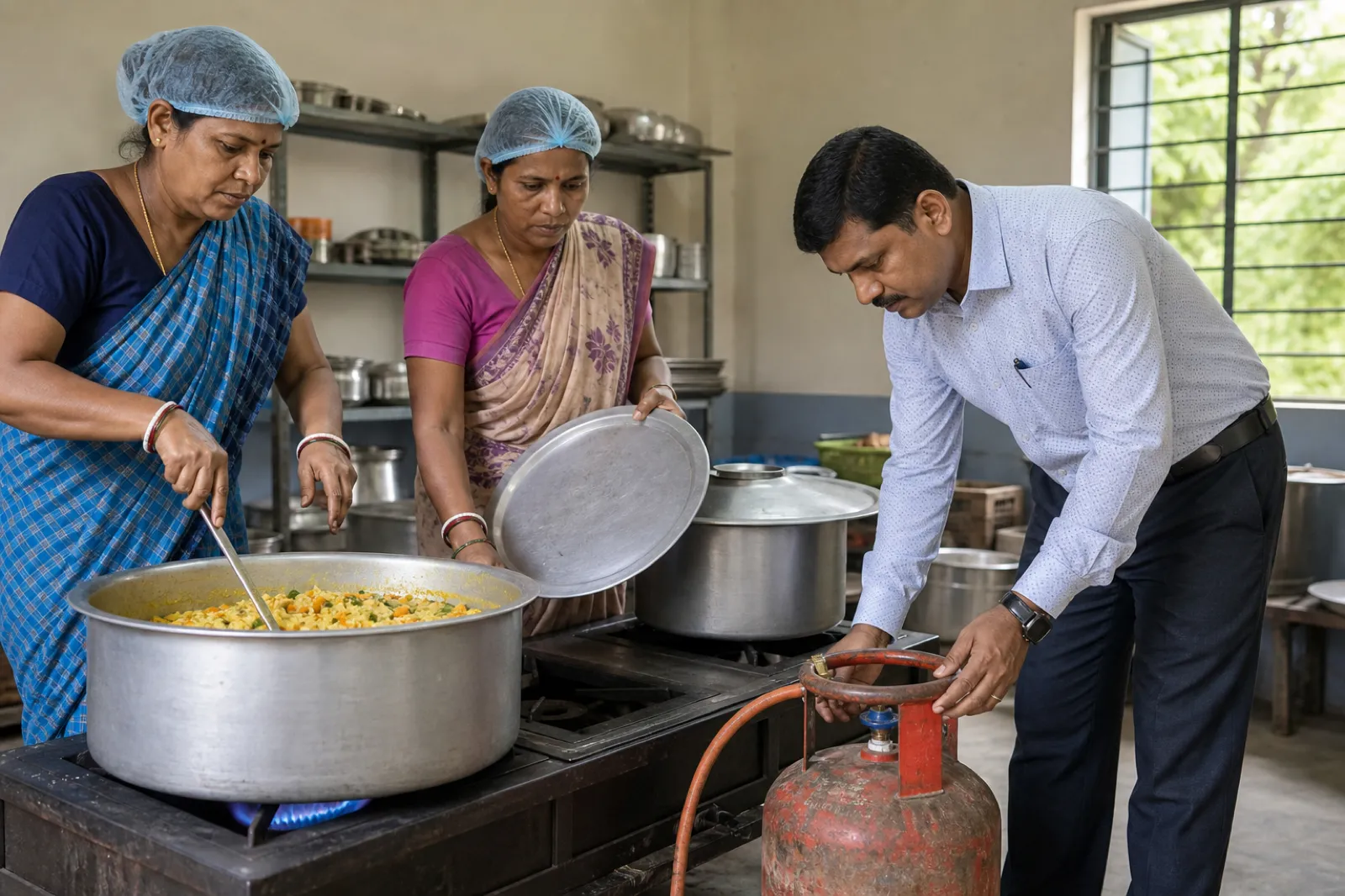
West Bengal will provide Rs 3,000 each to 8,375 schools that still lack an LPG connection under PM POSHAN, a step intended to move their kitchens away from firewood. The state order also raises the per-child material cost of meals and doubles its additional honorarium for cook-cum-helpers.
The state’s 2026-27 PM POSHAN work plan lists 81,012 covered schools. Of these, 72,637 had LPG connections, while 8,375 were dependent on firewood during 2025-26. Bankura accounted for 3,639 of the firewood-using schools and Jhargram 2,217, followed by Paschim Bardhaman with 1,007.
Other reported district counts include 613 in Uttar Dinajpur, 366 in North 24 Parganas, 310 in Murshidabad, 217 in Jalpaiguri and six in Purba Medinipur. Several districts reported complete LPG coverage. Publishing the school-wise list would allow communities to check whether the support reaches the kitchens recorded in the plan.
The Rs 3,000 grant is described as support for installing LPG facilities. Schools will need clarity on whether it covers a connection deposit, regulator, hose, stove and initial cylinder, and who pays for recurring refills. A connection that cannot be refilled will not end dependence on firewood. Safe storage, ventilation and staff training must accompany the equipment.
Moving from firewood has practical benefits. Smoke in an enclosed kitchen can harm cooks, while gathering or buying fuel consumes time and money. LPG can also make heat more controllable and reduce soot. It introduces its own risks, so leak checks, approved components and emergency procedures are necessary.
With effect from August 1, the state has increased the material cost for a hot cooked meal in Bal Vatika and primary classes from Rs 6.78 to Rs 10 per child per day. The order says the change applies to government, aided and sponsored schools. The higher amount should be reflected in menu planning and procurement, with school-level records open to the monitoring committee.
The state’s additional monthly honorarium for cook-cum-helpers has risen from Rs 1,000 to Rs 2,000 for up to ten months. Combined with the existing component, officials say the total will be Rs 3,000 a month. The increase recognises work that includes preparation, serving and cleaning, though the amount remains modest for a recurring responsibility tied to food safety.
The order carries concurrence from the state finance department. Implementation will involve education officials, school management committees, suppliers and the workers who run the kitchen. Payment delays can undermine both the meal and the wage increase even after a budget order is issued.
Parents and local committees should monitor three concrete outcomes: whether the LPG installation is complete and safe, whether the revised food allocation reaches the menu, and whether helpers receive the new honorarium on time. Photographs of equipment are not enough if cylinders are empty or payments are pending.
PM POSHAN is an education programme as much as a nutrition scheme; a reliable meal supports attendance and concentration. West Bengal’s order addresses fuel, ingredients and labour together. Its value will depend on sustaining all three after the initial grants are distributed. District-level payment and installation data should make that progress visible.
Sources and reporting
Based on the West Bengal school education department order issued on 13 August 2026 and PM POSHAN Annual Work Plan and Budget data.
Related Stories

Two Held for Alleged Bid to Run Over Men
Retired HSVP Officer Surrenders in SCO Plot Case
Cops Warn Weekend Bikers After Recent Crashes
HT Pole Still Blocks Road Between Sectors 102, 102A
HSVP Plans Single City Office in Sector 16