A beginner home workout can start with a gentle warm-up and a few controlled movements using a stable chair. You do not need gym equipment for the exercises below. The aim is to learn comfortable movements and build a repeatable routine, with walking or other suitable activity alongside it. If an exercise causes pain or makes you feel unwell, stop immediately.
This guide combines the NHS's published exercise instructions with the World Health Organization's general activity guidance. It is a starting routine for adults, not a personalised exercise prescription or a complete programme for every major muscle group. If you have a medical condition, consult a qualified doctor before starting or changing your exercise routine.
| Before starting | What to check |
|---|---|
| Support | A stable household chair |
| Movement | Slow and within a comfortable range |
| Symptoms | Stop for pain or feeling unwell |
How to start a home workout safely
The NHS strength guide specifies a non-slip chair without wheels. Your feet should sit flat with knees at right angles. Wear comfortable clothing and keep water nearby.
The NHS advises speaking to a doctor first if you have not exercised for some time or have health concerns. Its warm-up page also calls for professional advice after an injury, recent operation or other health event, and during pregnancy or after giving birth. If you are uncertain about balance or whether a movement suits you, get individual guidance rather than forcing the movement.
How to warm up before exercising at home
The NHS warm-up routine begins with marching for 3 minutes. Start on the spot, then move forwards and backwards if space permits. Let your bent arms move with your steps and keep your hands relaxed. Allow at least 6 minutes for the complete warm-up, longer if needed.
The routine also includes alternating heel digs, bringing one heel forward while keeping a slight bend in the supporting leg, followed by knee lifts. For the lifts, remain upright and bring each knee towards the opposite hand. Shoulder rolls and shallow knee bends complete the sequence. Follow the linked instructions for the full sequence; keep the range comfortable and stop if you feel pain or become unwell.
Three beginner strength exercises without gym equipment
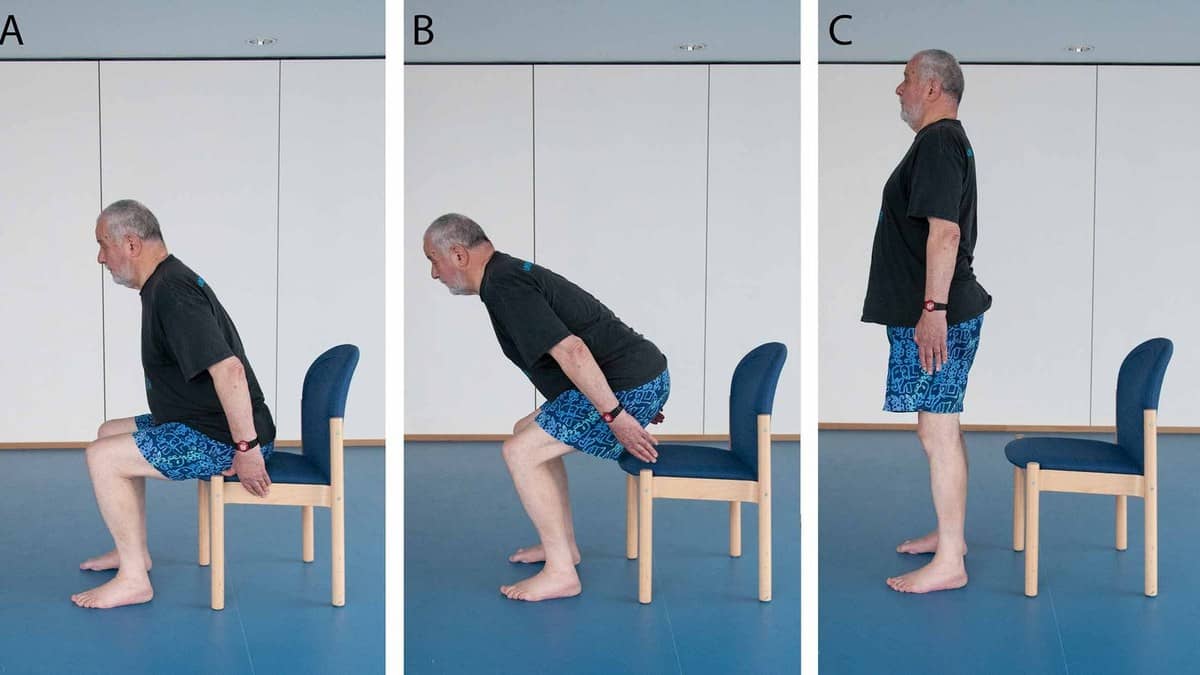
Sit-to-stand: Sit near the chair's edge, feet hip-width apart. Lean slightly forward and rise slowly using your legs, looking ahead. Stand upright, then lower carefully, guiding yourself with your hands if needed. Aim for 5 repetitions.
Mini-squat: Hold the chair back, feet hip-width apart. Keep your back straight and knees forward. Bend only as far as comfortable, then rise gently. Repeat 5 times. Chair support and a shallow bend keep this movement accessible.
Calf raise: Hold the chair back. Slowly raise both heels as far as comfortable, then lower with control. Repeat 5 times. Keep the support; removing it is the NHS's harder variation.
How often should beginners work out?
The NHS adult activity guidance recommends strengthening all major muscle groups on at least 2 days each week, alongside at least 150 minutes of moderate activity or 75 minutes of vigorous activity. Those are broader weekly goals. This short selection of movements is a starting point, and strength work does not automatically replace aerobic activity.
At moderate intensity, the NHS says you should still be able to talk but would struggle to sing. Brisk walking is one example. Build from your current ability and spread activity through the week. WHO emphasises that some activity is better than none and that movement at work, at home and during leisure all counts.
A workout is only one part of an active day. The NHS also recommends reducing time spent sitting or lying down and breaking up long inactive periods with movement. Finishing one session does not replace that separate recommendation.
A practical record can be simple: write down the movements you completed, whether the range felt comfortable and what you want to repeat next time. For related local coverage, read about BHU's Yoga Day programme, the yoga book exhibition in Varanasi and a local CPR awareness workshop. These reports provide community context, while the exercise instructions here come from the linked official health guidance.