
Varanasi Doctors Flag Rise in Flu-Like Complaints, Warn Against Self-Diagnosis
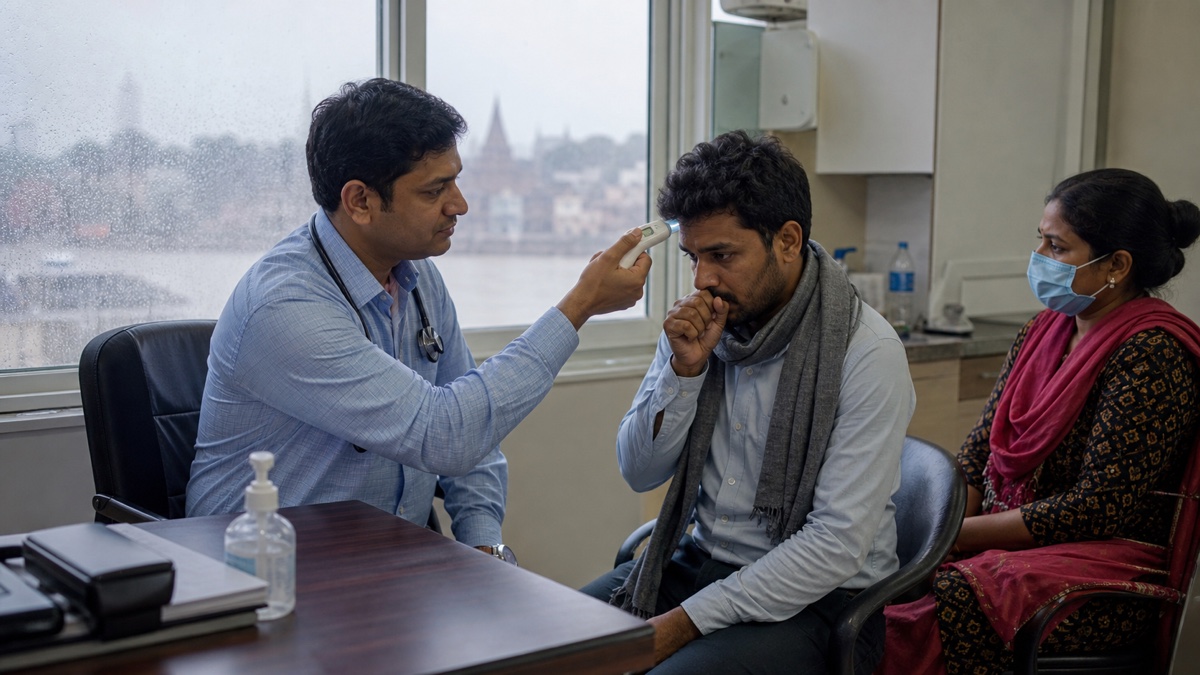
VARANASI: Fever, cough, sore throat, body ache and an exhaustion that refuses to lift are sending more residents to clinics across the city, according to doctors who have spoken to Dalimss News Banaras. The symptoms may look like the usual seasonal viral infection, but physicians are cautioning families against making that diagnosis at home. In the monsoon, several illnesses can begin with a similar first chapter, while the treatment and monitoring required later may be very different.
Influenza commonly arrives suddenly, with fever, cough, muscle pain, sore throat and fatigue. Dengue can also begin with fever and body pain, while malaria and typhoid may enter the differential diagnosis depending on the patient’s history, examination and test results. That overlap is the practical reason doctors are asking people not to rely on a neighbour’s prescription, an old strip of antibiotics or a medicine suggested in a social-media message.
The city has not announced a confirmed outbreak count or identified one virus as the cause of the current complaints. The concern, at this stage, is a rise in flu-like symptoms against the wider background of monsoon disease risk. That distinction matters. A cluster of similar symptoms does not prove a single outbreak, and responsible reporting should not turn waiting-room observations into a laboratory conclusion.
Doctors advise seeking medical attention when fever persists, returns after an apparent improvement, or is accompanied by breathing difficulty, chest pressure, repeated vomiting, severe abdominal pain, bleeding, dehydration or unusual weakness. The World Health Organization notes that influenza can cause an acute onset of fever, cough, sore throat, body aches and fatigue. Its dengue guidance lists severe abdominal pain, persistent vomiting, bleeding and marked weakness among warning signs that require urgent care.
Medication choices also deserve care. Antibiotics do not treat viral infections and should not be started without a clinician’s assessment. Steroids and strong painkillers can create additional risks when taken without supervision. WHO guidance advises avoiding aspirin and ibuprofen where dengue is suspected because these medicines may increase bleeding risk. Patients should ask a qualified doctor what is appropriate for their individual condition rather than attempting to match symptoms to a drug.
Children, pregnant women, older adults and people living with diabetes, heart disease, asthma or reduced immunity may need earlier assessment. Families should keep patients hydrated, note the duration and pattern of fever, and tell the doctor about recent travel, mosquito exposure and medicines already taken. Those details can help determine which tests, if any, are justified.
Basic prevention remains useful even before a diagnosis: cover coughs, wash hands, avoid close contact while feverish, remove standing water and use mosquito protection. The clearest message from Varanasi’s clinicians is neither panic nor complacency. A familiar set of symptoms deserves a proper medical look, especially when the monsoon allows respiratory and mosquito-borne illnesses to circulate at the same time.
Sources and reporting
Based on a verified Dalimss News Banaras report published on 11 August 2026, supplemented with World Health Organization guidance on seasonal influenza and dengue warning signs. No official local outbreak count had been announced at publication.
Related Stories

Police ID Suspect, Probe Delay in Road-Rage FIR

GMDA Hires Consultant for Recycled Water Links
HSNCB Holds Nigerian Man With 15g MDMA
Four Held After Scorpio Attack Near New Colony

Man Escapes Armed Abduction Bid at Galleria