JNV Kannauj Food Protest Prompts District to Order Random Checks
Students at the Jawahar Navodaya Vidyalaya in Jalalabad, Kannauj, ended a hostel protest after the district magistrate met them and promised random checks of food quality. Pupils in Classes 10, 11 and 12 had boycotted meals from Wednesday evening and locked themselves inside hostel rooms on Thursday, alleging that poor food and administrative lapses had continued despite earlier complaints.
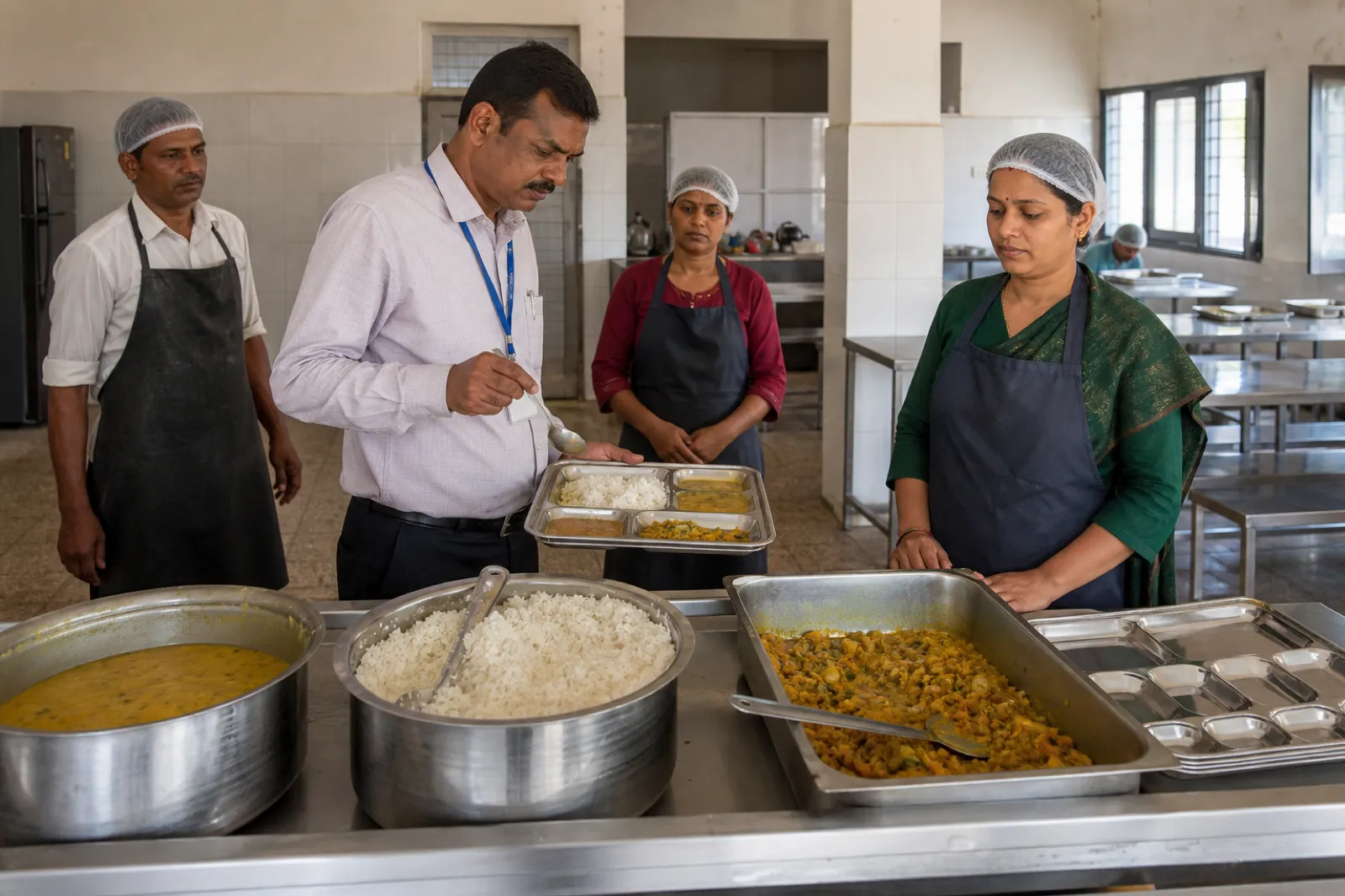
Kannauj District Magistrate Ashutosh Mohan Agnihotri visited the school late on Thursday and spoke with the students. He said their concerns had been heard and that the administration stood with them. The pupils subsequently ate in the canteen. He also said the issues would be taken up with school officials and further action would follow where required.
The immediate resolution matters because a meal boycott by adolescents can itself create a health risk. It does not settle the underlying allegation. A one-night inspection may find a presentable kitchen without revealing whether ingredients, portions or hygiene are consistently poor. Random checks are useful only when they are genuinely unannounced, recorded and followed by corrective action.
Residential schools carry a higher duty of care than day schools. A hostel controls most of a child’s food, water, sleep and access to an adult when something goes wrong. Students cannot simply eat at home after a bad meal. A complaint system therefore needs to work before frustration reaches the point of confinement or hunger strike.
The chief secretary’s office has directed officials to maintain regular communication with students and address concerns through dialogue, according to the district magistrate. JNV Kannauj should translate that instruction into a predictable mechanism: a weekly hostel meeting, a register accessible to pupils, named staff for escalation and a response deadline. The student mess committee should include representation across classes and genders where relevant.
Food oversight should cover more than taste. Inspectors need to check procurement records, storage temperature, pest control, potable water, kitchen cleanliness, serving time, portion size and whether the planned menu provides adequate protein and micronutrients. Samples and photographs can create an auditable record, while periodic medical screening may identify nutrition problems not visible during a kitchen visit.
Parents should receive a concise account of the complaint and remedial steps without the names of pupils who spoke up. Students must not face retaliation, loss of privileges or academic pressure for raising a welfare concern. Staff accused of negligence are also entitled to a fair inquiry rather than punishment based solely on the protest.
The Navodaya Vidyalaya system serves many talented rural children through residential schooling. Its credibility rests not only on examination results but on whether families can trust the hostel. The Kannauj episode shows that pupils were willing to take a serious risk to be heard.
The district administration has restored calm. The next test is whether it publishes what the checks find and whether the quality remains acceptable after public attention moves elsewhere. A safe meal should be the ordinary outcome of the system, not the temporary result of a student protest. Follow-up matters more than a single reassuring visit.
Sources and reporting
Based on statements from Kannauj District Magistrate Ashutosh Mohan Agnihotri and accounts of the student protest reported on 14 August 2026.
Related Stories

Two Held for Alleged Bid to Run Over Men
Retired HSVP Officer Surrenders in SCO Plot Case
Cops Warn Weekend Bikers After Recent Crashes
HT Pole Still Blocks Road Between Sectors 102, 102A
HSVP Plans Single City Office in Sector 16