Wash fruits and vegetables under plain running water before eating, cutting or peeling them. Gently rub the surface, use a clean brush for firm produce such as cucumbers, and dry with a clean cloth or paper towel. The FDA says soap and commercial produce washes are unnecessary. Washing reduces contamination risks, but it should not be presented as a guarantee that food is free of every hazard.
| Question | Official guidance |
|---|---|
| Wash before peeling? | Yes, so cutting does not transfer surface dirt or bacteria |
| Use soap on produce? | No need for soap or a produce wash |
| Firm fruits and vegetables? | Scrub with a clean vegetable brush under running water |
| Damaged areas? | Cut away bruised or damaged areas |
This guide draws on the FDA's produce cleaning advice, CDC prevention guidance and WHO's Five Keys to Safer Food, read on 5 November 2026. The FDA page was accessible through a public text reader when direct retrieval failed. Readers with a medical condition should consult a qualified doctor about individual food safety needs.
How to wash fruits and vegetables at home
Start with your hands. The FDA recommends washing them with soap and warm water for 20 seconds before and after preparing fresh produce. Soap belongs in this hand cleaning step. Its advice for the food itself is different: gently rub the produce while holding it under plain running water.
Check the fruit or vegetable before preparing it. Where there is bruising or damage, cut away the affected area before preparation or eating. The FDA also advises choosing produce without bruises or damage where possible. Inspection and washing address different parts of preparation, so a quick rinse should not replace checking the condition of the food.
For firm produce, such as melons and cucumbers, use a clean vegetable brush. The CDC also recommends scrubbing firm fruits and vegetables under running water. A brush that is itself unclean would undermine the purpose of this step, so include the preparation tools in your cleaning routine.
After washing, dry produce using a clean cloth or paper towel. The FDA says this can further reduce bacteria that may be present. For a head of cabbage or lettuce, it also recommends removing the outermost leaves. These are specific preparation steps rather than a requirement to buy a special cleaning solution.
Why wash produce before peeling or cutting?
The outside surface still matters when you plan to discard the peel. The FDA says rinsing before peeling helps prevent dirt and bacteria from being transferred by the knife to the edible part. A melon is a useful example: the rind is not normally eaten, but the knife passes through it before reaching the flesh.
The same sequence is useful when preparing a cucumber for a salad or fruit for a lunchbox. Wash the intact produce first, then use clean equipment to cut it. This is an application of the official instruction, not evidence that every item is contaminated. The purpose is to reduce avoidable transfer during preparation.
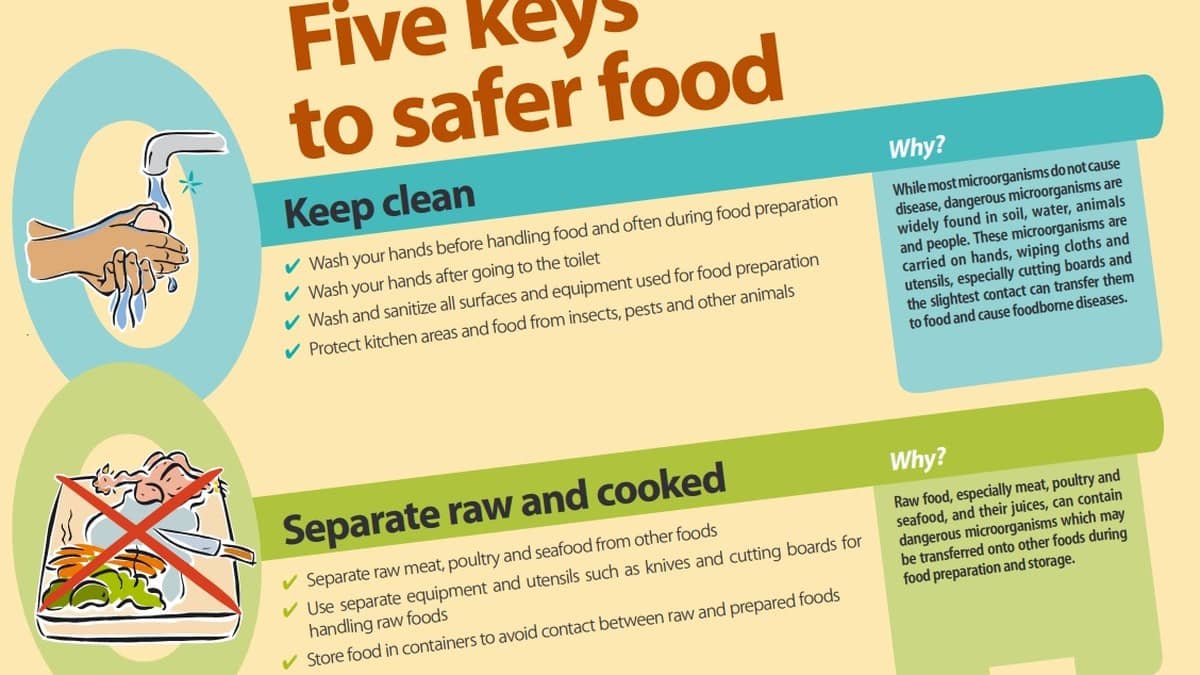
Keep the cleaned produce away from raw meat, poultry and seafood. The CDC's general food safety guidance recommends separate cutting boards or plates for raw animal foods and foods that will not be cooked. A clean fruit can pick up contamination from a board used immediately beforehand for raw food.
Does washing remove all bacteria, parasites or pesticides?
The official guidance supports washing as a risk reduction step. It does not justify promising complete removal of every contaminant. The CDC's Cyclospora prevention page specifically says washing alone cannot guarantee removal of that parasite. Keep that limit in mind when reading claims that one household washing method makes produce completely safe.
Searches often ask about vinegar, baking soda or pesticide removal. The sources used here do not establish a universal household recipe or a percentage of pesticide removal for every fruit and vegetable. This guide therefore follows their documented plain running water method without attaching unsupported performance claims to it.
What should happen after washing?
Food handling continues after the rinse. The FDA says precut produce should be refrigerated or kept on ice when selected and stored. The CDC advises refrigerating cut, peeled or cooked fruits and vegetables promptly, within two hours. Do not leave a prepared fruit bowl out indefinitely simply because every ingredient was washed beforehand.
WHO places safe water, clean preparation and separation of raw and cooked foods within the same food safety framework. For related reading, see fruit and vegetable portions, reading Indian food labels and fibre rich vegetarian foods. Safe preparation belongs alongside nutritional planning when deciding what to serve.