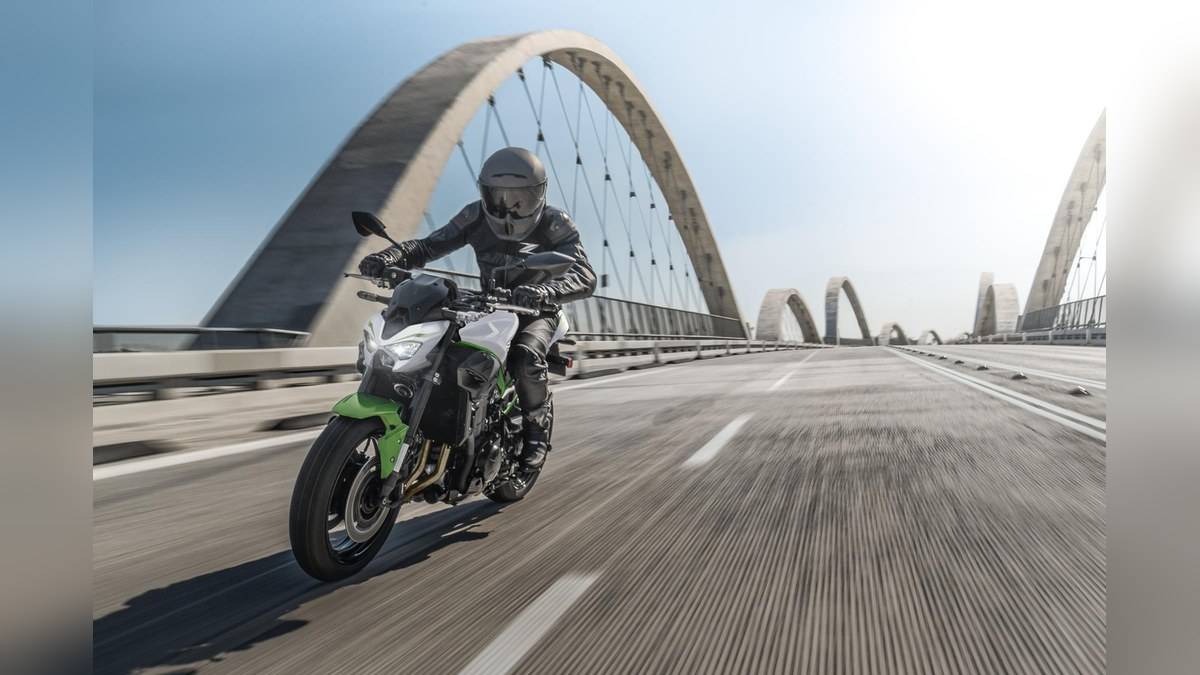
NEW DELHI: The Kawasaki Z900 lists a 5-inch TFT instrument display and turn-by-turn navigation through its connected features, but the India page adds a qualification: navigation and voice commands are available only to users with a licence, and feature availability varies by market. Riders should confirm those conditions for their own account and motorcycle before treating navigation as ready to use.
| Item | Official detail |
|---|---|
| Display | 5-inch, all-digital colour TFT |
| Connected service | RIDEOLOGY THE APP MOTORCYCLE |
| Navigation presentation | Turn-by-turn directions on the instrument panel |
| Published condition | Navigation and voice commands require a licence |
| Market qualification | Feature availability varies by market |
A display specification is only the beginning
The Z900 cockpit has a clear hardware headline, but screen size alone cannot establish which connected services will work for a rider. The official description links the display to an app and separately qualifies navigation and voice operation. Read all of those statements together. A photograph of a direction arrow on the TFT is not sufficient evidence that an individual phone and account are already configured to reproduce it.
The page does not identify the licence price, its duration or the process for obtaining it in the feature description we read. Do not turn the word into an invented subscription tariff. It is also different from assuming that the rider needs a special driving-licence category to unlock a screen. In this context, Kawasaki attaches the condition to the connected functions, without providing those commercial details.
For an Indian owner, the useful next step is a demonstration using the exact motorcycle and the current app information. Ask which navigation and voice functions are supported locally and what the required entitlement includes. Keep a record of the answer and any applicable terms. A broad statement that the motorcycle has smartphone connectivity does not resolve the narrower question of navigation access.
Rehearse a journey while parked
Choose a familiar destination for a stationary demonstration. Watch how the destination is entered, how a route is presented and how the next instruction appears on the motorcycle display. The purpose is to understand the information flow without also managing traffic. Avoid assuming that the product description promises a full moving map: the specific wording identifies turn-by-turn guidance.
Use the demonstration to check what you can read from your normal riding position. A large display may still present information differently from the phone you normally use. Find the ordinary vehicle information first, then see how navigation fits around it. Learn how to recognise an instruction without treating the screen as something to study continuously while moving.
Voice control needs its own verification. Ask what equipment and permissions are required for the supported functions, rather than assuming that voice compatibility includes a supplied helmet audio system. The India page states that app compatibility allows various functions to be controlled by voice, with the same licence and market qualification. It does not provide a universal equipment bundle in that sentence.
Make a plan for an interrupted connection
Before using the system for an unfamiliar trip, ask what happens if the connection is interrupted and how it is restored. This is a question for the demonstration, not a claim that the Z900 has a particular offline capability. The public feature description does not establish an offline navigation guarantee. Keep the route understandable independently of any unconfirmed connected function.
For a highway departure, settle navigation setup before leaving the parking area. If a route needs attention later, find a safe place to stop. That habit is particularly relevant to the Z900 because its connected display sits within the cockpit of a performance motorcycle. Technology intended to simplify route prompts should not become another task competing with observation of the road.
Treat phone access as a separate decision from motorcycle operation. Review the current app permissions and account terms yourself, and ask for an explanation of anything unclear. A showroom demonstration should establish that the functions work as represented; it need not require an owner to leave personal credentials or account access with someone else.
Confirm the model year and the promised functions
The opened listing is for the 2027 Z900. Record that model year when discussing equipment, because a familiar model name can span different cockpit specifications. Do not assume this display description applies unchanged to every earlier Z900. Equally, the model-year label does not by itself establish when an Indian customer can take delivery of a particular motorcycle.
Keep the connected-feature discussion separate from the other rider aids listed on the page. Navigation provides route information; it does not operate the motorcycle for you. Ask for the relevant rider aids to be explained on their own terms during the owner briefing. The presence of several electronic features is not evidence that they share one activation process.
The practical standard is a completed, stationary demonstration with clear local terms: your model, the supported app, the required licence and the directions you can actually see. That gives the Z900 screen specification a useful meaning for a real journey, without assuming that every advertised connected function is automatically enabled for every rider.
Related reading: Kawasaki Z900 Rs 9,99,000 to ZX-10R Rs 20,79,000: big bike price list, Kawasaki 650 price: Z650 Rs 7,26,000, Ninja 650 Rs 7,91,000, Versys 650 Rs 8,63,000, Kawasaki Ninja 300 and Ninja 500 2027 price in India: Rs 3.34 lakh and Rs 5.76 lakh.
Official source: Kawasaki Z900 product information.