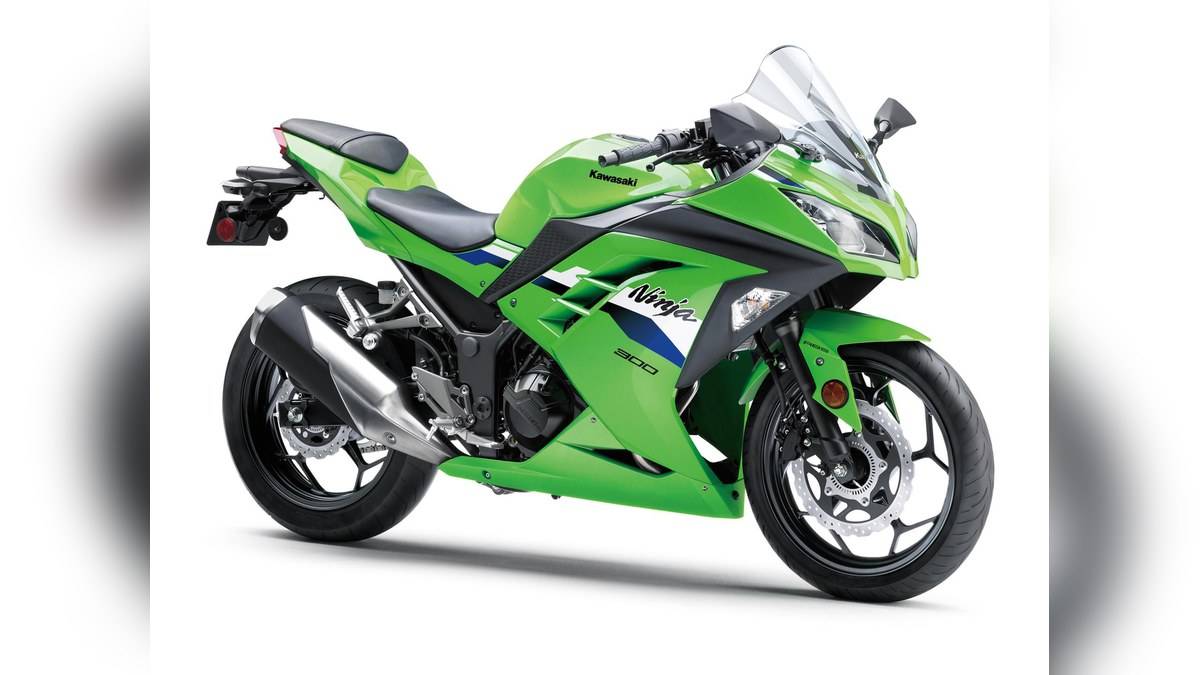
NEW DELHI: The Kawasaki Ninja 300 uses an assist and slipper clutch with two different cam functions: assistance for a lighter lever action and slipper operation to reduce excessive back-torque during abrupt downshifts. On the 296 cc parallel twin, these are mechanical clutch functions. Understanding them separately is more useful than treating the combined name as a general promise of easier riding.
| Item | Official detail |
|---|---|
| Engine | 296 cc, liquid-cooled parallel twin |
| Gearbox | 6-speed, return shift |
| Clutch specification | Wet, multi disc |
| Assist function | Helps reduce clutch spring load and lever effort |
| Slipper function | Relieves excessive back-torque at the clutch |
What the assist part does
Kawasaki describes the assist cam as drawing the clutch hub and operating plate together during normal operation. That action permits reduced clutch spring load and a lighter feel at the lever. The manufacturer does not supply a measured percentage reduction on the opened page. There is therefore no official basis here for saying that the lever is a particular fraction lighter than another motorcycle.
For a rider assessing the Ninja in traffic, the sensible question is how the lever feels with their own hand position and gloves. Make that assessment on a correctly prepared motorcycle. A feature description cannot tell you whether an individual rider will find the action comfortable throughout a commute. It explains the intended mechanical assistance, while your own fit and the condition of the bike remain relevant.
Do not confuse lighter lever effort with removal of the lever from normal riding. The specification still identifies a conventional wet, multi-disc clutch and a return-shift gearbox. The assist mechanism changes how the clutch assembly is loaded; it is not a statement that starting, stopping and every gear change have become automatic. Learn the controls in the way set out for the actual motorcycle.
What the slipper part addresses
The second cam has a different job. Kawasaki says it acts when excessive engine braking follows a quick or accidental downshift, easing pressure on the clutch plates to reduce back-torque. The stated purpose is to help prevent rear-tyre hopping and skidding in that situation. It should be understood as support for a specific event rather than a guarantee against every possible loss of grip.
For an owner moving from a simpler motorcycle, the distinction is worth learning before trying to demonstrate it. A deliberate harsh downshift on a public road is not a useful test of the feature. Ask for an explanation using the owner information and practise smooth control inputs in an appropriate learning environment. The existence of a protective mechanism is not a reason to provoke the condition it addresses.
The two clutch functions can be described together without assigning them the same benefit. Assistance concerns the effort and loading associated with normal clutch operation. Slipper action concerns excess back-torque during deceleration. Keeping those ideas separate also makes conversations about an unusual lever feel or a shifting complaint more precise when the motorcycle is inspected.
Keep the engine and gearbox in view
The Ninja 300 combines this clutch with a six-speed gearbox and a liquid-cooled parallel-twin engine. Those details explain why the clutch discussion belongs to the whole powertrain. A rider still needs to choose an appropriate gear and coordinate control inputs. Neither half of the clutch name supplies a substitute for learning the operating procedure or understanding the motorcycle in use.
The official page also describes dual throttle valves. That is a separate engine-airflow system, not another name for the slipper mechanism. When reviewing the equipment list, group the clutch, gearbox and throttle features by the job each performs. This avoids attributing a throttle-response claim to the clutch or assuming that several different technologies all intervene in the same way.
If something feels wrong on a particular motorcycle, describe the circumstances instead of diagnosing it from the badge. Was the issue at the lever while stationary, during a gear change or while slowing down? Was the engine warm, and was the symptom repeatable? Record what happened and seek a competent inspection rather than assuming every sensation must be normal because the bike has an assisted clutch.
Questions an owner can resolve before riding
Check which model-year information accompanies the motorcycle and ask where the clutch inspection and adjustment instructions are located. The current India product listing identifies the bike as a 2027 model. That label should not be used to infer that every older Ninja 300 has received a newly announced clutch revision; this article explains the equipment on the opened listing.
An owner briefing should leave you able to explain both functions in plain language and operate the controls without uncertainty. Ask for any maintenance questions to be answered from the correct handbook. The most useful takeaway is modest but specific: assistance changes the clutch operating load, while slipper action addresses excessive back-torque. Neither promises that rider technique or mechanical condition can be ignored.
Related reading: Kawasaki Ninja 300 and Ninja 500 2027 price in India: Rs 3.34 lakh and Rs 5.76 lakh, Ninja 650 connectivity: keep its 2 KTRC modes separate, Kawasaki Ninja 1100SX vs ZX-6R price: ZX-6R starts lower at Rs 12,49,000.
Official source: Kawasaki Ninja 300 product information.