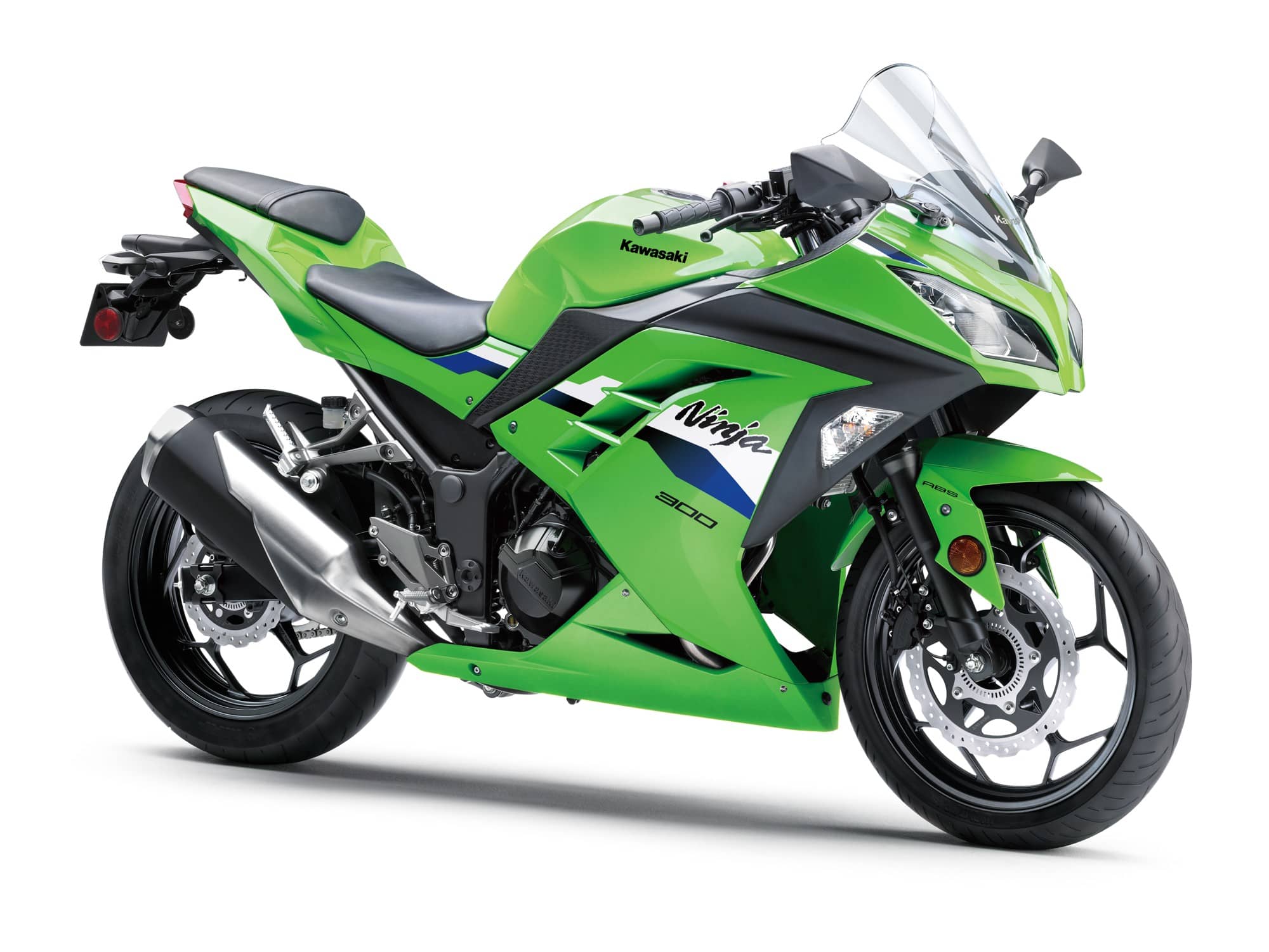
NEW DELHI: The 2027 Kawasaki Ninja 300 costs Rs 3,34,000 ex-showroom in India and the 2027 Ninja 500 costs Rs 5,76,000, according to Kawasaki India's model pages. Both are listed in a single colour, Lime Green, and as a single standard edition. The Ninja 500 costs Rs 2,42,000 more than the Ninja 300. Price as of 23 October 2026, 1:10 AM IST, for both bikes.
The two bikes are the entry points to Kawasaki's Ninja line in India. Kawasaki describes the Ninja 300 as having large-body Ninja styling with dual headlights and a sharp tail cowl, taken from its bigger Ninja models. The two look alike, but the spec sheets show a wide gap in engine size and output, and a smaller gap in weight than the price suggests.
Kawasaki Ninja 300 and Ninja 500 prices
2027 Ninja 300, Lime Green: Rs 3,34,000 ex-showroom.
2027 Ninja 500, Lime Green: Rs 5,76,000 ex-showroom.
Kawasaki marks both prices with an asterisk on its site, so check the on-road price, which adds registration and insurance, with a Kawasaki dealer in your city.
Engine and performance
The Ninja 300 uses a 296 cc liquid-cooled parallel twin with DOHC and eight valves. Kawasaki rates it at 39 PS at 11,000 rpm and 26.1 Nm at 10,000 rpm, with a 6-speed gearbox.
The Ninja 500 has a 451 cc engine rated at 45 PS at 9,000 rpm and 42.6 Nm at 6,000 rpm, also with six speeds. That is 6 PS more power but 16.5 Nm more torque, and the torque peak arrives 4,000 rpm lower. Kawasaki says the 451 cc engine's power is spread across the whole rev range, from pulling away in the city to highway speeds. Kawasaki quotes fuel consumption of 3.8 litres per 100 km for the Ninja 500.
Both bikes get an assist and slipper clutch. Kawasaki says it gives a lighter clutch pull and acts as a back-torque limiter.
Size and weight
Both have a 785 mm seat height. The Ninja 300 weighs 179 kg at the kerb and the Ninja 500 176 kg, so the bigger bike is 3 kg lighter, according to Kawasaki's figures. The Ninja 300 has a 17-litre tank, 140 mm of ground clearance and a 1,405 mm wheelbase. The Ninja 500 carries 14 litres, sits at 145 mm ground clearance and has a shorter 1,375 mm wheelbase on a trellis frame. So the Ninja 300 holds 3 litres more fuel, while the Ninja 500 is lighter, a little taller off the ground and 30 mm shorter between the wheels.
The Ninja 500 uses a 310 mm front disc, which Kawasaki says is the same size as on the Ninja ZX-6R, and runs 110/70R17 and 150/60R17 tyres. The Ninja 300 has a 290 mm front petal disc with a dual-piston caliper and a 220 mm petal disc at the rear, also with a dual-piston caliper.
Instruments
The Ninja 300 pairs a large analogue-style tachometer with a multi-function LCD screen that shows speed, a clock, fuel gauge, two trip meters, odometer and an economical riding indicator. The Ninja 500 standard model gets a full LCD panel with smartphone connectivity for notifications and riding logs, according to Kawasaki. The TFT display Kawasaki mentions is for SE models, and the India page lists only the standard edition.
Which one to buy
The Ninja 300 is the cheaper twin by Rs 2,42,000 and carries the bigger tank. The Ninja 500 makes sense for riders who want much more torque, a lighter bike and smartphone connectivity, and are willing to pay about 72 percent more. Both are sold through Kawasaki dealers, and the company's site lets buyers request a quote or book a test ride.
At Rs 3,34,000, the Ninja 300 sits below the Royal Enfield Classic 650, which our Classic 650 price list shows starting at Rs 3,67,592. For Kawasaki's bigger naked bike, read our Z1100 price and specs report. Full details are on Kawasaki India's Ninja 300 page.