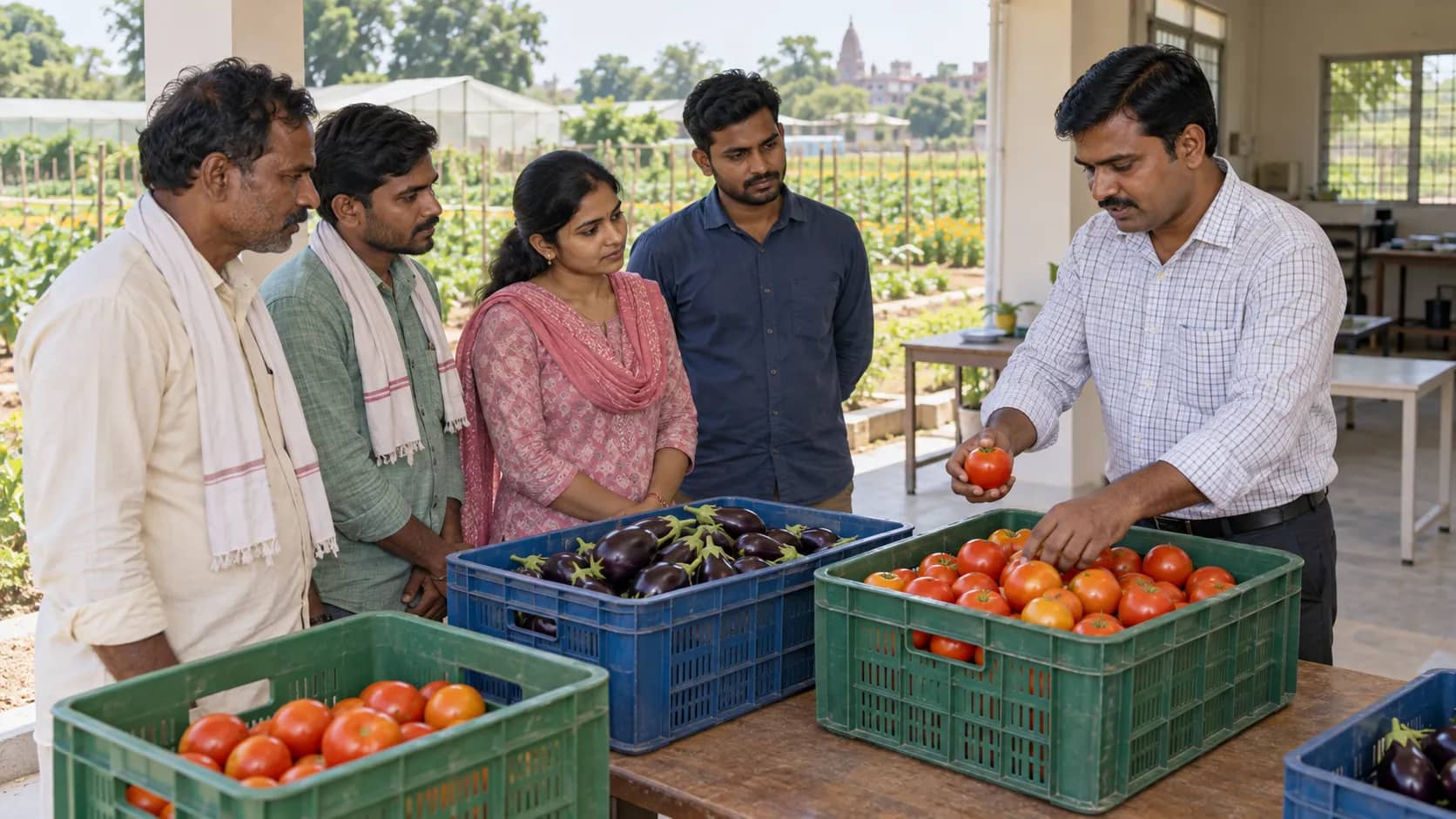
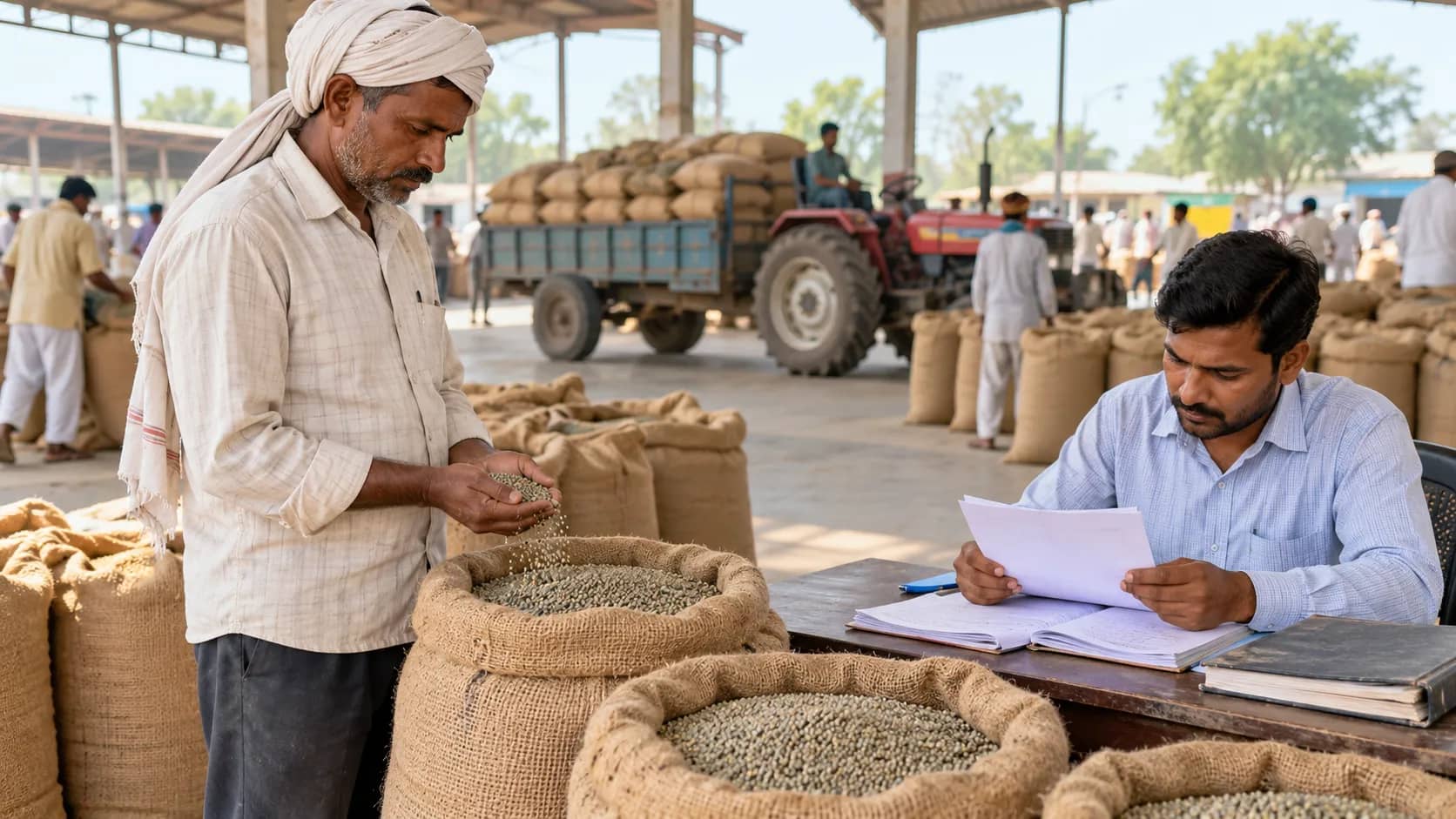
GURUGRAM: The district reported purchases of 28,394.15 tonnes of bajra from 11,649 farmers on 15 October, as officials reviewed the kharif marketing arrangements. The official update identifies purchase centres at Jatauli, Sohna and Farrukhnagar. It also says growers will receive support through Haryana’s Bhavantar Bharpai scheme.
District administrative secretary Ashima Brar inspected the help desk, gate-pass arrangements and biometric verification at Jatauli grain market. She sought feedback from farmers and commission agents before joining the state procurement review. The district total is a dated snapshot: the release does not divide purchases between government agencies and private buyers or give the amount already paid to farmers.
How the price-support arrangement works
The Union Cabinet’s 2026-27 kharif price notification, approved on 13 May, fixes bajra’s minimum support price at Rs 2,900 per quintal, up Rs 125 from the previous season’s Rs 2,775. This is the notified support benchmark, rather than a report of the price paid for every lot in a Gurugram market. The rate is for the current kharif marketing season.
The Cabinet’s table also gives an all-India estimated production cost of Rs 1,858 per quintal for bajra. That is a policy cost estimate, including imputed family labour, rather than a verified cost for each farm.
Haryana set out its purchasing arrangement in a separate 25 September review. Chief Minister Nayab Singh Saini said the government would buy bajra at Rs 2,300 per quintal and use price-deficiency support to ensure the Rs 2,900 benchmark. Where a farmer obtains more than Rs 2,300 in the open market, the state announcement says compensation would cover the difference between that sale price and the MSP. The September announcement is background to the present buying season.
The same announcement ties procurement and Bhavantar support to the crop record on Meri Fasal Mera Byora and the issued J-form. It also directs officials to prioritise area verification. For a grower, that makes the registered acreage and recorded sale relevant to any support enquiry. A headline MSP alone cannot establish what has been credited to an individual account; the sale record and compensation record need to be checked separately.
Paddy has different notified rates: Rs 2,441 per quintal for common paddy and Rs 2,461 for Grade A. Both rose Rs 72 over the preceding season. Those figures should not be substituted for the bajra benchmark. Growers handling paddy can also read Dalimss News’s separate report on Gurugram’s combine-harvesting hours and moisture restrictions. Support rates were checked on 17 October 2026 at 7:35 am IST.
Check crop records before seeking help
The Meri Fasal Mera Byora portal is run jointly by Haryana’s agriculture and citizen-resources departments. It brings together farmer registration, crop registration and field details. The public homepage currently displays 31 July 2026 as the kharif-registration deadline. A visible registration or login button does not establish that a new October application window is open. Farmers with missing or incorrect records should confirm the available correction route with the department.
For that enquiry, the portal lists 1800-180-2117 and 1800-180-2060 as Kisan Call Centre numbers. Its contact section gives Monday-to-Friday hours of 9 am to 5 pm for 1800-180-2117 and the email address mfmb-agri@hry.gov.in. These are published contact details, not a promise that a correction can be approved by phone. Ask which record needs attention before making another trip to the market.
The Food and Civil Supplies Department’s e-Kharid site provides its own sign-in screen and links to its Android and iOS apps. It also publishes the toll-free number 1800-180-2060. Use the government portal’s links when looking for the service. A public login page is not evidence that a particular farmer’s sale or payment has been processed.
For an administrative complaint that remains unresolved, Dalimss News’s earlier Samadhan-camp guide explains the district’s hearing schedule and how to keep track of a complaint. It distinguishes registering a grievance from receiving a final resolution. The guide also explains how to retain an earlier complaint reference and seek the next step from the department handling the case. Those details can make a follow-up more specific.