
GURUGRAM: The Commission for Air Quality Management has expanded industrial camera monitoring across the NCR, setting November 30, 2026 as the deadline for installation and live transmission. Its October 16 announcement says the new order supersedes the October 5 order and covers industries under Direction No. 98.
The scope includes the 17 CPCB categories of highly polluting industries, medium and large Red Category air-polluting units, food-processing and textile units with boilers or thermic fluid heaters, and metal units with furnaces.
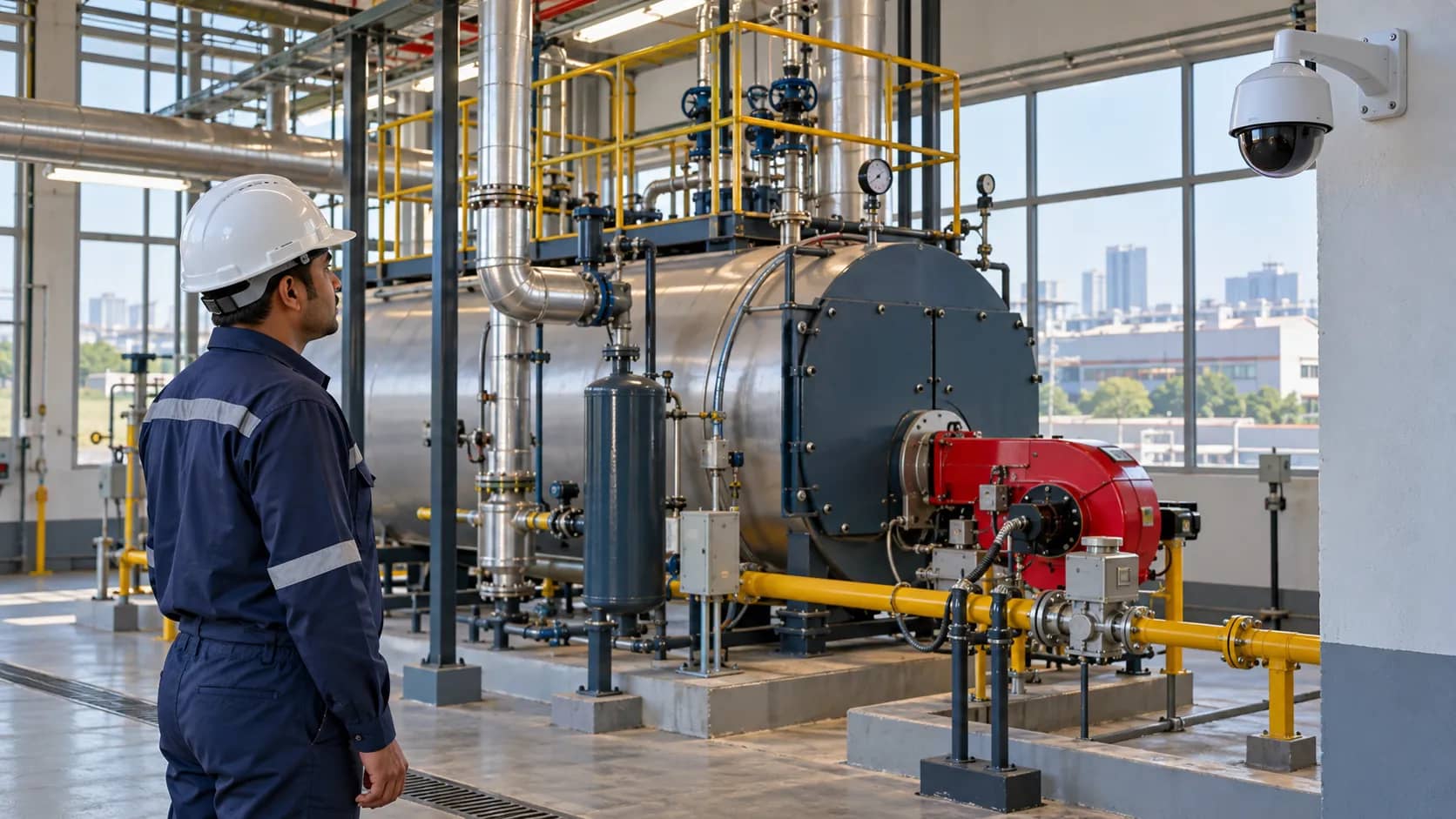
Pan-tilt-zoom (PTZ) cameras must cover fuel-feeding points, gas meters where applicable, stack-monitoring locations and relevant fume-extraction areas. Feeds must reach regulators through Real Time Streaming Protocol (RTSP), with adequate visibility, night-time coverage where needed and backup power. The November deadline does not replace existing emission standards or approved-fuel requirements.
Gurugram falls within the Haryana portion of the NCR, as listed by the National Capital Region Planning Board. The industrial requirement therefore reaches eligible local units, rather than every shop or office in the city.
What the earlier camera order required
The earlier October 6 announcement had set October 31 for additional cameras at industrial sites. Its focus was fuel surveillance: equipment was to show all fuel-storage areas and fuel-charging points, with the gauge or meter visible where gas was used. It also required video feeds to the Central Pollution Control Board and the relevant state board or Delhi committee.
That announcement asked regulators to develop the portals and infrastructure needed to receive the streams. Industries were responsible for adequate backup power for both the cameras and connectivity. State boards and the Delhi Pollution Control Committee were then asked to report implementation by November 1. These are the earlier requirements, useful for identifying which version an old compliance circular describes.
The October 6 release also explained that cameras were already prescribed around emissions-sampling ports, flue-gas stacks, furnace-feeding areas and fume-extraction systems in specified sectors. Camera monitoring therefore predates this latest announcement; the regulatory sequence is an expansion of an existing arrangement.
The emissions deadline is a separate matter
A July 31 amendment announcement placed the revised particulate-matter emission standard on a different timetable. It said the 50 milligrams per normal cubic metre limit would apply from October 1, 2026 to industries covered by clause 21(i) of Direction No. 98. That direction was notified on February 20. The July change concerned when the tighter emissions standard applied.
CAQM said industry associations had raised procurement and installation delays for air-pollution control devices, limited availability of assessment agencies and constraints at recognised laboratories. CPCB recommended more time. The July amendment consequently allowed a limited extension for installation, retrofitting and assessment work, while leaving the direction’s other provisions unchanged.
That history matters when plant managers compare circulars. A date associated with fitting pollution-control equipment is not automatically the date for a camera project. The July announcement describes a standard measured in a pollutant concentration, supported by technical recommendations and studies, rather than a requirement to buy a particular surveillance product.
Video and instrument readings answer different questions
CPCB’s 2017 continuous-emission monitoring guidelines explain the separate role of instruments. A continuous-emission monitoring system combines equipment, analytical measurements and software to determine pollutant concentration or emission rate. Its readings go to a data-acquisition system for recording and transmission. Watching the operation of a furnace is therefore different from obtaining a validated measurement of what its stack emits.
Those guidelines require attention to the quality of the measurement, including calibration, performance checks and validation. They describe automatic collection and transmission of readings to pollution-control authorities, rather than manual handling of each value. They also provide for recording authorised changes to system settings. A working picture cannot substitute for these checks on the underlying numerical data.
The document assigns responsibility for data submission to the industrial unit, even when an instrument supplier facilitates transmission. It also describes comparison of instrument readings with manually collected samples analysed using approved laboratory techniques. These are older technical principles, presented here to explain the monitoring system, not as newly announced October conditions or evidence that any named Gurugram factory has failed them.
Dalimss News has separately reported Gurugram’s pollution-review arrangements and CAQM’s road-dust inspection. Those reports concern different measures and do not establish compliance with this industrial-camera order.