
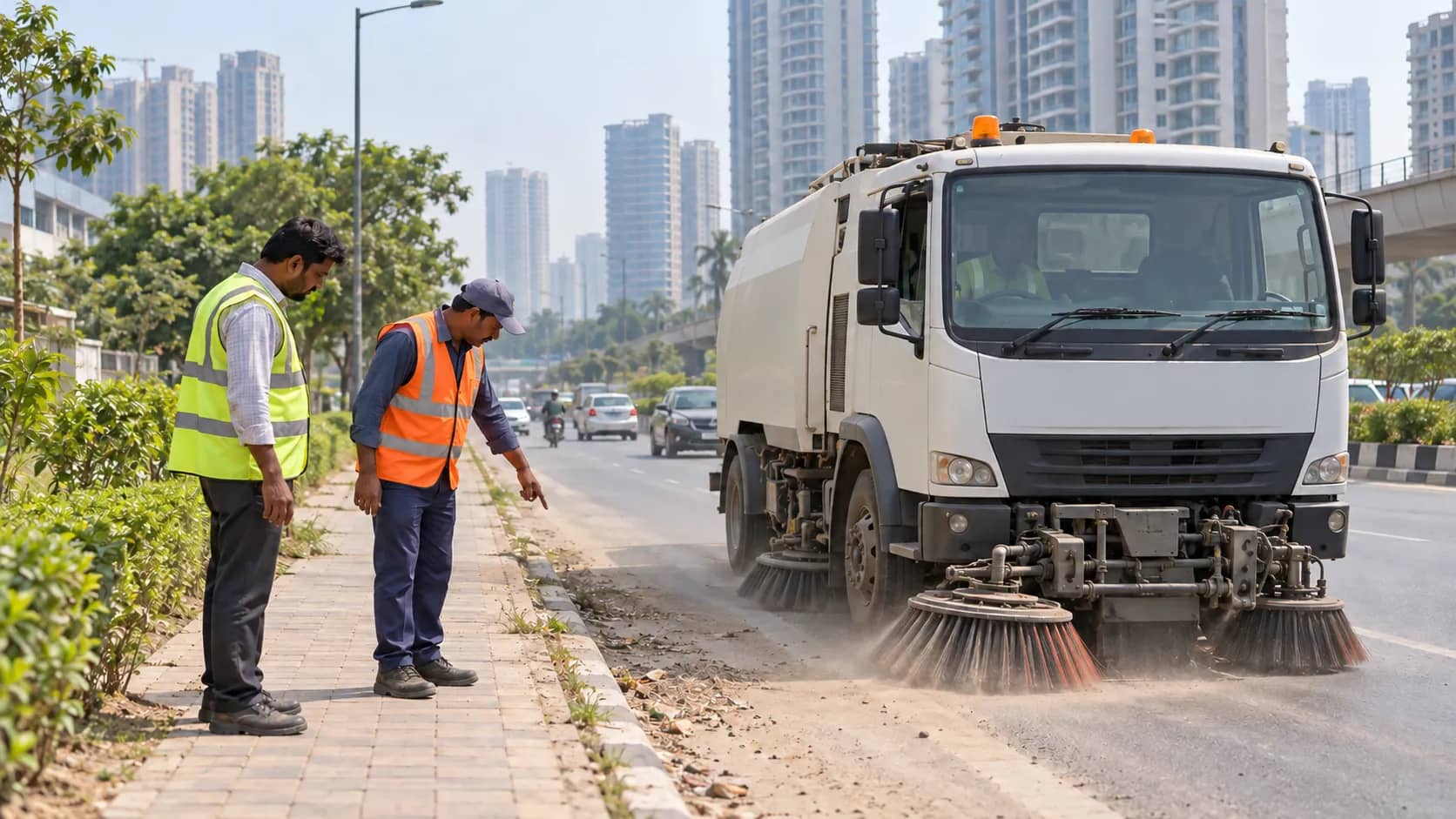
GURUGRAM: The Commission for Air Quality Management recorded 258 violations during a road-dust inspection in Gurugram on 14 October, according to its 15 October report. Of these, 174 were on roads under the Municipal Corporation of Gurugram and 84 on Gurugram Metropolitan Development Authority roads.
Four flying squads checked 52 stretches covering about 104 km, including 56 km under MCG and 48 km under GMDA. Inspectors observed visible road dust and construction debris, as well as damaged footpaths and potholes. Areas visited included Palam Vihar, Pace City, Sikanderpur, Mehrauli-Gurugram Road and Dwarka Expressway.
CAQM directed the agencies to correct the gaps on priority through regular sweeping, debris removal and other remedial work. It warned that non-compliance could lead to prosecution. The release announces no prosecution.
The release provides no street-by-street violation register or completion deadline. It does not verify subsequent clean-up. CAQM said inspections would continue across Delhi-NCR.
Dalimss News previously covered the separate 15 October pollution review meetings. The field inspection adds findings from roads to that wider discussion of enforcement.
What effective road sweeping requires
CAQM’s mechanised-sweeper norms announced in February provide a practical benchmark for road agencies. Machines should combine water spraying with particulate filtration so that sweeping does not simply throw collected material back into the air. New machines entering the fleet should run on CNG or electricity.
Large machines are intended for a right of way above 15 metres, medium machines for 10 to 15 metres, and small machines for narrower roads. It also provides for handheld vacuum cleaners or litter pickers for roadsides and footpaths, and scientific disposal of the dust collected. Cleaning the carriageway alone is therefore only part of the prescribed operation.
Agencies should announce sweeping days and shifts in advance. The norms envisage machines operating for at least eight hours per shift, with fleet requirements calculated around alternate-day sweeping. Actual deployment can respond to dust on particular roads.
Coverage figures need careful reading: sweeping both edges of a one-kilometre carriageway without a median counts as two running kilometres. With a median, it counts as four. Residents comparing a contractor’s claimed coverage with a road’s length should check which measure is being used.
Dust controls and stage-specific restrictions
The revised GRAP schedule issued on 29 September places periodic mechanised sweeping and water sprinkling in Stage I. It also requires scientific disposal of collected dust at designated sites or landfills. Urban local bodies and road-owning or maintenance agencies are assigned these duties.
For road construction, widening, repairs and maintenance, the schedule calls for stronger dust suppression, including water sprinkling and anti-smog guns. Its construction provisions cover stored materials and debris, covered transport and other dust controls. Regular removal of waste from designated dumping sites sits alongside preventing illegal dumping on open land.
These provisions belong to a staged framework. The direction says stage-specific measures take effect through appropriate invocation orders, with lower-stage measures continuing when higher stages apply. The inspection release itself does not announce a new GRAP stage. Readers following transport restrictions can consult our separate report on the revised vehicle provisions.
How residents can report a dusty stretch
CPCB’s Delhi-NCR air-pollution complaint guide explains how to lodge and track a report through Sameer. The registration process asks for a name, mobile number and email address before a complaint is lodged. Select the public-complaint option, choose the pollution category and add photographs. Check the address picked up automatically and correct it manually if necessary, so that a complaint identifies the right location.
The acknowledgement supplies a complaint ID. Keep it to review the action history and photographs associated with the report. Sameer assigns complaints to nodal agencies according to location and the type of pollution, which can include municipal corporations and development authorities.
The guide says agencies are expected to redress complaints within 24 hours and upload evidence of action. That is an expectation set out in the guide, not a guaranteed response time. CPCB’s control room monitors redressal and flags delays. The guide also lists aircomplaints.cpcb@nic.in for air-pollution complaints; reports received by email are transferred into Sameer for central monitoring.