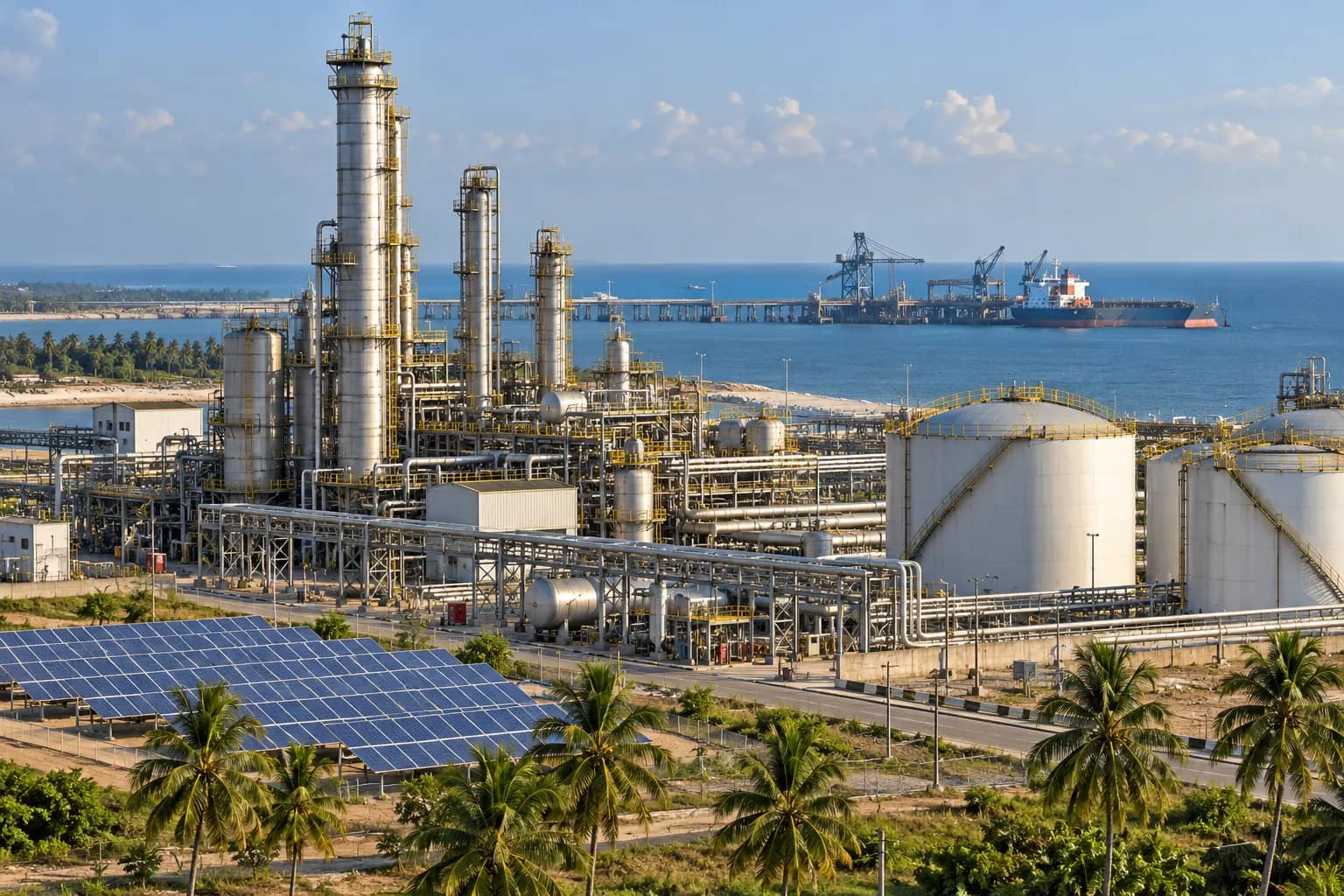
The Asian Development Bank and Japan have signed financing agreements with AM Green Ammonia (India) for a renewable-powered ammonia plant in Kakinada, Andhra Pradesh. The 15 October announcement includes a $100 million loan from the Japan-financed Leading Asia's Private Infrastructure Fund 2, which ADB administers.
The development bank describes the project as the first investment under ACCEL, an energy-security initiative it launched with Japan in May. The plant will replace natural gas-based ammonia and urea production at an existing industrial site with renewable-powered production, with planned capacity of about 1.1 million tonnes a year.
The announcement records financing agreements, rather than confirming that the money has been disbursed or that commercial production has begun. It identifies the $100 million fund loan as part of the investment, without presenting that figure as the total cost of the plant.
Equipment delivery comes before production
A separate 14 October statement from equipment supplier Everllence gives a closer view of the conversion work. The company has received an order for a synthesis-gas compressor train to serve one production unit, designed for about 525,000 tonnes of ammonia annually. That unit figure should not be confused with ADB's figure for the wider project.
Ammonia production combines hydrogen and nitrogen under pressure. Everllence says its compressor raises the pressure of that mixture before synthesis. Conventional production can use steam generated while making hydrogen from natural gas to drive the machinery. Renewable-hydrogen production provides less process steam, so the Kakinada equipment will use an electric motor.
The order covers two compressors, a gearbox, cooling and sealing equipment, controls and testing. The parallel arrangement lets the compressors run at different speeds through the gearbox. Dynamic simulation and process-piping engineering are also included in the supply package. The compressors will be manufactured and tested in Zurich, with packaging and integration in Oberhausen, Germany. Everllence schedules delivery for late 2027 and commissioning for 2028. Those are the supplier's stated equipment milestones, not confirmation that the entire ammonia complex is operating.
German purchase agreements underpin export plans
The project also has a route to overseas customers. In a 30 September announcement, Germany's Hintco named AM Green the winner of the Asian lot in its H2Global auction. The agreement sets a minimum purchase value of EUR 585 million over ten years. That is a purchase commitment, separate from the development-finance loan announced on 15 October.
Hintco identifies the supply source as the Kakinada project's second phase and expects initial German deliveries in 2029. Shipments are planned through Kakinada Seaports beside the plant. The buyer says renewable electricity backed by pumped-hydro storage will support production under European requirements for renewable fuels of non-biological origin, known as RFNBO.
The auction operator may buy further quoted volumes using proceeds from reselling ammonia in Europe. Hintco acts as an intermediary between producers and buyers through government-funded auctions, rather than consuming the ammonia itself. It plans to publish the complete tender results before the end of 2026, alongside results for other regional lots. Until then, the announcement does not provide a complete public price-and-volume schedule for the contract.
Another buyer, Uniper, announced its own binding agreement on 12 January for up to 500,000 tonnes of renewable ammonia a year from AM Green's projects. Its announcement anticipated first shipments from Kakinada as early as 2028. The agreement is earlier commercial context for the financing news; it was not newly signed this week.
Uniper describes the contracted product as RFNBO-certified ammonia and says the partners will work with certification bodies on traceability and reporting for European customers. It identifies industrial chemicals, fertilisers and refining among the intended applications, with shipping a potential later use. Its volume commitment covers AM Green's projects, so it should not be read as a statement that Kakinada alone has already supplied that quantity. The buyer's announcement does not disclose a price per tonne or a full annual delivery profile.
Dalimss News has also covered Maruti Suzuki's green-hydrogen pilot in Manesar and Newtrace's work on electrolyser components, two other parts of India's developing hydrogen industry.