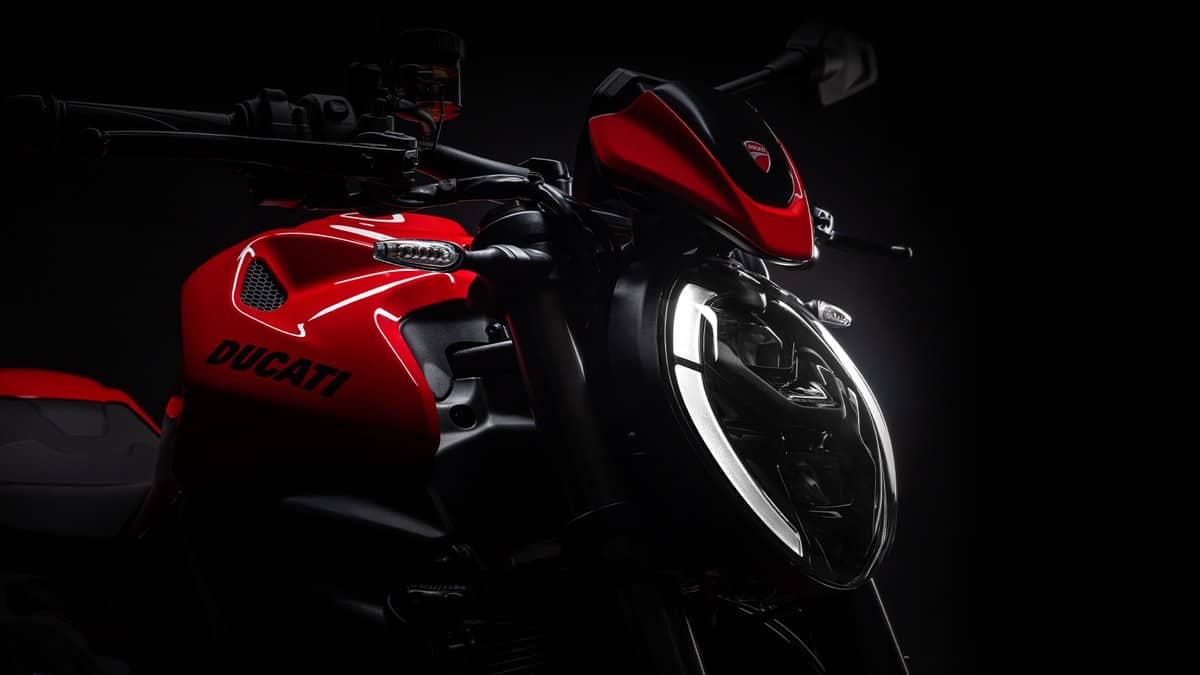
NEW DELHI: Ducati India's Monster page lists starting prices from Rs 13,99,000 for the Monster in Ducati Red to Rs 14,45,000 for the Monster+ in Iceberg White. These are ex-showroom India amounts for the priced configurations. The page also displays Sport choices without an Indian price, so their cost cannot be added to that range. Price as of 26 October 2026, 14:18 IST.
| Version | Colour or livery | Listed starting price, ex-showroom India |
|---|---|---|
| Monster | Ducati Red | Rs 13,99,000 |
| Monster | Iceberg White | Rs 14,23,000 |
| Monster+ | Ducati Red | Rs 14,34,000 |
| Monster+ | Iceberg White | Rs 14,45,000 |
| Monster | Sport | No Indian price published on the page |
| Monster+ | Sport | No Indian price published on the page |
The colour matters as well as the badge
A single entry price misses part of the Monster range. Ducati gives Red and Iceberg White separate amounts, while the Plus version has its own price for each. The table follows those entries individually. It does not assign an estimated premium to Sport or treat an unpriced display as confirmation of an Indian sale configuration.
Ducati describes the figures as starting prices. They therefore establish the advertised entry point for each priced choice, rather than a fully configured invoice. This is especially relevant where a motorcycle appears alongside accessory seating, connectivity equipment or other additions in a brand's presentation.
What changes with Monster+
The equipment comparison identifies a flyscreen and passenger-seat cover as additions on Monster+. The engine and the central chassis specifications remain common to both versions. The Plus badge therefore represents an equipment and appearance choice, without a separate engine-output claim in the published specification.
That distinction also explains why colour and version should be read separately. Iceberg White is a finish, while Monster+ is the equipment version. A white standard Monster and a red Monster+ are different configurations, even though both sit above the least expensive Red entry in the published price order.
The current engine and chassis
The technical table lists an 890 cc V2 engine producing 111 hp at 9,000 rpm and 91.1 Nm at 7,250 rpm. Both versions use a six-speed gearbox with Ducati Quick Shift up and down functionality. The listed wet weight without fuel is 175 kg, a definition that should remain attached to the number.
Ducati's production announcement describes the engine as part of the motorcycle's structure, working with a monocoque frame and a double-sided swingarm. It also explains the combination of a technopolymer and trellis rear subframe. These are central elements of the current Monster's construction, rather than cosmetic details attached to a paint update.
The same announcement describes a higher and more forward handlebar and a lower seat than the previous generation. Its short tail and single-piece seat preserve familiar Monster proportions. The result, on paper, is a naked motorcycle designed around road use and rider movement, rather than the enclosed cockpit of a fully faired sports bike.
Seat height and rider controls
The standard seat height is 815 mm. Ducati lists an accessory low seat giving 795 mm, or 775 mm when combined with the lowering kit. Those are distinct configurations. The lowest figure is not the seat height of the standard motorcycle and should not silently replace it in a specification comparison.
For Indian use, that distinction is more informative than a general claim that the bike is easy to manage. The rider's reach depends on the actual seat and suspension combination. The advertised price and the lowest possible seat position describe different aspects of the product, and an accessory price has not been assumed here.
The production release names Sport, Road, Urban and Wet riding modes. It also describes traction, wheelie and engine-brake controls alongside cornering ABS. Ducati's Insights material distinguishes equipment included with the motorcycle from systems for which it is prepared, including connectivity and navigation accessories.
Reading the service schedule correctly
The published technical information gives an annual service interval of 12 months, an oil service at 15,000 km or 24 months, and a valve-clearance check at 45,000 km. These are separate schedule entries. A long valve-check interval does not mean that all other maintenance waits until the same mileage.
Related coverage includes our Kawasaki middleweight prices, KTM Duke price guide and vehicle-finance document explainer.
Official sources: Monster production announcement, Monster Insights and Ducati India Monster prices and specifications.