NEW DELHI: Dreame H12 Dual owners can start a separate roller-drying cycle by holding the self-clean button for 3 seconds. For the full self-cleaning sequence, Dreame India says to place the appliance on its base, make sure the clean-water tank contains water and briefly press that button. The support instructions require at least 20% battery for self-cleaning.
| H12 Dual function | Official instruction or specification |
|---|---|
| Independent drying | Hold self-clean button for 3 seconds |
| Self-cleaning battery requirement | 20% or higher, appliance on base |
| Clean-water tank | 900ml |
| Used-water tank | 700ml |
| Published charging time | 4.5 hours |
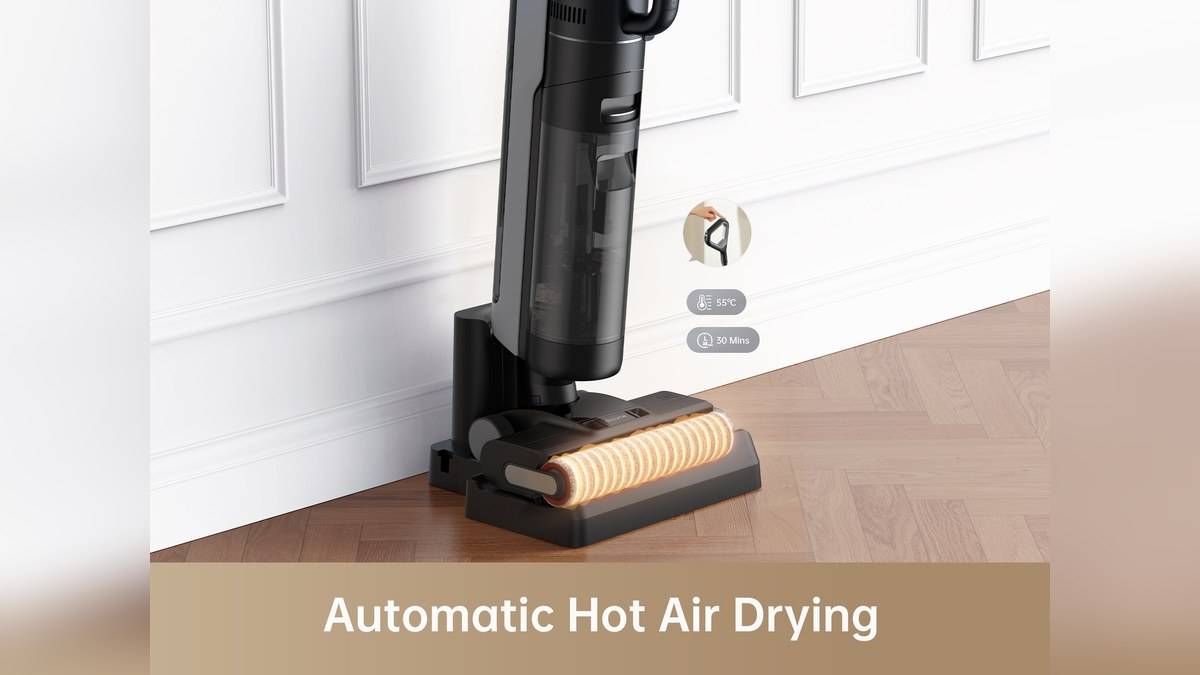
| Hot-air drying claim | 55 degrees Celsius, 30 minutes |
Choose the cycle before pressing the button
The same control performs different jobs depending on the length of the press. A short press begins self-cleaning, after which drying starts automatically. A long press selects drying independently. That distinction is useful when the roller needs drying but the owner does not intend to repeat the whole wash sequence.
Think of the dock routine as a separate task after floor cleaning. Returning the machine to its base is the starting point, rather than the whole procedure. Check the water supply and battery before starting the cleaning cycle. This makes the sequence easier to follow than pressing the button repeatedly while trying to work out which condition has not been met.
Check water and battery first
Dreame's requirements page specifies the charging base and battery threshold. Its combined cleaning-and-drying article adds the water check. Read together, these provide a clear order: return the appliance, check that it has sufficient charge, confirm water is present and then start the cycle. A depleted battery after a long cleaning session is therefore relevant even though the machine has reached the dock.
The support page also warns against touching the roller or heating module during hot-water cleaning. Keep hands away while that operation runs. There is no need to reach into the brush area to see whether the machine has started; follow its normal prompts and the published procedure instead.
For a household sharing cleaning duties, these checks belong in the handover. Someone who has just finished cleaning knows whether the water supply needs attention, while the next person may see only a machine standing on its base. Agreeing who starts the dock cycle avoids leaving the final stage to guesswork.
Drying heat is different from heated floor washing
The product page advertises hot-air drying. Separately, Dreame's tank-filling FAQ permits water up to 60 degrees Celsius and says the machine does not itself turn cold tank water into water at that temperature. Owners should keep those claims separate: a heated drying function does not establish that water is heated to the same level while washing the floor.
This matters when reading product photographs and feature badges. A temperature displayed beside a drying feature belongs to that operation. It should not be used to infer an unlisted floor-cleaning temperature, a sterilisation result or a treatment suitable for every floor material. This guide makes no independent hygiene-performance claim.
Allow time for the dock routine
Dreame says the appliance resumes charging after independent drying finishes. Its separate self-cleaning FAQ says a button press can stop drying. The published controls therefore let owners distinguish starting the full sequence, selecting drying alone and interrupting drying. Those are different actions, even though they use the same control.
In a home where the kitchen floor is cleaned after dinner, the practical planning point is to include the base routine in that job. Putting the vacuum away and immediately moving on can leave an essential instruction overlooked. The dock is part of this model's cleaning workflow, rather than simply a parking position for the handle and attachments.
For this particular design, the separate clean-water and used-water tanks also make the dock check more specific than a generic cordless-vacuum checklist. Looking at one tank does not tell you the state of the other. Identify the clean-water supply before initiating self-cleaning, and keep the supplied instructions available to whoever normally puts the machine away. That is especially useful when handheld cleaning and floor washing are handled by different people.
Keep the H12 Dual instructions with the H12 Dual
The appliance combines wet-and-dry floor cleaning with detachable handheld use. Dreame publishes different maximum runtimes for those configurations, so handheld endurance should not become an expectation for a floor-washing session. Both are company figures, with actual performance subject to the environment and use.
Owners researching other cleaners can also read our Dreame D9 Max setup explainer, L10s Ultra update guide and CycloVac warranty guide. Those cover different machines and procedures. Their battery rules, maintenance terms and controls should stay with the models named.
Official sources: H12 Dual product specifications, cleaning and drying sequence, self-cleaning requirements, independent drying, automatic drying and tank water temperature.