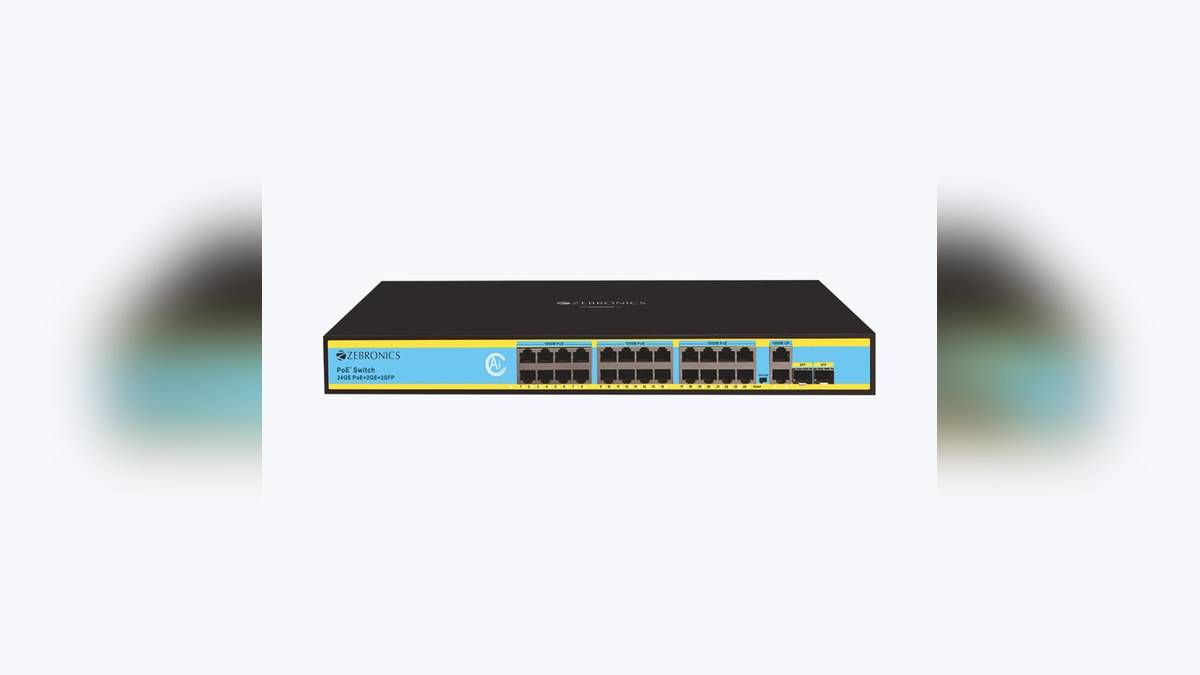

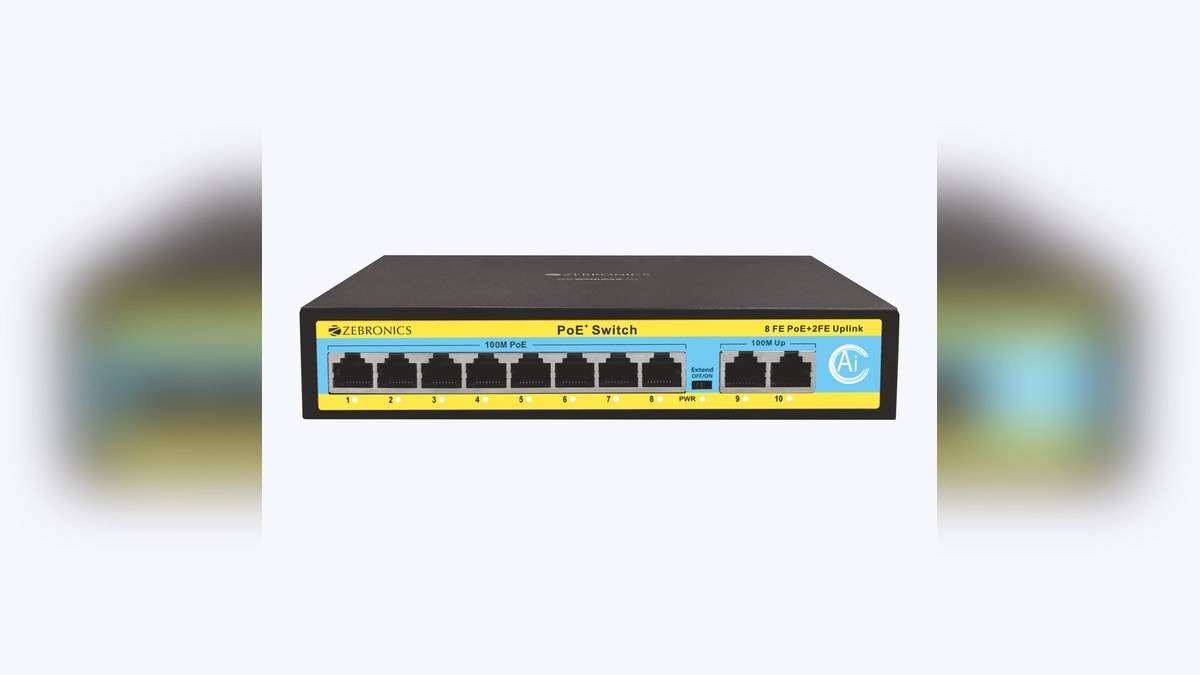
NEW DELHI: Zebronics lists the Zeb 8PM2UM 120 at Rs 4,199 and the 8PM2UG1UF 120 at Rs 4,999. Both are wired PoE switches for camera networks. The important difference is the connection back to the recorder or wider network: the UM has Fast Ethernet uplinks, while the UG1UF adds Gigabit uplinks and an SFP connection.
| Item | Official listing |
|---|---|
| 8PM2UM 120 | Rs 4,199; 8 x 100M PoE, 2 x 100M uplink |
| 8PM2UG1UF 120 | Rs 4,999; 8 x 100M PoE, 2 x 1000M uplink, 1 x 1000M SFP |
| Both power ratings | 120W total; up to 30W per port; IEEE 802.3af/at |
| Extended mode | Up to 250 metres at 10M over Cat.6 |
Price as of 20 November 2026, 10:56 IST. Zebronics lists these prices with tax included.
What the price difference actually changes
According to Zebronics' official product pages, the camera-facing sockets remain Fast Ethernet on both models. The more expensive unit therefore does not turn each attached camera connection into Gigabit Ethernet. Its advantage sits further along the route, where traffic from several cameras may need to share the link to a recorder, router or another switch.
That distinction matters in a home with separate cameras at the gate, staircase, parking area and terrace. Looking only for a Gigabit label can obscure which sockets have that capability. An installation diagram should identify the camera connections and the uplink separately, so that the quotation describes the path the footage will actually follow.
The listings describe both products as unmanaged. Treat them as equipment for extending a wired network, with the operating limits shown in the table, rather than assuming that the higher price brings a web dashboard or advanced traffic controls. Ask for any required management feature to be demonstrated before including it in the installation plan.
Power is a shared budget
Both pages specify the same total power budget and the same maximum per-port output. These are different limits. A camera can fit within the individual port rating while the combined demand of the installed devices still needs checking against the switch budget. The port count alone is insufficient evidence that every connected device can draw its maximum simultaneously.
For an Indian household adding cameras in stages, the useful document is a load schedule containing each camera model and its rated demand. Keep the ratings for illumination and other powered features in view as well. This is an installation check, not a prediction of measured consumption: neither product page supplies a tested power profile for your particular camera combination.
PoE compatibility also needs attention. Zebronics names the supported standards on both listings. Match those against the cameras, rather than using the word PoE as a universal compatibility promise. Existing equipment should be identified from its label or manual before the installer replaces a separate power arrangement with power supplied over Ethernet.
Read the extended-distance claim carefully
The official specifications tie the extended transmission distance to the slower link mode and Cat.6 cabling. That qualification belongs beside the distance claim. It should not be presented as the normal high-speed reach of every socket. Ask the installer to record the selected mode and show live video from the furthest camera after the cabling is complete.
This is particularly relevant when a camera sits at a distant gate and the recorder stays inside the house. A cable route may be much longer than the straight-line distance between those points. The switch specification is only part of the assessment; the proposed route, terminations and camera requirements still need to be checked together.
Both listings include watchdog and protection features. Those descriptions do not establish a guarantee that a camera can never freeze or that every electrical incident will be harmless. During handover, check how the system recovers after an ordinary power interruption and confirm that recording resumes. That gives the household a practical acceptance check without inventing reliability results.
Which installation question comes first?
The first question is whether the planned recorder connection benefits from the UG1UF uplinks. If the design needs its fibre connection, confirm the matching optical equipment separately. An SFP socket is a connection option; it is not evidence that every module, fibre lead or network accessory is supplied in the box.
For related background, our Zeb 8PPG2UGS guide covers another CCTV switch, while the Zeb IP recorder guide explains a separate part of the system. The Zeb WR3004G guide is relevant when remote access also needs an internet connection. These are separate products, not included components.
The two prices here are for the switches on their respective official pages. Obtain a separate itemised quotation for cameras, recording hardware, storage, cabling and labour. There is no verified complete-system price or camera retention period in these switch listings. The better comparison is the network design each model can support, followed by the total installed bill.
Official sources: Zebronics 8PM2UG1UF 120 product page, Zebronics 8PM2UM 120 product page.