The World Trade Organization has raised its forecast for world goods trade in 2026 to 3.9%, up sharply from the 1.9% it expected in March. At the same time it has cut its forecast for services trade to 3.3% from 4.8%. The numbers come from the WTO's Global Trade Outlook and Statistics, released on 8 October 2026.
The headline is better than many people expected, given the Middle East conflict. This explainer sets out what the WTO measured, why the numbers moved, and what they say about economies that export services, as India does.
What the WTO is forecasting
The WTO measures trade in volume, which means it strips out price changes. For 2026 it now expects merchandise trade volume to grow 3.9%, and then 4.1% in 2027. For commercial services it expects 3.3% in 2026 and 6.4% in 2027. It pairs these with global GDP growth forecasts of 2.6% in 2026 and 2.9% in 2027.
The upgrade came from a stronger first half. Merchandise trade volume grew 3.5% in the first six months of 2026, ahead of expectations. The WTO says supply chains adapted to shocks in energy, fertiliser and transport markets.
Its figures show the scale of the disruption. Crude oil exports from the Middle East fell by roughly 24% in the first half and liquefied natural gas exports by 47%. Other suppliers filled much of the gap, so global crude oil exports fell only around 6% and LNG exports just 1%.
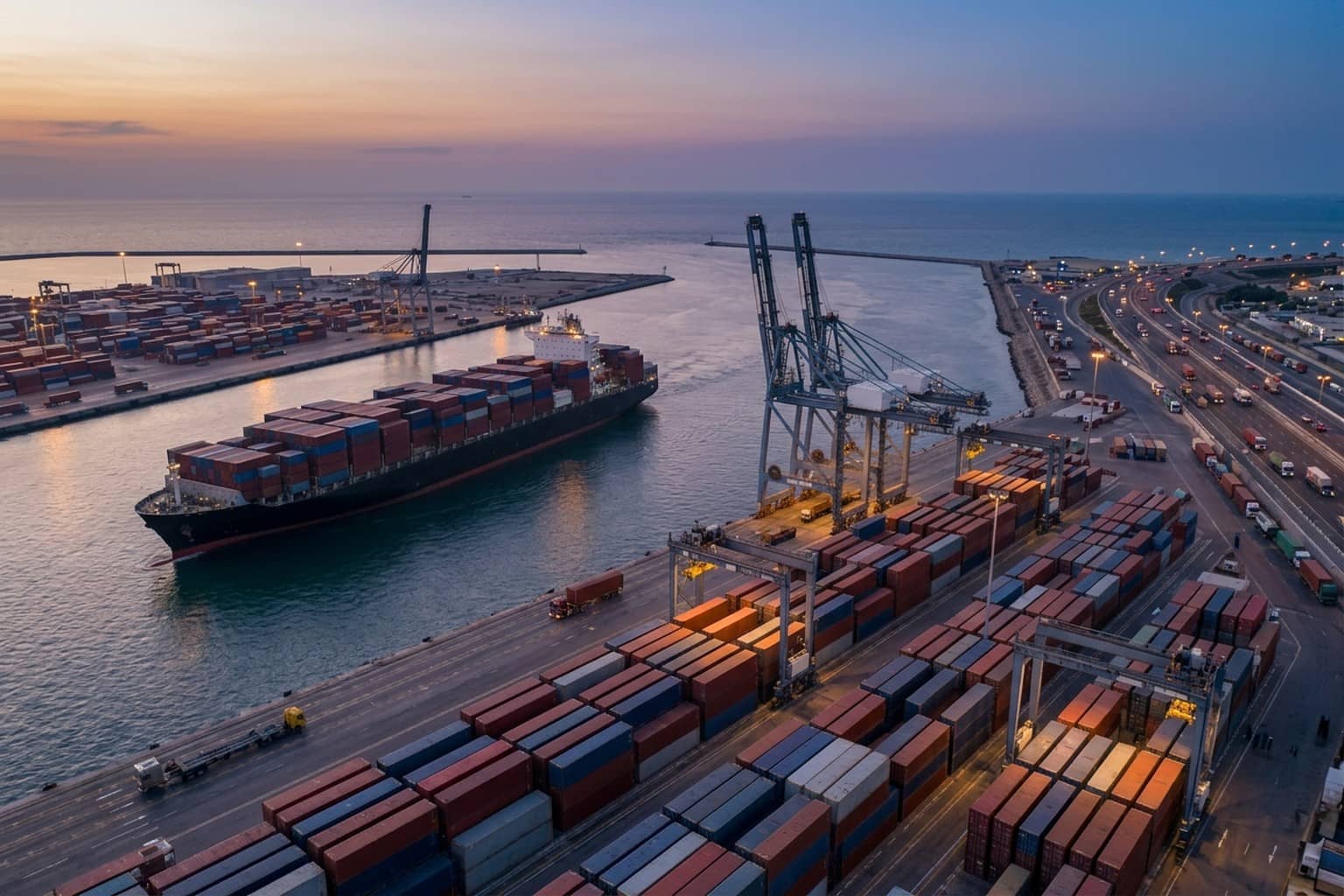
Fertiliser markets adjusted too. Global imports of nitrogenous fertilisers were only 2.8% below recent averages, and phosphatic fertiliser imports were 2.2% higher. Container throughput rose 3.9% in the year to July.
Why AI hardware matters so much
The biggest single driver was investment in artificial intelligence. Goods that enable AI, such as semiconductors and servers, accounted for 47% of global merchandise trade growth in the first half of 2026. Trade in those products rose 67% compared with a year earlier, faster than in 2024 and 2025.
The WTO expects this to continue. It projects global AI infrastructure spending to rise by at least 30% in 2026, with market projections pointing to a further 10% to 20% rise in capital spending on AI in 2027. The report includes a chapter on how this boom is reshaping trade patterns and the geography of supply and demand.
Services took the hit
Commercial services trade grew 14% in value in the first quarter and 10% in the second. The slowdown came from transport and travel, two sectors that depend on the Middle East's role as a hub. Higher freight costs and rerouted shipping affected transport. Travellers' spending abroad grew only 5% in the second quarter, down from 15% in the first, and international tourist arrivals fell 0.8% in the second quarter.
Digitally delivered services held up better. Computer services exports rose 18% in the first quarter and an estimated 12% in the second. Financial services exports grew 14% in the second quarter. The WTO expects these categories to keep supporting services trade.
Imports tell a similar story. Asia is expected to post the strongest import growth in 2026 at 9.5%, followed by Africa at 8.9% and the Commonwealth of Independent States at 8.8%. North America is forecast at 1.4% and Europe at 0.5%, while Middle East imports are projected to fall 15.4% as the conflict continues to disrupt trade flows.
An uneven picture by region
The WTO expects Asia to record the fastest merchandise export growth in 2026 at 9.9%, followed by North America at 5.7%, Africa at 5.6% and South America at 3.4%. Europe is forecast at minus 0.1%. The Commonwealth of Independent States is projected to fall 3.9% and the Middle East 17.2%.
On services exports, Europe is expected to lead at 4.6%, then Asia at 4.0% and Africa at 3.1%. The Middle East is forecast to fall 10.3%. The WTO says Europe will provide more than half of global services export growth this year.
What it means for India
The WTO's regional figures group countries, and this news item does not give a separate India forecast, so none is quoted here. What the numbers do show is the kind of trade India depends on: computer and financial services, where the WTO sees resilience, and the Asian goods trade that is benefiting from AI hardware.
India has been adding trade partners at the same time. Readers can follow the India and New Zealand trade deal that starts on 20 October and the excess capacity statement India has signed, and our explainer on the EU carbon border levy and Indian exporters.
The WTO also warns that the benefits are not shared evenly. In its words, not everyone can access emerging opportunities like AI, which is why the forecast for a country can look very different from the world average. A forecast is also not a guarantee. It rests on assumptions about the Middle East conflict, energy prices and continued AI spending, and the WTO updates it as new data arrives.
For businesses, the practical reading is cautious. A stronger goods forecast does not mean every exporter will see more orders, because the WTO says AI hardware accounts for nearly half of the growth. Sectors that sell into other supply chains may feel the shift in demand only slowly, and the services slowdown is a reminder that travel and transport remain exposed while shipping routes and energy prices stay unsettled.
What to watch next
The International Monetary Fund will publish its October World Economic Outlook on 13 October during its Annual Meetings in Bangkok, which will give a second official view of the world economy. Director-General Ngozi Okonjo-Iweala said the numbers reflect trade resilience in action, but that some economies have felt the shock more than others. This is information, not advice.