
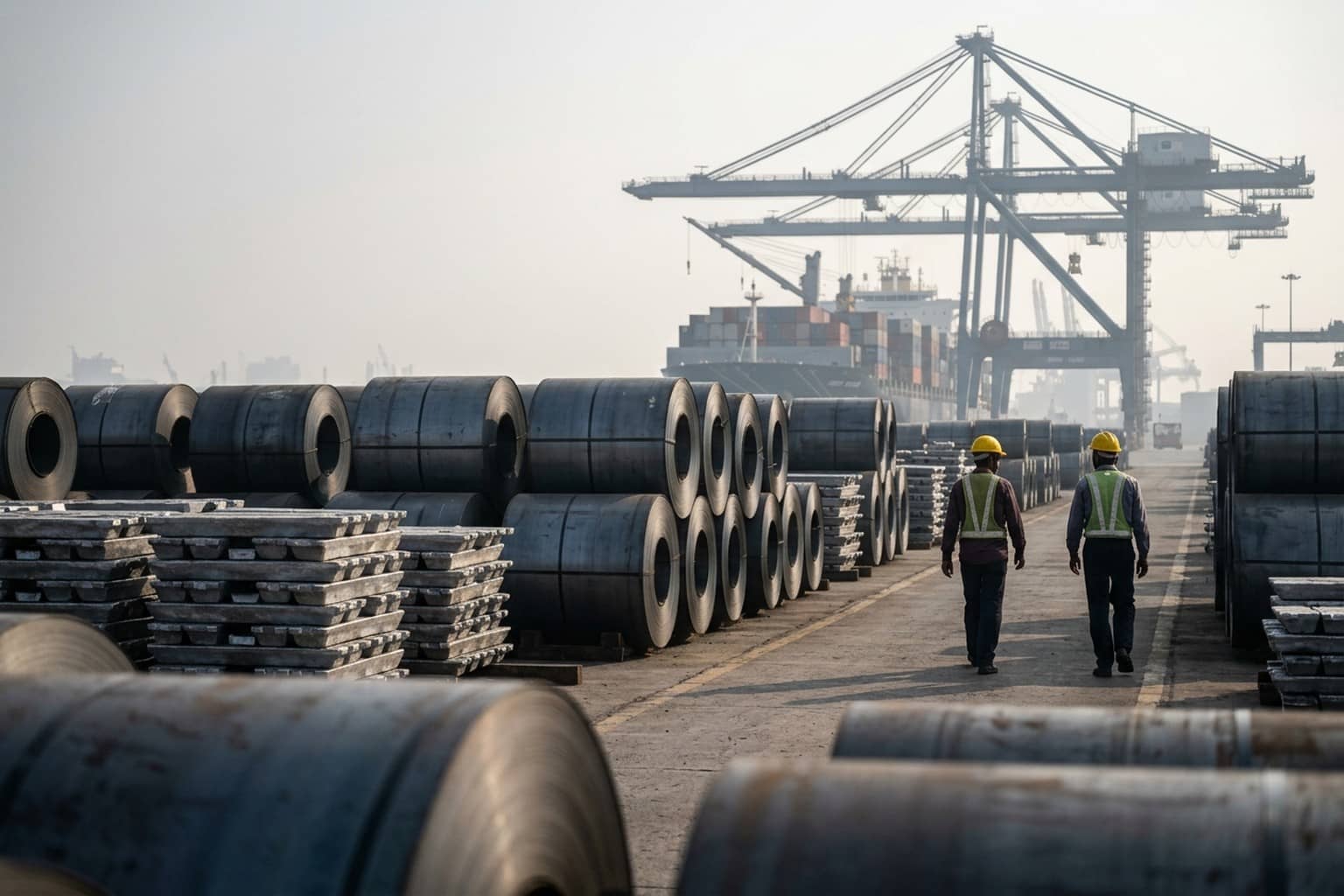
Since 1 January 2026, steel, aluminium and a few other goods crossing into the European Union have been under the definitive phase of the Carbon Border Adjustment Mechanism, known as CBAM. The earlier years were a reporting exercise. Now there are certificates to buy and surrender, with the first purchases due in 2027. Indian exporters do not hand over the money, but their EU customers do, and that makes the rules a practical matter for any Indian plant that ships to Europe.
Today, 5 October 2026, is also the date the European Commission scheduled for publishing the CBAM certificate price for the third quarter. When we checked the Commission's price page early on 5 October, that quarter's figure had not yet appeared.
What CBAM covers and why it exists
The Commission says CBAM puts a carbon price on the emissions built into certain imports, so that imported goods face a cost comparable to what EU producers already pay under the EU Emissions Trading System. The aim is to stop what it calls carbon leakage, where production simply moves to countries with looser climate rules. The covered sectors are cement, iron and steel, aluminium, fertilisers, electricity and hydrogen. The Commission says the design is compatible with World Trade Organization rules.
Who pays, and why exporters still need to care
The obligation sits with the importer in the EU, not the exporter. An EU importer, or its indirect customs representative, that brings in more than 50 tonnes of CBAM goods over a year must become an authorised CBAM declarant. That means registering through its national authority, buying certificates from that authority and surrendering them once a year against the emissions it declares. Importers of goods other than electricity and hydrogen that stay under the 50 tonne yearly threshold do not need authorisation. Importers of electricity and hydrogen must always be authorised.
Why would an exporter in Gujarat or Odisha care? Because the importer needs the numbers. The declared emissions can come from actual, verified data supplied by the plant that made the goods, or from default values published by the Commission. Those defaults carry a mark-up of 10 per cent in 2026, 20 per cent in 2027 and 30 per cent from 2028. The Commission's own question-and-answer document says it should in most cases be more advantageous to use actual values where they exist. A buyer in Europe has a reason to ask its suppliers for them.
The defaults are specific to country and year. Where a good is not listed for a country, the table for other countries and territories applies. The Commission also warns importers that unsolicited offers of paid verification reports are likely a scam, and says verified emissions data should come from the operator that made the goods.
A carbon price already paid where the goods were made can be deducted, so long as the importer can prove it. The Commission says this covers carbon taxes and emissions trading schemes charged on the embedded emissions, and that it must be genuinely paid rather than rebated or offset by free allowances. The detailed rules for evidence were due in an implementing act in 2026, so exporters should watch the Commission's guidance pages for them.
How the certificate price is set
For 2026 the Commission works out one price per calendar quarter, as the weighted average of the clearing prices at EU emissions allowance auctions. It publishes each price in euros in the first week after the quarter ends. The first-quarter price, published on 7 April 2026, was 75.36 euros. The second-quarter price, published on 6 July 2026, was 75.28 euros. The third-quarter figure is scheduled for 5 October 2026 and the fourth for 4 January 2027. From 2027 the price becomes a weekly average.
These are statements of what the Commission has published. They are not a view on where carbon prices are heading, and nothing here is a basis for a trading or investment decision.
The dates that matter
Certificates cannot be bought yet. The Commission's question-and-answer document says sales start on 1 February 2027, through a common central platform that only authorised declarants can reach, and only from the CBAM registry. From 2027, a declarant whose imports pass the threshold must hold enough certificates at the end of each quarter to cover at least 50 per cent of the emissions embedded in goods imported since the start of the year.
The first annual deadline is 30 September 2027. By then declarants must file a declaration for the 2026 import year and surrender the matching certificates. For 2026 imports, the certificates are bought between February 2027 and that deadline, priced by the quarter in which the goods arrived. The Commission expects the first verification reports in early 2027, and it asks plants outside the EU to register in the CBAM registry so verified data can reach importers securely.
Small shipments and the 50 tonne line
The 50 tonne threshold is a mass-based exemption for small importers. On 30 September 2026 the Commission published an assessment of it. For the period from 1 April 2025 to 31 March 2026, it found the threshold would exempt 0.87 per cent of embedded emissions, below the 1 per cent limit set in the CBAM Regulation. For now, the line stays where it is.
Indian companies are also working on cleaner production at home, and we have covered a green hydrogen pilot plant at Manesar. On the export side, a first processed-food shipment from Varanasi to Oman shows how a small consignment can test whether a local producer meets an overseas buyer's standards.