Saudi Arabia will let highly skilled foreign workers bring their families into the country at the same time as their own work visa is completed, the Ministry of Interior announced on 6 October 2026. Until now, a worker usually had to arrive, finish his or her own residency paperwork and only then start the process for a spouse and children. For skilled Indian professionals weighing a move to the Kingdom, the change could remove months of living apart.
The ministry posted the announcement in Arabic and English on its official X account. The English post says expatriates "may bring their families to the Kingdom concurrently with the completion of work visa procedures for highly skilled heads of households." The Arabic version, posted ten minutes earlier, describes the same heads of household as people of competence, meaning qualified workers.
What the new sequence looks like
According to the ministry's announcement, entry visas for eligible family members can now be issued alongside the head of household's work visa. The family's residence procedures, the iqama that every foreign resident needs, are then completed after they land in Saudi Arabia. The ministry said the step was taken together with the Ministry of Foreign Affairs and the Ministry of Human Resources and Social Development.
In practical terms, the old order was work visa, arrival, the worker's own iqama, and then a separate family visa application. The new order puts the work visa and the family entry visas on the same track. That matters most for people relocating with school-age children, who often had to plan around an uncertain gap before the family could join.
Who counts as family
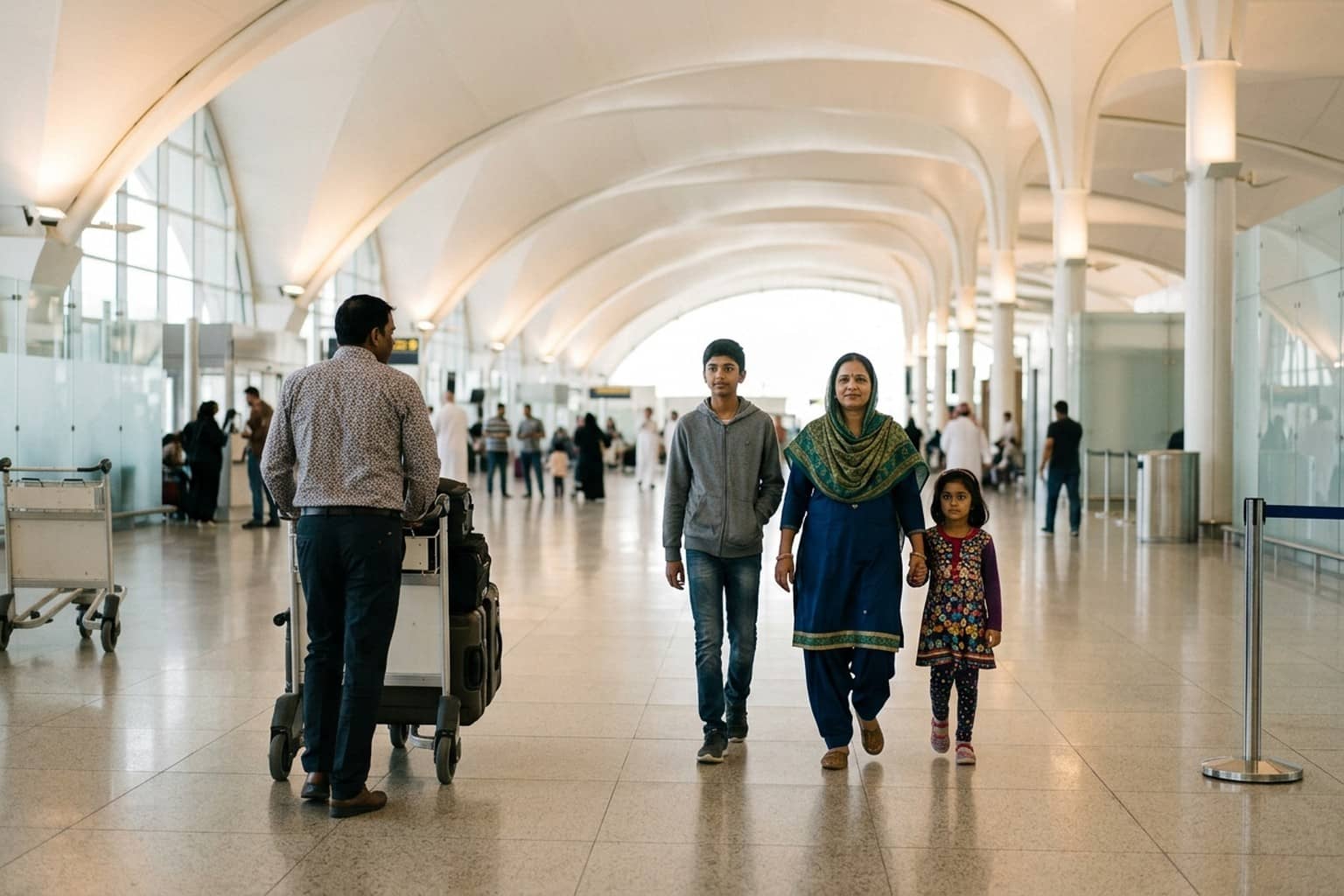
The announcement covers the spouse, sons under the age of 25 and unmarried daughters. Parents, siblings and other relatives are not mentioned, so they remain under the existing visit visa routes.
The benefit is limited to heads of household classed as highly skilled. The ministry's announcement does not define that term, and as of 9 October 2026 no official page we checked lists the qualifying jobs, salary levels or skill grades. Employers and applicants will need to watch for detailed guidance from the ministries involved.
What is still unclear
Several practical points have not yet been published. The ministry has not said which online platform will carry the combined applications, whether the usual family visa fees change, or whether the step applies to workers already in the Kingdom who are waiting on family visas. It also has not given a start date beyond the announcement itself.
Until those details appear, the existing official channels remain the place to look. Family visa and residency services run through Absher, the Interior Ministry's e-services portal, while visa applications are handled on the Foreign Ministry's visa platform. Readers should check the official page or a qualified adviser for their own case before making travel or school plans.
Why it matters for Indian families
Indians form one of the largest foreign communities in Saudi Arabia, and many work in engineering, healthcare, finance and technology roles that are likely to fall within a skilled category. For them, the change could make an offer from a Saudi employer easier to accept, since the family would no longer have to wait at home while paperwork moves in stages.
The move also fits a wider pattern of Gulf states competing for skilled foreign staff with easier family rules. For Indians tracking other countries, our recent reports cover the UK's updated travel advice and arrival rules for India and the extension of the US H-1B $100,000 payment to September 2027.
For now, the key point is simple. If you are classed as highly skilled and your Saudi work visa is in progress, your spouse and eligible children may be able to travel with you rather than after you. The fine print on who qualifies is the part still to come, and we will update this report when the ministries publish it.