Varanasi's District Panchayat has invited bids for 14 health subcentre and wellness-centre buildings, alongside a public-health laboratory and health-information cell at Hathi Bazar Community Health Centre. The notice is dated 13 October, with online submissions scheduled to close at 5pm on 3 November 2026. No service opening is announced.
The subcentre works cover Sevapuri and Harhua blocks. Each carries an estimated cost of Rs 41.57 lakh including GST; the Hathi Bazar work is estimated at Rs 56.99 lakh including GST. The listed construction period is six months. These are estimates, not awarded prices or opening dates.
Bid opening is scheduled for 11am on 4 November. The notice makes subcentre agreements conditional on transfer of land by the health department and specifies a two-year defect-liability period.
What the laboratory and local centres are meant to do
The laboratory and information cell have different roles. The Union health ministry's 2022 standards for community health centres describe a Block Public Health Unit as combining clinical care with public-health functions, laboratory work and health-information reporting. Its purpose extends beyond a room in which samples are tested: the unit is also meant to support disease surveillance and planning for the block.
Under that model, subcentres and primary health centres connect to a block-level referral facility. Health-information reporting is intended to improve the quality and timeliness of service data and help identify possible outbreaks. Block health plans feed into district plans, with local bodies involved in planning. These are national design objectives, rather than evidence that a particular local unit is already performing them.
The same standards call for laboratory functions to be integrated to avoid duplication. For readers assessing a future facility, the practical question is how its testing, reporting and referral arrangements work together. A building's completion and a functioning public-health service are different things. The standards prioritise in-house recruitment of clinical staff, while support activities such as cleaning can be outsourced.
For the smaller centres, the ministry's separate 2022 subcentre standards offer a way to assess readiness. Compliance requires the essential services for that level of care, supported by the necessary staff, medicines, equipment and infrastructure. A newly constructed building alone therefore does not establish that the full service package is available to patients.
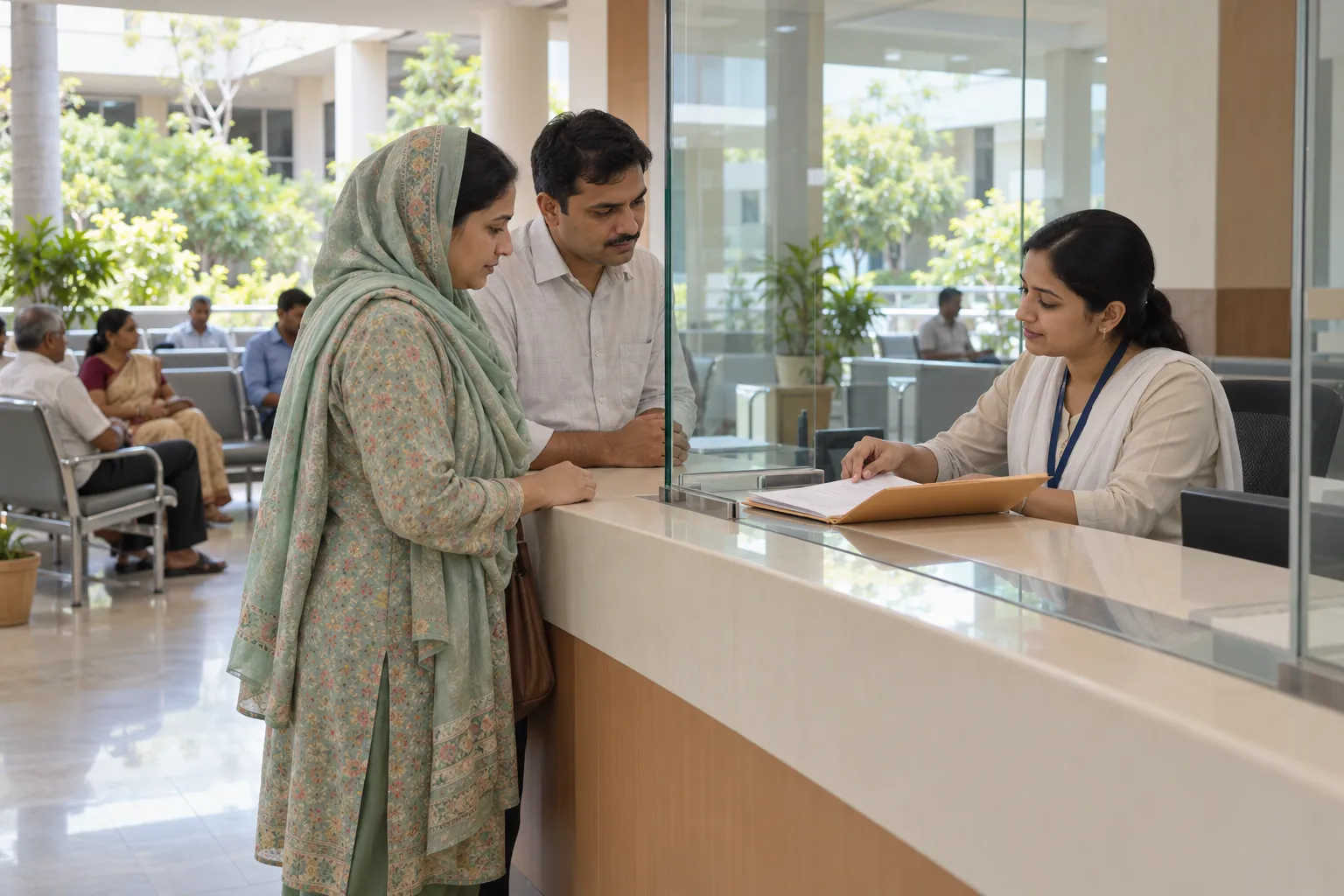
The standards call for a visible citizens' charter setting out services, hours, entitlements and grievance arrangements. Information about free medicines and diagnostic tests should be available for residents to inspect. Referral arrangements should also be displayed, helping a patient understand where to go when care is needed beyond the centre's capacity.
Community oversight has a defined place: Jan Arogya Samitis are intended to identify gaps and provide a route for families to raise concerns. Local complaint arrangements should complement state-level systems, with feedback and escalation when resolution is delayed. These published benchmarks give residents concrete questions to ask as facilities become operational. Complaint routes include a complaint box, written acknowledgement and meeting the community health officer. For a separate, current service update, see Dalimss News's Varanasi cancer-hospital holiday guide.
What bidders should check before submitting
Contractors should also distinguish uploading files from completing a bid. The Uttar Pradesh eProcurement portal's official instructions say bids must be frozen to complete submission; an unfrozen bid is treated as incomplete and is not evaluated. The resulting bid summary records the submission and should be kept as acknowledgement. Receipt by the system does not certify that the bid is correct.
The portal tells bidders to check corrigenda before submission and preserve the supplied bill-of-quantities template, entering only the permitted details. It advises preparing documents early and using the portal's server clock, which follows Indian Standard Time. This reduces the risk of treating a laptop's clock or an unfinished upload as proof that the deadline has been met.
Its guidance also covers enrolment and digital signatures. Bidders should read the specific tender alongside these general instructions because the notice governs the documents and conditions for the work being sought. Dalimss News has separately explained IIT-BHU's equipment tenders, whose eligibility conditions and deadlines belong to those purchases.