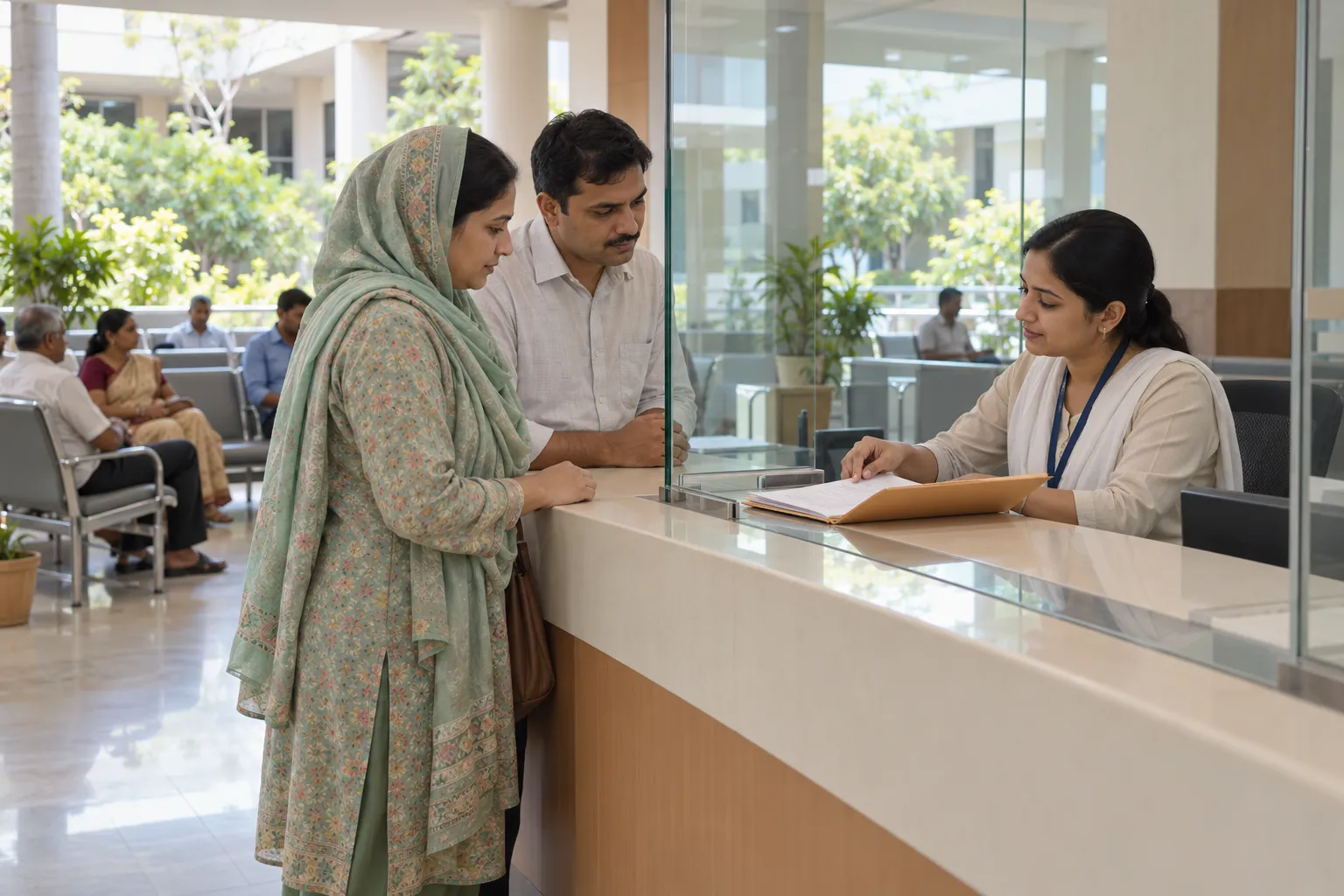
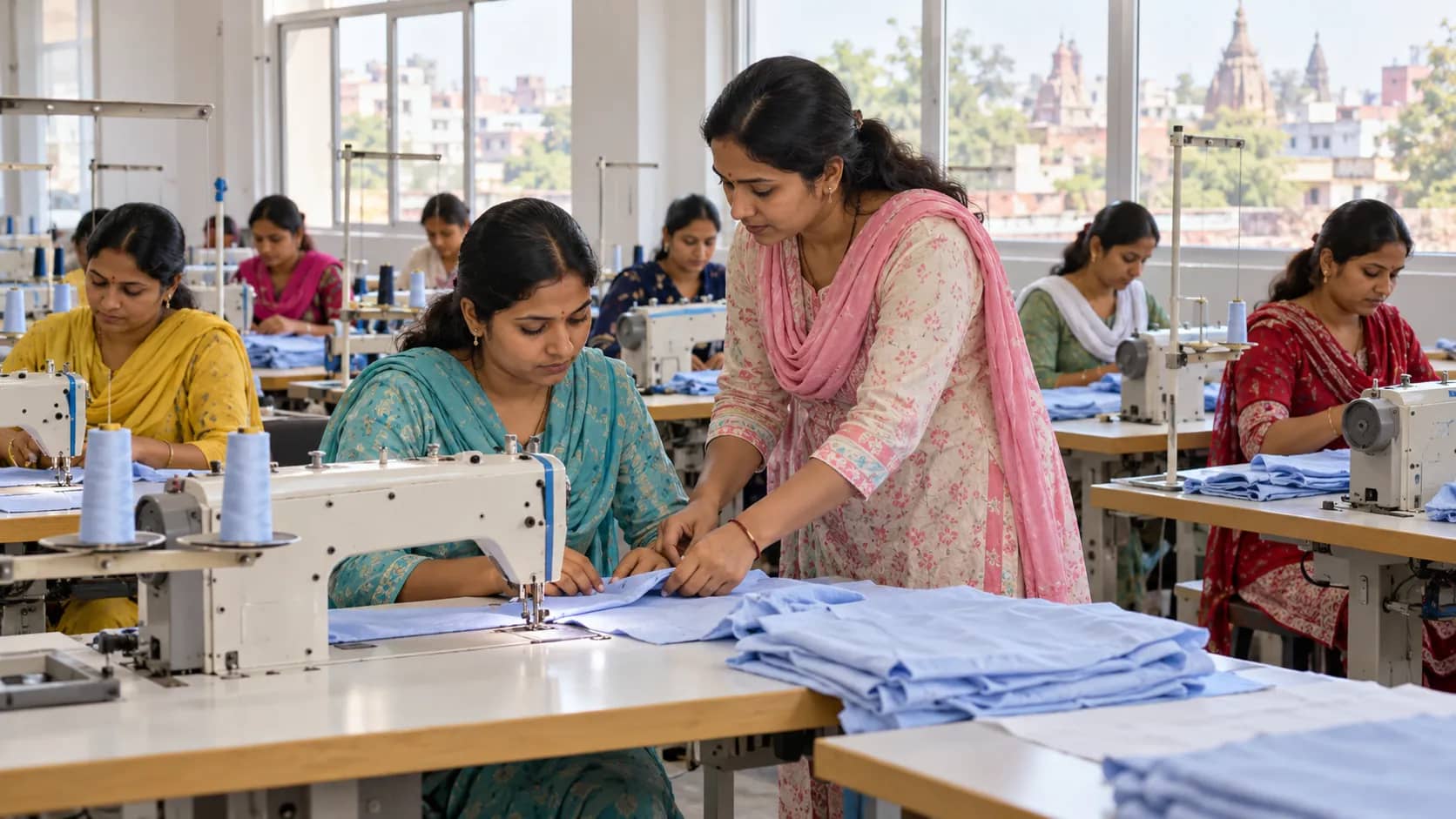
Arvind's new unit at Mirzamurad in Varanasi is being prepared for a proposed inauguration by Prime Minister Narendra Modi on 25 October, according to the Uttar Pradesh government's 14 October inspection release. Chief Minister Yogi Adityanath reviewed the preparations and met women undergoing training there.
The release puts the project's cost at Rs 100 crore and says it is expected to create more than 1,000 jobs. About 300 women were receiving training at the time of the visit. It records the foundation ceremony on 25 April 2024 and a site covering more than seven acres. These are the state government's figures.
An inauguration date is not a production-start date
There is an earlier company timeline to read alongside that announcement. In its 13 August 2026 earnings call, Arvind management said the Varanasi factory was expected to start the following month. The transcript does not establish whether that September expectation was met. A planned public inauguration therefore should not be described as proof of the first day of commercial production.
The project had already appeared in Arvind's 7 November 2025 earnings discussion. Management said it had slowed expansion spending during global uncertainty, then restarted the projects. Varanasi was specifically discussed as part of the garment-capacity programme. That earlier account provides a construction and investment history; it is not a new announcement made this week.
The August call also described increasing output at existing factories through automation and second shifts. Management said new garment capacity was needed because the business was operating at full utilisation. Those statements concern the company's wider manufacturing network. They do not give the Mirzamurad unit a verified daily output or a particular share of group production.
For the quarter ended June 2026, Arvind reported garment volume above 11 million pieces, up 13% from a year earlier. Those company-wide figures show the scale of the business into which the Varanasi project fits.
Why the company is adding garment factories
Arvind set out the commercial reasoning in its 30 January 2026 call: it wanted to expand finished-garment capacity rather than simply add more fabric-making space. Management pointed to buyers seeking a complete apparel package and said fabrics could also be sourced from other suppliers. Varanasi was named among the factories coming up within that plan. Management also identified automation at three existing facilities and the ramp-up of a Bengaluru factory as parts of the same wider capacity programme.
That is the distinction behind the company's use of vertical integration. A business that supplies fabric can also undertake more of the work needed to deliver a finished garment. The January discussion prioritised denim and knitted garments in the expansion programme, with other categories at later stages. It did not allocate every product category to Varanasi, so a group strategy cannot be read as the local factory's confirmed order book.
The company's textile and apparel overview separately describes businesses covering denim, woven fabric, knits and garments. Its garment operations include jeans, shirts, knitted clothing and essentials, serving domestic and overseas brands. Those are portfolio descriptions. The page does not identify which named customers will be supplied by the Mirzamurad facility.
The overview also describes work beyond stitching, including design, fabric development and finishing. This helps explain why an apparel expansion can involve several production skills. It does not establish which of those functions will operate at this particular site or what qualifications a local vacancy will require.
What prospective workers can check
Arvind's official careers page links to its current-openings portal. Applicants should check the location and role in an actual vacancy before making plans. The corporate page also describes training and early-career programmes, but it does not itself provide a Mirzamurad recruitment schedule, application deadline or salary list.
The employment estimate in the state release is not an advertised vacancy count. Nor does the training figure establish that every trainee has received a permanent job offer.
Dalimss News has separately reported on the Varanasi logistics-park concession and the India Carpet Expo in Bhadohi. These are separate regional business developments, with their own operators and timetables; neither establishes production or hiring arrangements at Arvind's unit.