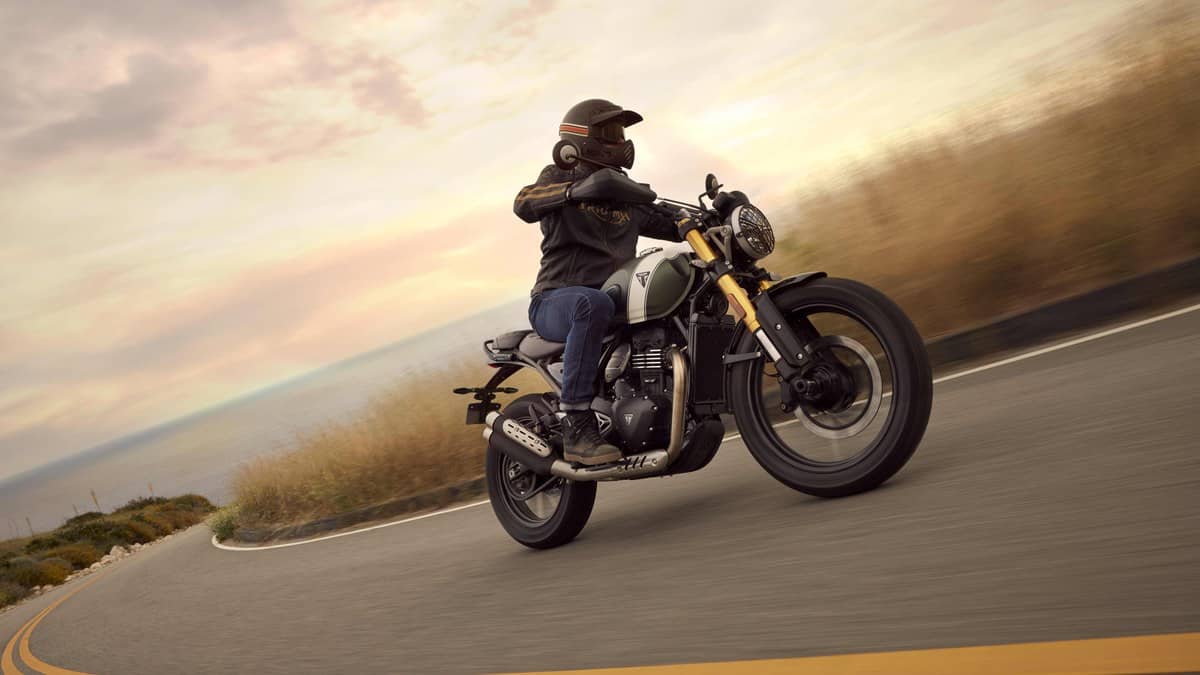
NEW DELHI: Triumph's current India product pages list the Speed 400 from Rs 2,35,327 and the Scrambler 400 X from Rs 2,66,166. These are the manufacturer's displayed starting prices, rather than quotations for every colour or a complete on-road bill. Despite their 400 badges, both current India specification tables identify a 349 cc engine, making the chassis and riding position central to this comparison.
| Official listing | Speed 400 | Scrambler 400 X |
|---|---|---|
| Displayed starting price | Rs 2,35,327 | Rs 2,66,166 |
| Engine capacity | 349 cc | 349 cc |
| Maximum power | 37 PS at 8,500 rpm | 37 PS at 8,500 rpm |
| Peak torque | 32 Nm at 7,000 rpm | 32 Nm at 7,000 rpm |
| Front wheel diameter | 17 inches | 19 inches |
| Seat height | 803 mm | 835 mm |
| Wet weight | 179 kg | 185 kg |
| Fuel capacity | 13 litres | 13 litres |
Price as of 26 October 2026, 23:15 IST. The figures above were read from the current model pages. Triumph's older page structure and indexed results can show different amounts, so they have not been mixed into this comparison. The displayed starting price also does not establish the price of a particular paint option.
The engine badge needs careful reading
The current motorcycles share the same published capacity, maximum power and peak torque. Both use liquid cooling, a single cylinder, fuel injection and an electronically controlled throttle. There is no extra peak output in the Scrambler's specification table to explain its higher entry price.
The shared power figures put the emphasis elsewhere. Riders comparing these models are looking at different ways of packaging a similar engine: a roadster with smaller front-wheel dimensions and a taller Scrambler with different suspension travel. Calling either one more powerful on the strength of its appearance would misread the official data.
Both specification tables also list a six-speed gearbox and an assist-and-slip clutch. That establishes the basic transmission arrangement, but it does not tell us how often either motorcycle needs a downshift on a particular road. Such impressions require riding the bikes in comparable conditions, rather than treating a specification sheet as a road test.
The Scrambler changes the stance
The larger front wheel is an obvious visual and mechanical distinction. It sits alongside a taller seat and a wider handlebar measurement on the Scrambler's page. Taken together, those details describe a different riding position, not simply a roadster wearing different paint and a different model name.
The Speed's lower seat measurement may be relevant when considering reach to the ground, although seat width, rider inseam and suspension movement also affect that experience. A seat-height number is a useful starting point for understanding the layout. It is not a guarantee that a particular rider will place both feet flat on the road.
Suspension and brake hardware explain more
Triumph lists front and rear wheel travel of 130 mm and 120 mm respectively for the Speed. The Scrambler has 150 mm at each end. Both use upside-down front forks and a rear monoshock with preload adjustment, but the published travel gives a clearer distinction than the similar engine specification does.
The front disc is 300 mm on the Speed and 320 mm on the Scrambler; both list ABS. A larger disc is a component difference, not a measured stopping-distance result. Tyres, road surface and the way the complete brake system is calibrated remain relevant when assessing actual braking performance.
Both pages describe a combined analogue and digital instrument display. Neither motorcycle's starting-price comparison should therefore be framed as a contest between a conventional dashboard and a large colour TFT screen. The shared fuel capacity also means there is no larger tank to explain the Scrambler's price position.
Keep the comparison tied to the current India models
For related motorcycles already covered by the desk, the Royal Enfield Guerrilla 450 report provides roadster context. The Scram 440 price report and Himalayan price report cover other interpretations of a taller, versatile motorcycle. Those articles have their own dates and price bases.
This pair is principally a comparison of riding layout and chassis equipment at different starting prices. The Speed offers the lower published entry point, while the Scrambler changes wheel size, suspension travel and stance without raising the listed peak engine output. A complete cost comparison would still need the chosen colour, registration, insurance and any accessories itemised separately.
Official sources: Triumph Speed 400 India product and specification page and Triumph Scrambler 400 X India product and specification page.