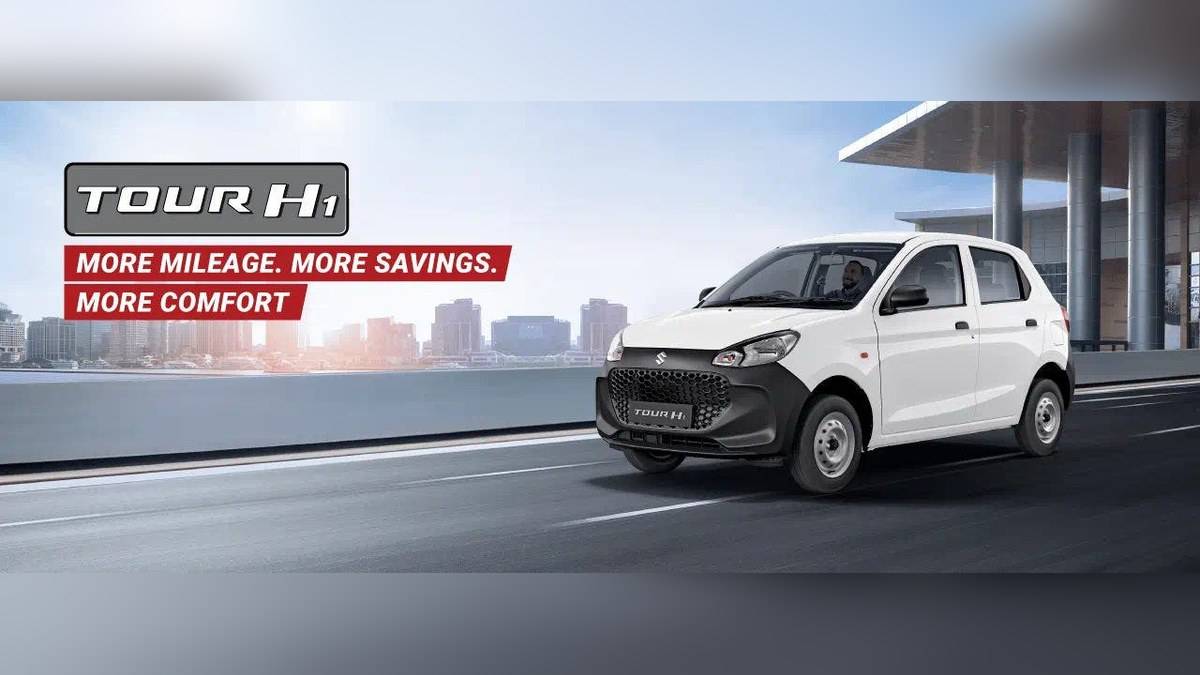
NEW DELHI: Maruti Suzuki's current Tour H1 page lists six airbags and an 80 km/h speed-limiting function for the commercial hatchback. The seating specification needs equal attention: the company lists five persons for petrol and four for CNG. These figures describe different parts of the vehicle's configuration, so an airbag count should never be treated as a passenger-capacity figure.
| Item | Current official listing | Practical reading |
|---|---|---|
| Airbags | 6 | Safety equipment count |
| Speed-limiting function | 80 km/h | Maximum permitted by the vehicle's limiting function |
| Petrol seating | 5 persons | Total listed capacity |
| CNG seating | 4 persons | Different from the petrol version |
| Other listed equipment | ESP, ABS with EBD, reverse parking sensor | Separate functions, rather than interchangeable safety claims |
The current page differs from the launch document
The original Tour H1 announcement in June 2023 described dual airbags. The current commercial product page instead explicitly says six. That difference is useful for an operator looking through old brochures or an owner checking an earlier car: the specification currently advertised cannot automatically be applied backwards to every vehicle carrying the same Tour H1 badge.
The launch announcement also established the model's relationship with the Alto K10 and its role in Maruti's commercial channel. Its factory S-CNG option and petrol option were part of that introduction. Those origins help explain why a familiar small-car shape can appear in taxi service, but they do not make every private Alto specification transferable to the commercial vehicle.
For an existing vehicle, its own documentation and equipment take priority over a screenshot of today's page. The production version matters when checking the airbag arrangement or another safety feature. This distinction also prevents an older photograph, launch specification or sales description from being mistaken for a complete description of the current vehicle.
An equipment list also needs to stay separate from a crash-test result. The current Tour H1 page identifies fitted features; this article does not assign the hatchback a star rating or borrow a rating from the related private passenger model.
Read passenger capacity before planning a trip
The petrol and CNG seating figures are explicitly different on the current Tour H1 page. An operator arranging a booking therefore needs to identify which fuel version will make the journey before discussing how many people it can carry. The answer cannot be inferred merely from the body shape or the model name on a fleet list.
For dispatch purposes, the useful record is the capacity of the particular car assigned to the trip. Keeping that information beside the registration and fuel type avoids a mismatch between the booking and the vehicle. Luggage requirements should also be discussed separately, because a seating figure does not describe the space available for bags.
What the speed limiter establishes
The published 80 km/h figure identifies the Tour H1's speed-limiting function. It is a technical ceiling associated with the vehicle, rather than a statement about how fast a journey should be completed. A trip schedule still has to allow for the roads, stops and conditions encountered on the route.
For an operator, this specification belongs in route planning and driver familiarisation. It would be a mistake to treat the limiter as proof that every road situation has been made safe. The driver still has to judge the available space, traffic and visibility, even when the car has electronic equipment intended to support safer operation.
Check the equipment by function
The current listing includes Electronic Stability Program, ABS with EBD and reverse parking assistance. They appear alongside airbags and seat-belt reminders, rather than replacing them. A vehicle handover should cover these systems individually, including the warning indications and operating guidance in the manual supplied for that car.
Maruti's original launch release already identified front seat belts with pretensioners and force limiters, front and rear belt reminders, an immobiliser and reverse parking sensors. That historical list provides context for the model's equipment development. It should not be used to claim that a particular later feature was present from the start.
Our Tour H1 price list covers the separate question of listed prices. The Tour H3 price coverage provides a reference for another commercial hatchback, while the Dzire test-scope explainer discusses a different type of safety information.
For Tour H1 fleet records, the useful combination is the car's version, listed seating and actual safety equipment. Keeping those details together gives a clearer account of the vehicle than a broad description such as a small taxi with multiple airbags, and makes it easier to identify which documentation belongs with it.
Official sources: current Tour H1 features and FAQs and original Tour H1 announcement.