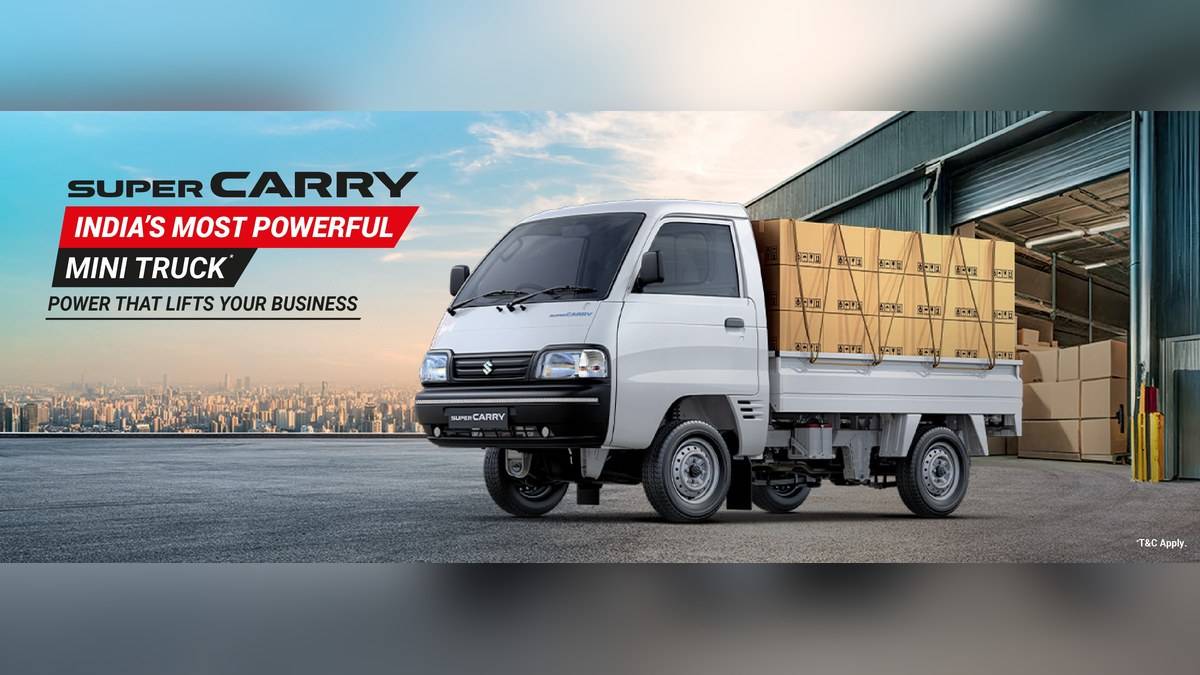
NEW DELHI: Maruti Suzuki lists a maximum loading capacity of 750 kg for the petrol Super Carry and 630 kg for the CNG version. The fuel choice therefore changes the published load ceiling, a distinction that deserves its own line in a goods operator's trip plan rather than being buried beneath a fuel-cost estimate.
| Official specification | Petrol Super Carry | CNG Super Carry |
|---|---|---|
| Maximum loading capacity | 750 kg | 630 kg |
| Maximum engine power | 59.4 kW at 6,000 rpm | 52.7 kW at 6,000 rpm |
| Engine description | 1.2-litre K-Series | 1.2-litre K-Series |
| Emergency petrol tank | Not applicable | 5 litres |
The load figures appear in the manufacturer's main Super Carry FAQ, while the dedicated CNG page repeats its own loading limit and gives the CNG engine output. Those figures describe different fuel versions. The petrol power figure should not be carried across to the CNG column simply because both use the Super Carry name.
Put the consignment before the fuel calculation
For a business moving dense goods, the first useful record is the weight of a normal consignment, including its packaging. The dispatch team can then compare that record with the published limit for the particular truck. A vague description such as a full load does not tell the operator whether the petrol and CNG vehicles can perform the same assignment.
For light but bulky parcels, the job may instead be constrained by the space and shape of the consignment. A loading-capacity figure alone does not establish that an item will fit. Conversely, a consignment that appears to occupy little room should still be weighed. The relevant limit cannot be assessed by looking at how empty the cargo area seems.
This is where the Super Carry fuel comparison becomes more specific than a general claim about cheaper running. If the normal dispatch already approaches the CNG limit, the business has to plan that dispatch around the CNG figure. It cannot borrow the higher petrol figure for the same badge, or assume a change in fuel cost compensates for a different loading ceiling.
Separate output from load capacity
The engine-power entries and the loading-capacity entries answer separate questions. Power is an engine specification; loading capacity is the manufacturer's stated carrying limit. Neither number should be used to improvise a new rating for a truck with a different body, installation or paperwork.
When an operator requests a body specification or a dispatch plan, the safest practical approach is to attach the precise vehicle description and its applicable documents. Ask the supplying workshop or body supplier to identify the approved arrangement in writing. The general FAQ does not provide an axle-by-axle loading schedule or a universal allowance for every possible conversion.
For an existing fleet, record which registration belongs to which fuel version in the dispatch system. That is more useful than keeping a single Super Carry capacity against every vehicle. It also gives the loader a clear reference when vehicles are substituted at short notice or a regular truck is unavailable.
The CNG page also specifies a 4.3-metre turning radius. That is a separate manoeuvrability measure, useful when examining access to a loading point. It does not describe the space needed by a particular load or grant a higher carrying limit when a journey is short. Keep site access and consignment weight as separate checks.
The emergency tank is a separate operating detail
Maruti's CNG page identifies a five-litre emergency petrol tank and a five-speed transmission. The small petrol reserve is relevant to route planning around CNG access, but the page does not turn that capacity into a promised emergency driving distance. Assigning a fixed range would require evidence that the official page does not supply.
An operator should therefore list the reserve separately from the expected CNG journey. Note the refuelling point, the actual fuel state before departure and the route's operating conditions. A tank-capacity entry does not establish how much petrol is present on a particular morning, and it does not increase the vehicle's published CNG loading capacity.
A useful dispatch sheet keeps these questions apart
For this model, a workable sheet can show the fuel version, the applicable carrying limit, the weighed consignment and the route's refuelling plan. Keep fuel receipts and trip distances in the running-cost record. That allows the business to examine costs without confusing them with permission to carry a heavier consignment.
Our Super Carry version guide explains the naming choices. The separate Super Carry stability-system explainer covers driving assistance, while the driver-seat recall report concerns a specific affected group. None of those subjects changes the fuel-specific loading limits published here.
Official sources: Super Carry product FAQ and Super Carry CNG product page.