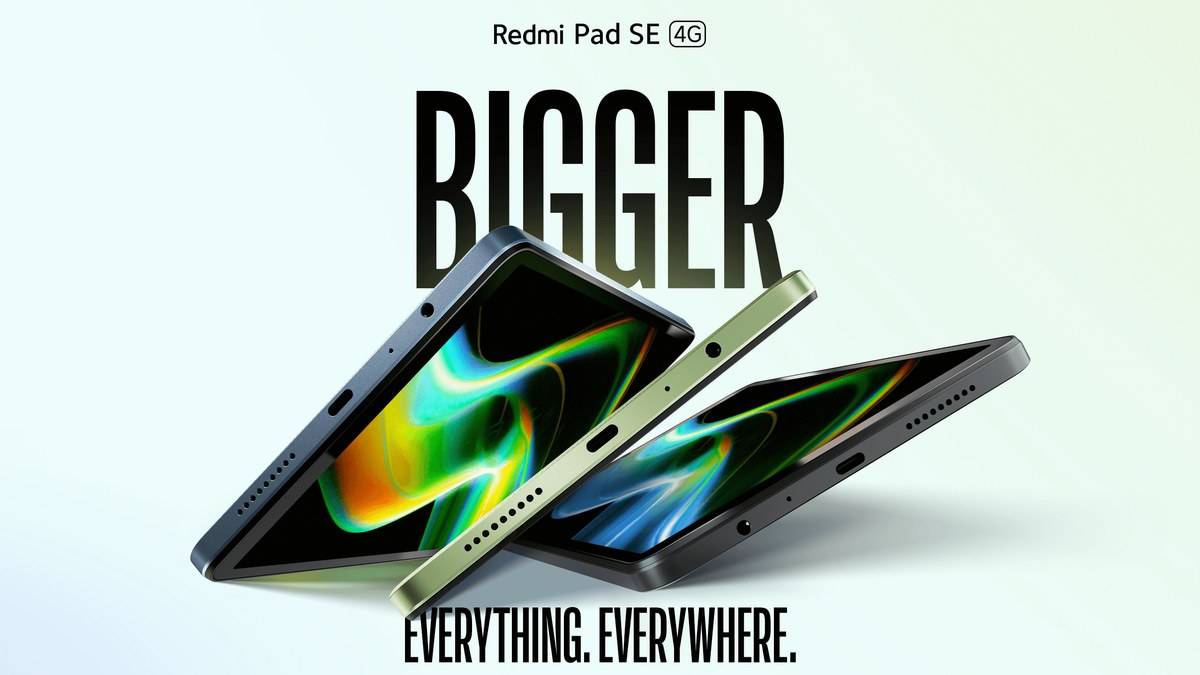
NEW DELHI: Redmi Pad SE 4G has a 2+1 card layout that accommodates two SIM cards and a microSD card, and Xiaomi's India page advertises 4G calling. The cellular model also lists Wi-Fi and satellite-navigation support. Buyers setting it up for calls, travel or classes should identify the exact 4G model first, then decide which connection each task will use.
| Connectivity or setup item | Xiaomi India listing |
|---|---|
| Card layout | 2 SIM cards plus 1 microSD card |
| Cellular generations | 2G, 3G and 4G |
| Calling description | 4G+4G calling |
| Wireless networking | Dual-band Wi-Fi 5 |
| Navigation | GPS/AGPS, Beidou, Glonass and Galileo |
| Screen | 8.7-inch LCD, 1340 x 800 pixels, up to 90Hz |
| Audio connection | 3.5mm headphone jack |
Identify the cellular tablet before choosing a plan
The words Pad SE on their own are not a sufficient hardware check. For this setup, look for Redmi Pad SE 4G in the product description and match it with the India specification. The tablet in this guide has a MediaTek Helio G85 processor and the smaller screen listed above. A similarly named tablet's memory or connectivity sheet is not interchangeable.
This matters in a family shopping discussion because a RAM figure and the mobile-network generation can both contain similar-looking abbreviations. Read the full model name rather than treating a short seller label as a complete specification. Then check the invoice and packaging against the intended device before building your setup around cellular calling.
Our earlier Redmi Pad SE memory guide concerns another configuration and use question. It should not be used to infer the card layout of this 4G model. Here, Xiaomi explicitly lists the separate positions for SIM cards and removable storage.
Give each SIM a purpose
The India overview describes 4G+4G calling, while the detailed sheet lists cellular support for both SIM positions. Before installing your cards, decide what each number is for. A work number and a personal number create different notification and availability expectations from a single data connection used only for lessons or browsing.
After setup, test the actual tasks you intend to use with your operator's service: an outgoing call, an incoming call and a mobile-data session. Make that a practical acceptance check rather than assuming a hardware specification confirms every aspect of a particular plan. The device page does not replace an operator's tariff conditions or an assessment of reception where you use it.
The 2+1 description also does not promise that every call or data task operates simultaneously in every circumstance. Avoid reading more into the slot count than Xiaomi states. Its clear benefit for planning is that the listed card arrangement includes a separate removable-storage position alongside the SIM positions.
Plan the tablet's role away from home
A parent carrying this tablet for a child's class has several separate decisions: where the internet connection comes from, who can call its number and how the lesson will sound in a shared room. Writing those requirements down before choosing services makes the device easier to configure around the actual user, rather than around a list of radio specifications.
The sheet lists dual speakers, a microphone and a headphone socket. For a class or call in a shared space, decide whether the user will need headphones and check the intended accessory during setup. A tablet capable of calling still needs a suitable place and audio arrangement for the conversation you want to have.
The navigation list is another distinct capability. Do not equate the presence of GPS with a promise that every map, route or travel application works without data. Before leaving home, open the intended application and confirm what it requires for the journey. This is a preparation suggestion, not a guarantee of a particular app's offline functions.
Keep network, display and charging limits separate
Xiaomi's India FAQ lists 4GB RAM with 64GB or 128GB storage. Its display refresh-rate claim is also qualified by support in the applications being used. Neither specification changes the listed cellular generation. The official network list does not include 5G, so a faster refresh-rate number should not be mistaken for a faster mobile-network category.
For the India model, the FAQ and specification both list 10W charging with a 6,650mAh battery. Use those local documents when planning the charging setup. A page for a related overseas model should not override the India specification simply because the tablet photograph or the product name looks familiar.
For a different tablet's storage distinction, read our Xiaomi Pad 7 memory guide. For service preparation, the Xiaomi India warranty explainer provides separate background. The Pad SE 4G's own local pages remain the reference for its SIM arrangement, calling description and hardware.
Official sources: Redmi Pad SE 4G India overview; India connectivity specifications; India product FAQ.