The National Highways Authority of India has published a wildlife-mitigation document that sets out how animal crossings, roadside fencing, warning systems and traffic controls can reduce conflict between vehicles and animals. Detailed in an official release on 8 October 2026, the report brings together engineering measures and monitoring evidence relevant to highway users travelling through forest and wildlife corridors.
NHAI says around Rs 19,700 crore has been invested in wildlife-mitigation infrastructure and related environmental protection over the last five years. Its total of more than 2,150 structures combines works already constructed with those proposed. The figure therefore does not represent 2,150 completed or newly opened crossings.
The document, Wildlife Mitigation Measures & Structures, was released on 5 October by Road Transport and Highways Minister Nitin Gadkari at the Chintan Shivir in Ekta Nagar, Gujarat. The ministry's announcement describes it as a reference framework for incorporating wildlife protection into highway development.
Crossings and fencing work together
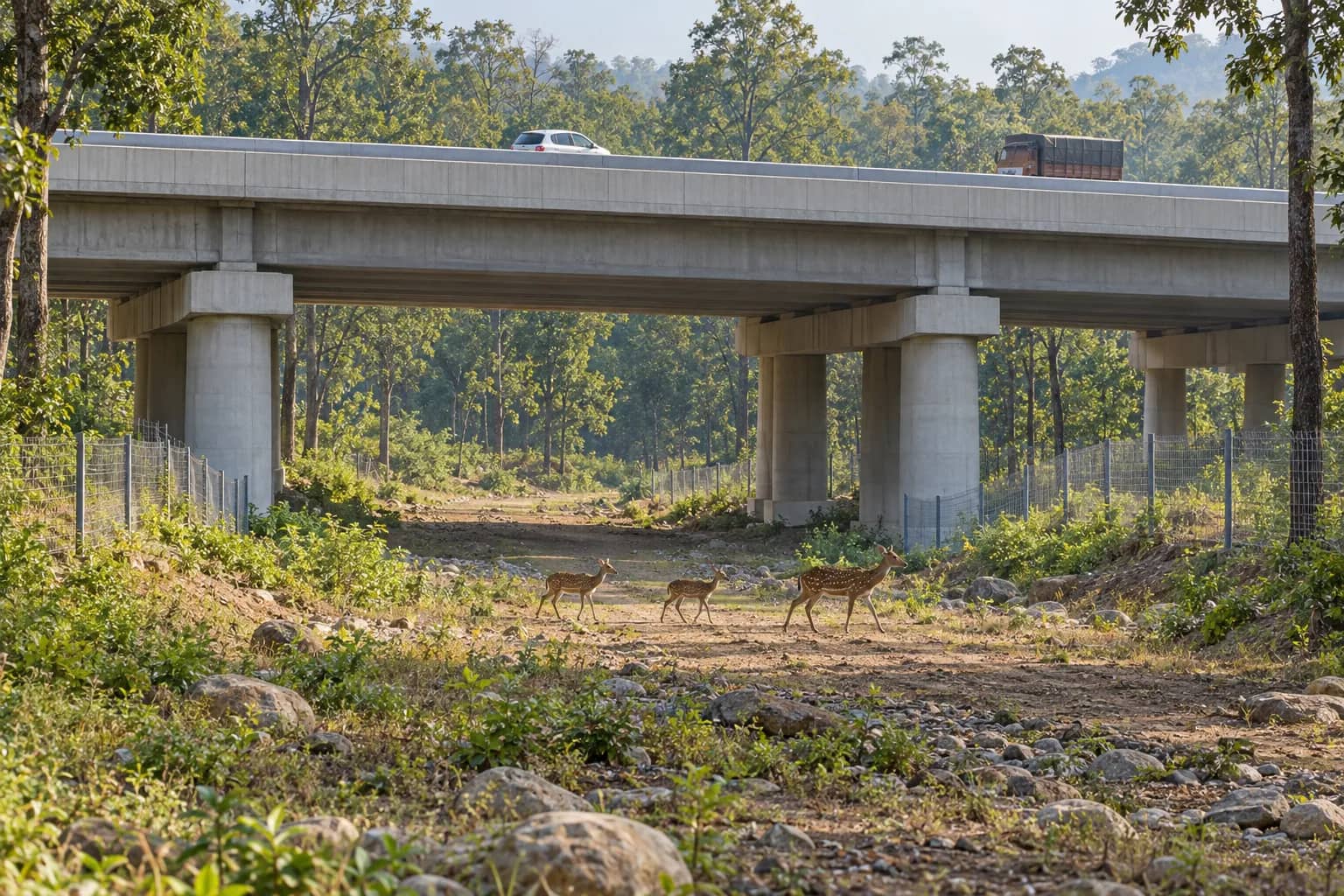
The report describes underpasses that provide routes beneath the carriageway, vegetated overpasses above it, and viaducts that retain a broader area for movement below an elevated road. It also covers culverts, canopy crossings and bridges that combine drainage functions with space for animals.
Underpass design involves more than leaving an opening beneath a road. The document identifies natural earthen floors, gentle approaches, drainage and clear entry and exit points as important features. Debris, standing water and human disturbance can affect whether animals use the passage. Fencing is intended to guide them towards these designated routes.
The report says fence design should account for local species, terrain and movement patterns. It describes escape ramps and suitable end treatments to prevent animals becoming trapped if they enter the highway corridor. Maintenance of fencing and crossing approaches is part of keeping the system functional, rather than a separate issue after construction.
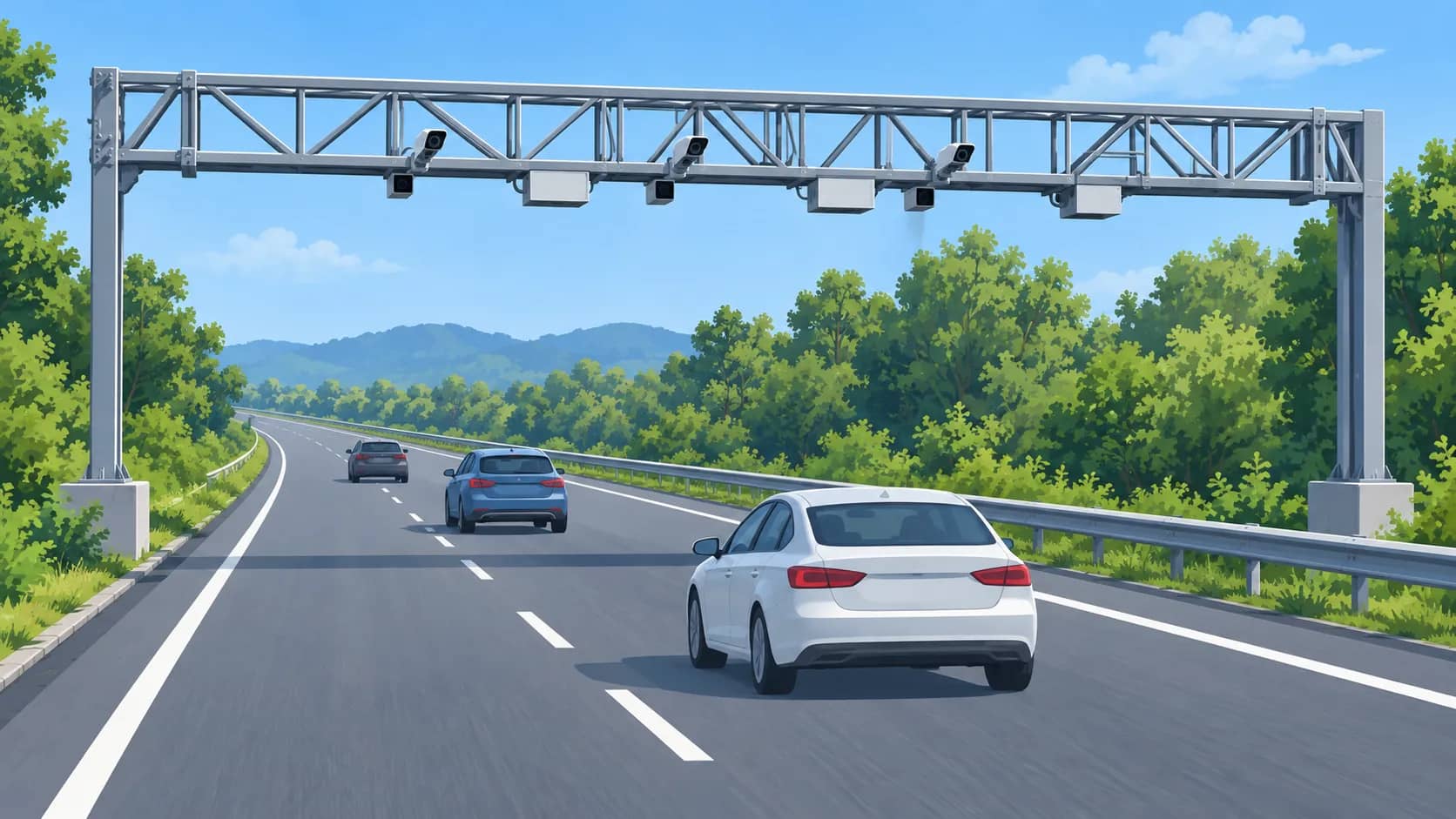
According to NHAI, guide fencing and noise barriers have been provided along more than 300 km of national highway alignments. The authority also identifies collision hotspots and uses speed-regulation boards and warning signs. These interventions connect wildlife planning with the recurring road-safety risks documented in Dalimss News' earlier report on a fatal nilgai collision on the Varanasi-Gorakhpur highway.
Detection systems have limits
The document discusses systems that detect animals and activate warnings for motorists. These can use reflected radar signals, passive infrared or video detection, or sensors that respond when an animal interrupts a transmitted beam. Their suitability depends on the road and the location of animal movement.
It also identifies limitations. Wide, fast or heavily trafficked roads can reduce effectiveness, while roadside vegetation may interfere with sensors. Moving leaves can generate false alerts. Sensor placement, spacing, power availability and protection against damage therefore form part of the assessment, rather than the presence of detection equipment alone establishing that a crossing is safe.
For conventional warning signs, the report links location and frequency to recorded collision patterns and known crossing points. Visibility near curves and embankments also matters. This location-specific approach has a parallel in the separate Gurugram highway black-spot audit previously covered by Dalimss News, where risk was assessed at individual highway locations.
Camera-trap evidence from two corridors
NHAI's compilation includes findings from a February 2026 Wildlife Institute of India study of the Delhi-Dehradun corridor. Over a 40-day observation period, about 18 wild animal species were recorded using underpasses. The study recorded 60 instances of elephants using the corridors; that is a count of recorded uses, not a statement that 60 different elephants were identified.
The report separately cites 2024 monitoring at nine wildlife-crossing structures on NH-44 through Maharashtra's Pench Tiger Reserve. Camera-trap monitoring there has operated since 2019, and the cited results recorded 23 mammal species using the structures. These are earlier studies assembled in the newly publicised document, rather than new October observations.
The evidence addresses whether wildlife uses the structures. NHAI also presents noise control, maintenance and periodic monitoring as parts of mitigation, alongside construction. Its October announcement does not prescribe a new nationwide driving speed limit or announce that every proposed crossing is now operational.