
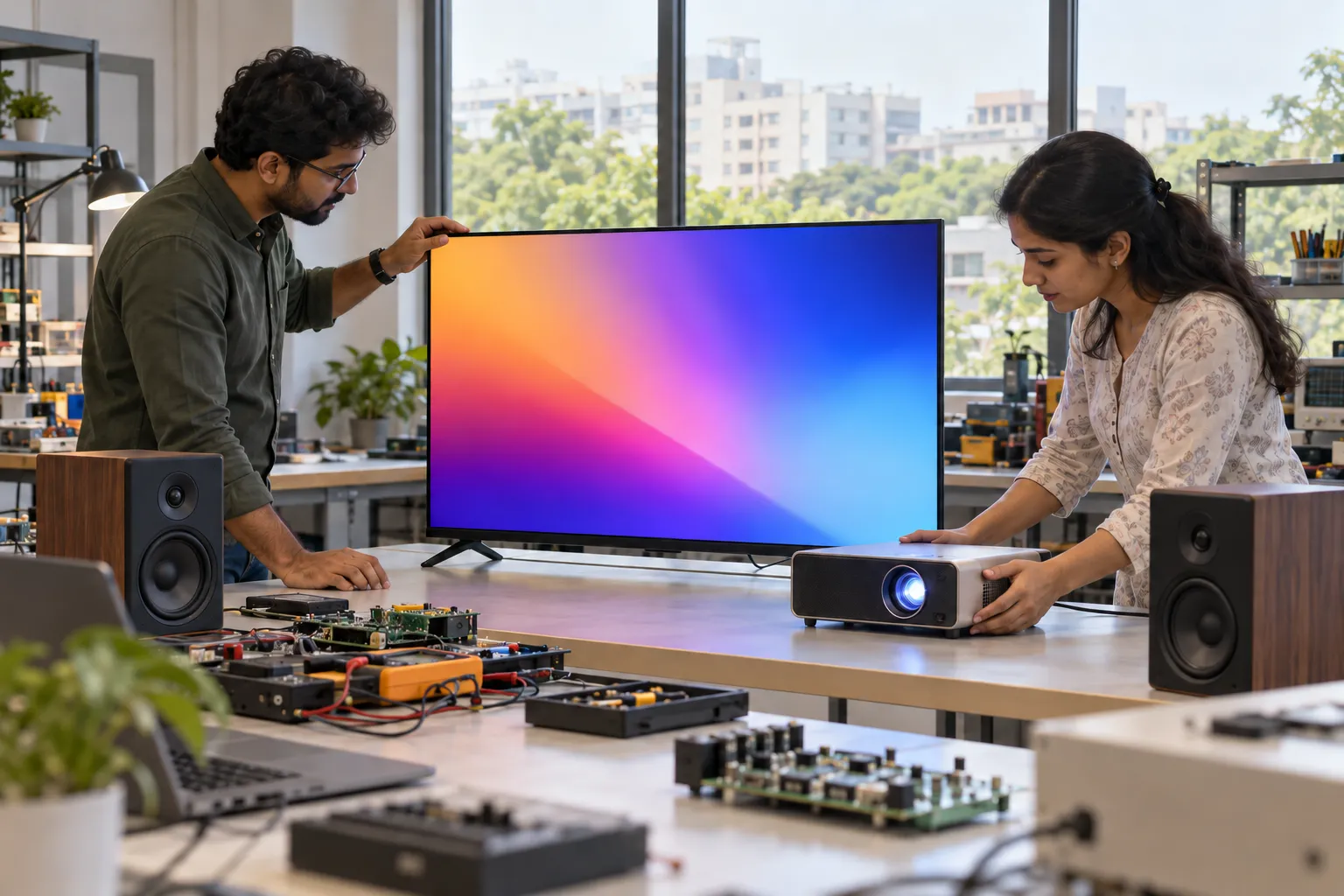
Lumio, the home-entertainment brand operated by Circuit House Technologies, has raised $12 million in a Series A round led by Blume Ventures. The investor announced the financing on 7 October, bringing new capital to an Indian electronics business that has expanded from smart televisions into projectors and audio.
Blume said it made the investment through Fund V. Its announcement describes a business built around hardware performance and software for finding content. It does not disclose Lumio's valuation, the stake acquired or a breakdown of the new capital's allocation.
Lumio's April 2026 lineup refresh covered 55-inch and 65-inch Vision 9 televisions and a refreshed Vision 7 range. The company paired those devices with changes to its TLDR content software. That gives the financing a commercial backdrop: continued development of products and services already being built for Indian homes.
A later round after the original seed investment
Circuit House's own newsroom records a separate $4.3 million seed round announced on 6 July 2024. That earlier financing was led by Stellaris Venture Partners and 3one4 Capital. The company said then that the money would support team building, hardware and software research, and the development of consumer-electronics products for India.
The 2024 company announcement identifies co-founders Raghu Reddy, previously chief business officer at Xiaomi India, and Kailash Sankaranarayanan, previously a senior director at Flipkart. Their earlier roles matter to the business they are now building: bringing electronics to market requires product planning and distribution as well as an attractive specification sheet.
The present round arrives after commercial products have reached customers. Blume says Lumio crossed roughly Rs 60 crore in net revenue in its first year of operations. That is an investor-reported business figure, not a profit figure. The announcement does not provide a full audited profit-and-loss statement.
Manufacturing is part of that business as well. At its April 2025 television debut, Lumio named Dixon as its manufacturing partner and said the TVs underwent tests covering conditions such as dust, humidity and power fluctuations. These were company-described testing arrangements, rather than an independent assessment of product durability by Dalimss News.
The software behind the screens
Blume's account of its investment puts particular emphasis on TLDR, Lumio's content-discovery layer. It describes a service that began with sports information and is expanding into finding films and television shows across platforms. The investor says about half of Lumio TV buyers use TLDR monthly, with around half of that group returning weekly.
Lumio's own April 2026 Vision announcement explains the wider software plan. Its refreshed TLDR platform added ways to browse by language, genre and streaming service. It also described Project Neo, an initiative intended to let people send content requests through messaging applications and build a watchlist on the television.
Those features address a different problem from panel brightness or speaker output: finding something to watch without repeatedly typing titles using a remote. The April release presented Neo as a rollout planned for later in the year. That older timetable should not be treated as confirmation that every feature is already available on every device.
There is an existing software-maintenance programme too. In a 10 February announcement, Lumio set out an Android 14 update for its Vision televisions, with Arc projectors to follow. The listed changes included revised system controls, standby power options and accessibility features. The notice described a phased rollout, so the announcement date alone does not establish an individual device's installed version.
Products are already on the market
The product range is already covered separately in Dalimss News reports on the Lumio Arc 7 (2026) projector and Aura 5 speakers. Those reports concern particular devices. The new investment concerns the company behind them, and does not replace model-specific buying information.
The company's earlier product announcements also show that software development extends beyond a single hardware generation. Features planned for a wider device range need to be delivered through releases for individual models. The Series A adds financing behind that work, while the company's published product notices, rather than the investment amount, establish the scope and timing of each update.