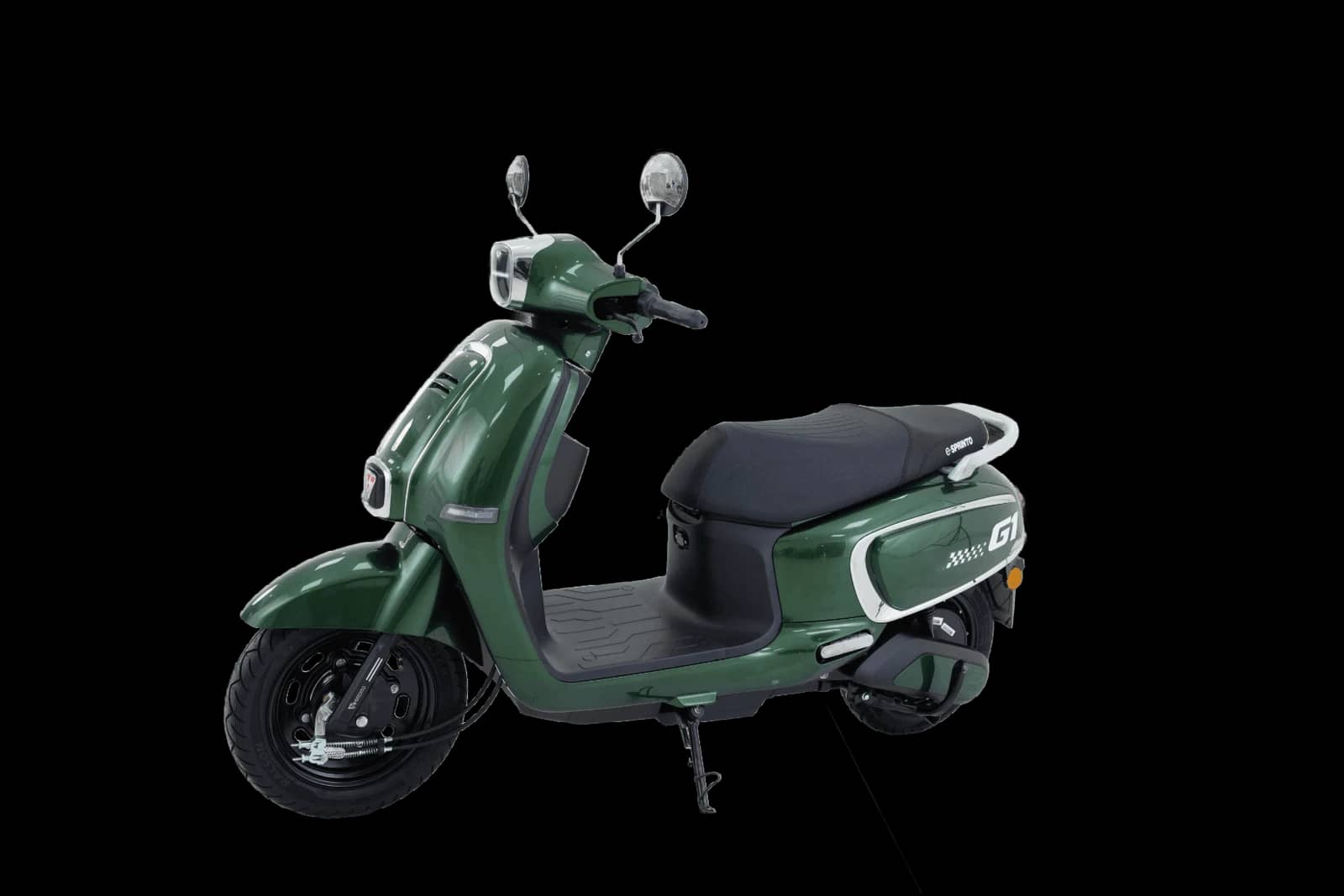
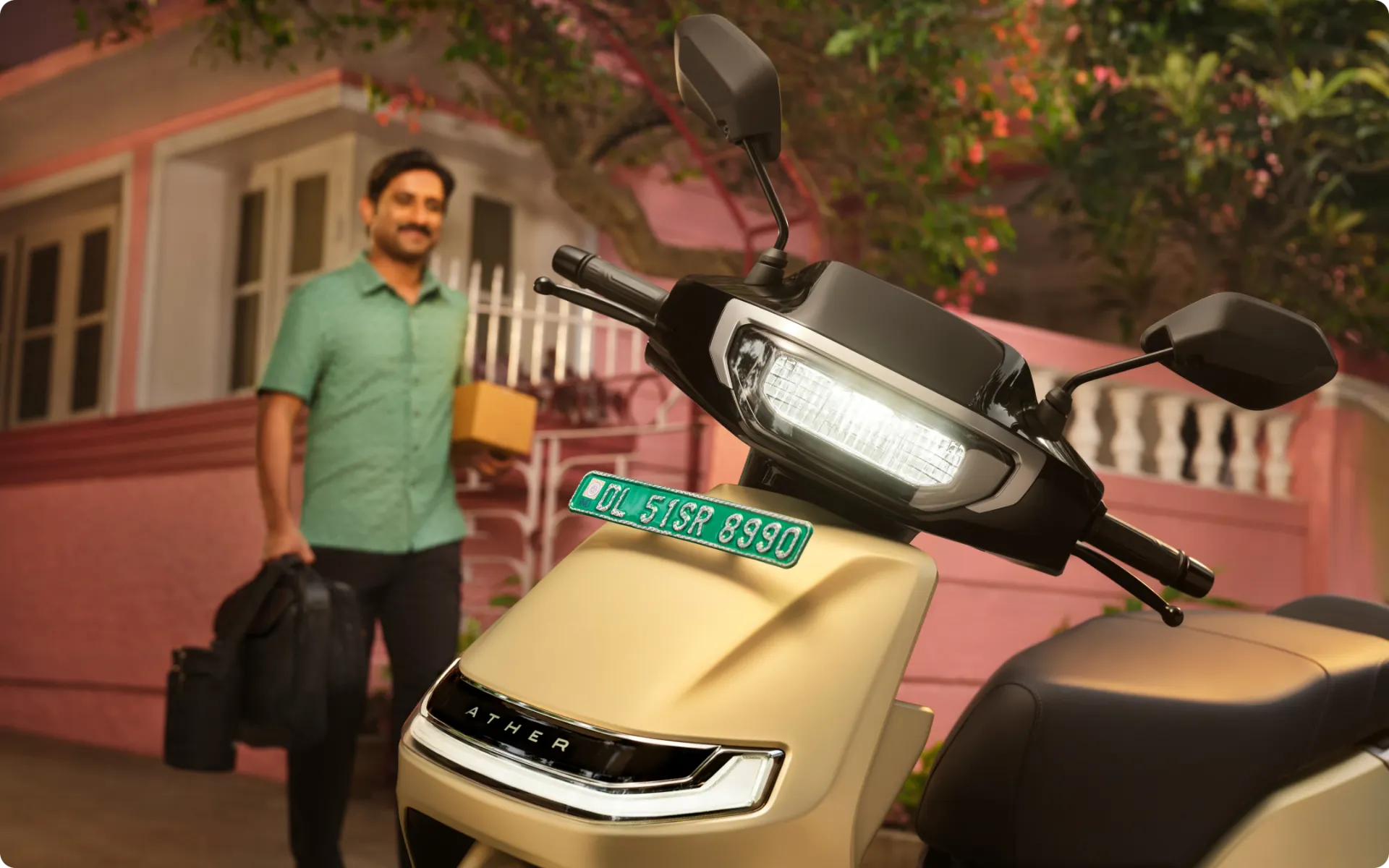
Ather Konarc, Rizta, Bajaj Chetak and TVS iQube have different answers to two ownership questions: when the scooter needs scheduled attention, and what happens if its battery develops a problem. The differences extend beyond the number of warranty years. Distance limits, separately purchased cover, battery-health conditions and maintenance exclusions can change what an owner actually receives.
This comparison uses the manufacturers' published India documents checked on 16 October 2026. It reports the terms currently displayed, without treating them as changes announced today. The comparison concerns maintenance and published coverage, rather than road-test results or a ranking of service quality.
Konarc and Rizta do not share a service interval
The Konarc FAQ specifies routine service every 12 months or 10,000 km, whichever arrives first. That makes the annual interval conditional on distance. A scooter reaching 10,000 km before its first anniversary reaches the stated service point earlier. Ather also says early owners receive an initial health check. The longer regular interval therefore should not be interpreted as a promise that the vehicle will never need inspection between annual visits.
For the Rizta and 450, Ather's separate servicing guide recommends a visit every 5,000 km. This is a model distinction within one manufacturer's range, rather than a common interval for every Ather scooter. The guide describes periodic maintenance as checks of moving parts, electronic systems and consumables, including brake pads. It says an inspection typically includes around 25 to 30 checkpoints. The absence of a petrol engine does not remove those mechanical and electrical checks.
The guide does not publish an itemised nationwide bill for each scheduled visit. A shorter service interval alone consequently cannot establish a rupee difference in ownership cost: the work required and charges would also be needed. Dalimss News' earlier Rizta S and Z comparison covers the model and equipment differences, while the 450S and 450X report sets out that separate range.
Battery cover: the years are only part of the comparison
Konarc's standard battery cover is three years or 30,000 km, whichever comes first. Ather's FAQ lists five years or 60,000 km with AtherStack Pro, followed by separately paid eight-year/80,000-km and ten-year/100,000-km options for Pro customers. The longest advertised period is therefore not the standard package. The Pro requirement also means that an extension's standalone price would not, by itself, describe the complete cost for a buyer without that package.
Ather's Eight70 warranty FAQ describes a different dimension of cover: a battery-health threshold. Alongside defects, it promises repair or replacement if health falls below 70% within eight years or 80,000 km, whichever comes first. Labour is included for covered work. This is a stated capacity condition, not merely a promise to address a battery that stops functioning. It should not be automatically applied to a different warranty product simply because both use Ather branding.
That FAQ also lists exclusions, including accident, flooding, fire, theft and unauthorised battery alterations. It provides an exception for deep discharge caused by leaving the scooter idle, but does not turn the policy into general damage insurance. The cover starts from the vehicle invoice date, and the FAQ says it can transfer when the scooter is sold. A later policy certificate therefore does not create a fresh eight-year clock. Claims remain subject to the service centre checking validity and applicability.
Chetak's FAQ lists three years or 50,000 km for the scooter and lithium-ion battery, whichever comes earlier. Its auxiliary battery and tyres have separate 12-month terms. Scheduled servicing at authorised centres is a condition of the main cover. These distinctions matter because the word battery can refer to different components, and the longest period attached to the scooter is not necessarily the period applicable to every part.
Chetak describes extensions of one year or 10,000 km, or two years or 20,000 km. Existing vehicles must be under two years old and below 50,000 km to qualify, subject to availability. The price depends on the plan and time since invoicing and is displayed after login. Its terms allow genuine replacement parts to be new, refurbished or reconditioned. Battery replacement takes account of the original pack's energy capacity immediately before failure, so the published wording does not promise a brand-new pack in every case.
The TVS iQube FAQ makes the variant distinction explicit. Standard cover is three years/30,000 km for the 2.3 kWh model and three years/50,000 km for the other variants listed there. Extended cover takes the stated total to five years/50,000 km for the 2.3 kWh version and five years/70,000 km for the others, whichever limit is reached first. TVS lists battery-only and battery-plus-critical-electrical-parts options separately.
TVS says those extensions do not include periodic maintenance such as battery-health checks. Eligibility depends on both age and kilometres, and the selected scheme cannot later be swapped for the other type. Its iQube 3.5 kWh manual, revision dated 6 January 2026, separately excludes normal adjustments and wear items such as brake linings. It also states that repaired or replaced parts retain only the balance of the original warranty.
The same manual lists prolonged storage with a fully discharged battery and use of a non-recommended charger among warranty limitations. It says remaining standard cover continues for a new owner if the vehicle changes hands. These are separate questions from the headline duration: the circumstances of a failure, the maintenance history and the unexpired period all remain relevant. The service schedule, battery policy and component cover thus answer different questions; none alone represents a complete promise to pay every ownership expense.