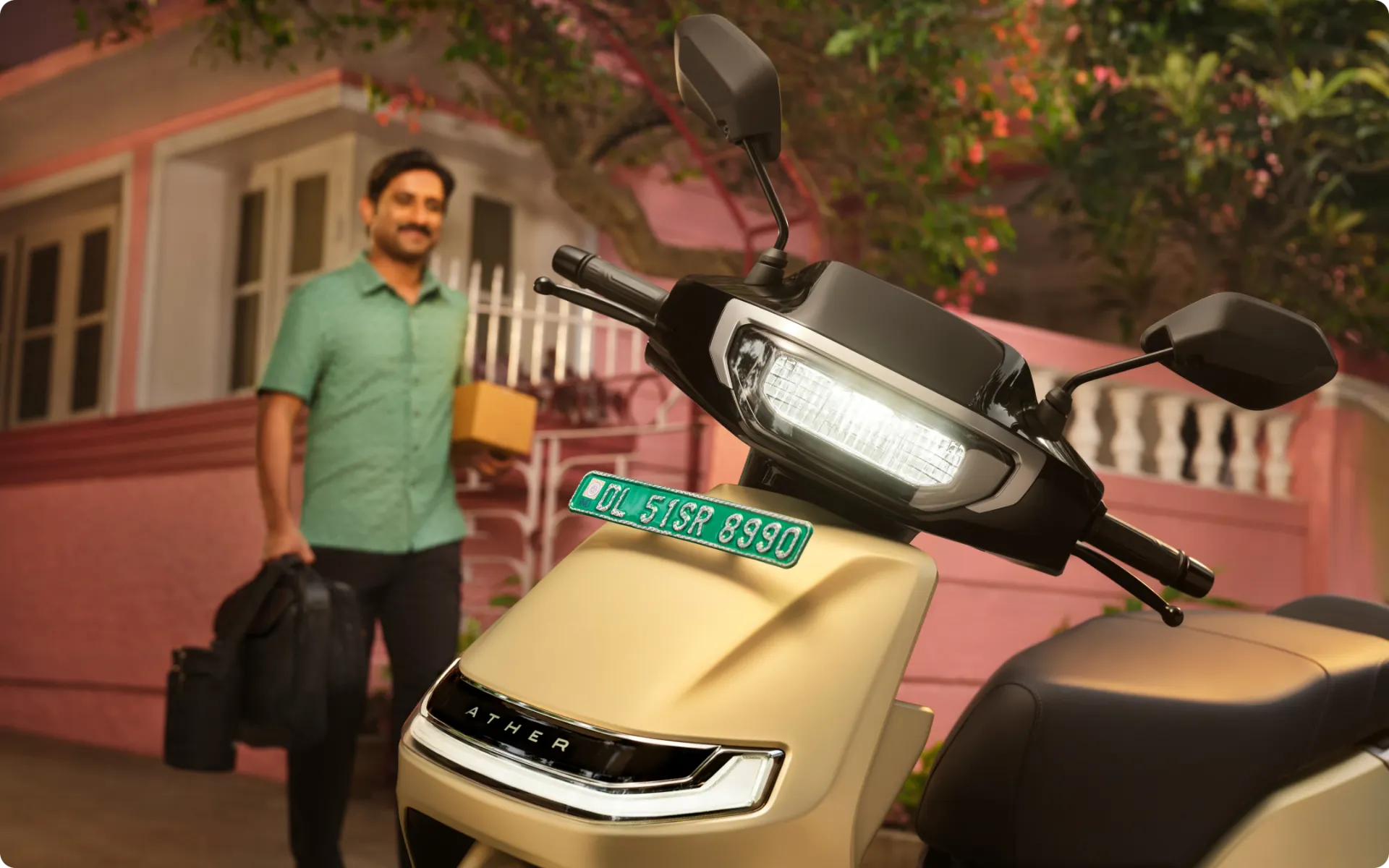
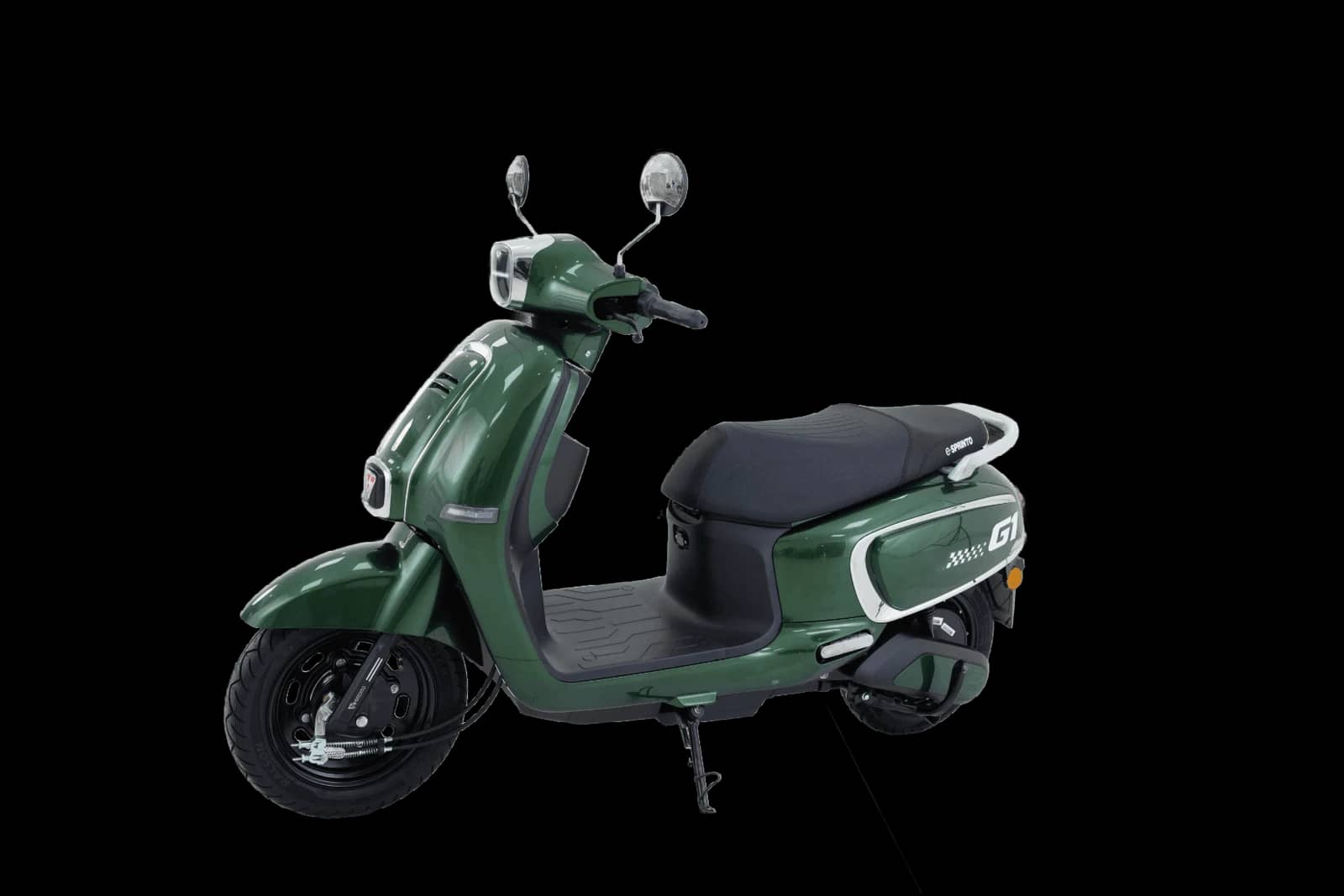
The e-Sprinto G1, TVS Orbiter V2 and VIDA VX2 Go 3.4 offer different answers to a basic ownership question: where can the battery charge, and how long will it take? The manufacturers describe different battery arrangements and different charging intervals. That changes what their published numbers actually establish.
A comparison of official material checked on 16 October shows a practical divide. The G1 and Orbiter have batteries intended to stay in the vehicle. The VX2 Go 3.4 has a removable battery arrangement. For a household whose parking space has no electricity connection, that difference affects where charging can happen, independently of the advertised distance per charge.
Charging times measure different portions of the battery
The units also matter. Battery capacity in kilowatt-hours describes stored energy; a charger rating in watts describes power. A larger battery and a more powerful charger are different specifications. Tata Power's charging explainer identifies battery size, starting charge and the vehicle's accepted charging rate as separate constraints. It also describes charging slowing as the battery approaches full. A partial-charge time therefore cannot simply be multiplied to predict a complete charge.
The G1 brochure lists 2.0 kWh, 2.5 kWh and 3.0 kWh battery capacities and describes the mounting as fixed. It gives a charging time of 4.5 hours. The specification table does not identify the starting or finishing charge percentage for that figure, or provide a separate time for each battery capacity. It therefore does not establish a directly comparable partial-charge time.
TVS is more specific about the Orbiter V2's charging window. Its product page lists a 3.1 kWh battery and a 10% to 80% charging time of three hours and 30 minutes with the included 650 W charger. With the add-on 950 W charger, the listed interval falls to one hour and 30 minutes. The quicker figure depends on different hardware, rather than describing the standard charger supplied with the scooter.
The VIDA VX2 Go page lists three hours and 33 minutes for the Go 3.4's AC charging from 20% to 80%, using a 580 W charger. It separately gives 62 minutes for fast charging from 0% to 80%. Neither interval matches TVS's 10% to 80% measurement. Simply putting the three home-charging times in order would obscure how much of each battery is being replenished.
The percentage windows illustrate the problem even without a road test. A rise from 10% to 80% covers 70 percentage points; 20% to 80% covers 60. On a hypothetical 3 kWh usable battery, those fractions would represent 2.1 kWh and 1.8 kWh respectively. This is arithmetic, not a measurement of these scooters: a model's advertised battery capacity does not by itself establish usable energy, wall-socket consumption or charging losses. The example shows why elapsed time needs an energy basis.
There is also a distinction between carrying a charger and carrying a battery. The Orbiter FAQ says its portable charger uses a standard 15 A domestic socket, but the vehicle's batteries are non-removable. It says the scooter does not support fast charging. The location of a compatible socket therefore matters even when the charger itself travels with the rider.
Charging access has another practical consequence. A scooter left in a shared parking area and a battery carried indoors follow different routines, even if both eventually use household electricity. The specification sheet cannot establish whether a particular building permits charging in a common area or whether its parking space has a suitable connection. Nor does a removable-battery label establish how comfortable an individual will find carrying it up stairs. Those are separate from the published charging-time claim.
Range claims need a variant and a test basis
TVS lists an IDC range of 158 km for the Orbiter V2. VIDA lists 146 km for the VX2 Go 3.4, also under an IDC heading in its variant specifications. Those are manufacturer-published test figures. TVS's FAQ says actual range varies with riding style, road conditions and load. The figures alone do not show how either scooter would perform on the same route with the same rider.
There is still value in a properly identified certification figure. In its explanation of IDC range, Ather describes a controlled test with a prescribed speed and acceleration pattern. It distinguishes that common benchmark from everyday riding affected by gradients, passenger load and traffic. The distinction cuts both ways: a laboratory result is not a personal range guarantee, but a variation in somebody's commute does not automatically invalidate the certification result either.
The G1 has a separate unresolved issue. Its product page displays 130 km, while the brochure prints 140 km under an IDC range heading. The material does not reconcile the difference. Dalimss News has already reported the G1's battery specifications and conflicting range figures. Neither number should be silently substituted for the other in a comparison.
The performance specifications also describe different machines. The G1 brochure gives a maximum speed of 50 km/h. TVS gives 68 km/h for the Orbiter V2, while VIDA lists 70 km/h for the Go 3.4. The G1 brochure also separates its motor figures into 1,500 W rated output and 1,800 W peak output. Those two ratings describe different measures of the same motor, rather than two battery options. These are published specifications, not results from a Dalimss News road test. A larger claimed range does not, by itself, describe acceleration, carrying comfort or behaviour in traffic.
This comparison covers those named configurations rather than every scooter sold under the three model names. Dalimss News's earlier report on Ather Rizta variant differences examines another family-scooter choice. Here, the clearest distinction is charging access: a fixed battery keeps the scooter near a power source, while a removable arrangement changes that requirement. A common charging interval and matched road test would be needed to turn the published numbers into a reliable speed or range ranking.